Last updated 2026-07-09
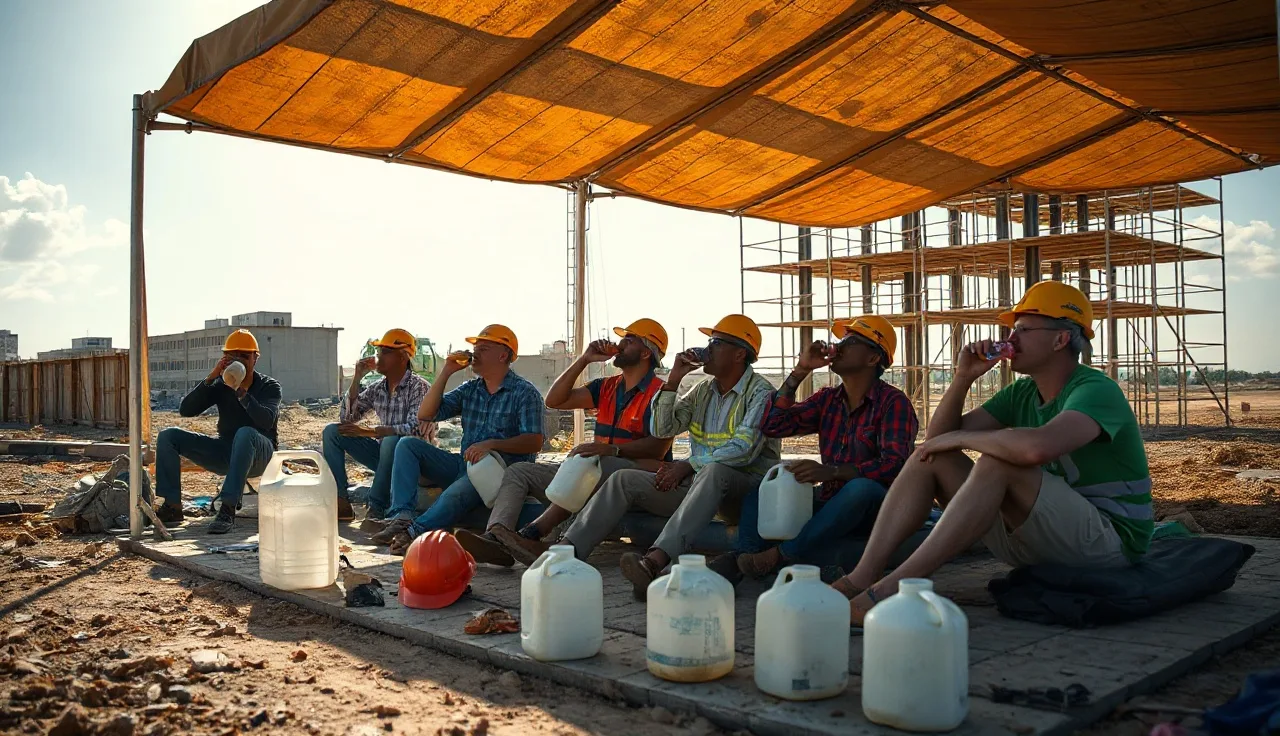
TL;DR
Heat is the leading weather-related cause of worker death in the U.S. OSHA enforces heat cases under the General Duty Clause (Section 5(a)(1)) while a formal heat standard sits in rulemaking. The core controls are water, rest, and shade. A heat index of 91°F flips on protective measures; 103°F puts you in high-risk territory where a written plan is your best defense.
Why is heat so dangerous for workers?
Heat kills more American workers than any other weather hazard. The Bureau of Labor Statistics recorded 436 occupational heat deaths between 2011 and 2019, and that count only includes cases where heat was listed as the primary cause [1]. The real number runs higher. Heat often gets coded as a cardiac event, or listed as a contributing factor rather than the killer, so death certificates and workers' comp claims undercount it.
Your body works hard to shed heat. It pushes blood to the skin, which leaves less for muscles and organs. It sweats, which drains water and electrolytes fast. When the air is humid, sweat stops evaporating and the whole cooling system starts to fail. Core temperature climbs. At roughly 104°F internal temperature, proteins in the body begin to break down. That's heat stroke, a medical emergency with a real chance of death.
Here's what makes a workplace worse than a backyard: workers don't feel it coming. Fatigue, a mild headache, a little dizziness. Those early signs look exactly like being tired on a hot day. By the time someone is confused or slurring words, the warning stage is already gone. Prevention has to happen before anyone feels sick, not after.
Construction, agriculture, landscaping, roofing, warehousing, laundries, and kitchens carry the highest exposure. But any employer who hasn't walked their own floor on a 95°F August afternoon with dead air is probably underestimating the risk inside the building too [2].
What are the OSHA heat standards and regulations right now?
There is no finalized federal heat-specific standard as of mid-2026. OSHA published a proposed rule on heat injury and illness prevention in August 2024 (RIN 1218-AD46), which would set formal requirements for outdoor and indoor work, but that rule had not been finalized when this article was published [3]. If you're reading this later, check the OSHA rulemaking docket directly, because the picture may have changed.
Until a final rule lands, OSHA enforces heat cases under the General Duty Clause, Section 5(a)(1) of the OSH Act. The clause requires employers to furnish a workplace "free from recognized hazards that are causing or are likely to cause death or serious physical harm to his employees" [4]. OSHA has cited dozens of employers under this clause for heat deaths. Heat is unambiguously a recognized hazard, and published industry guidance describes feasible controls, so the legal foundation is settled.
Several states with OSHA-approved plans already run their own heat standards, and California's is the most developed. Cal/OSHA's Title 8, Section 3395 requires employers with outdoor workers to provide one quart of water per hour per worker, shade that can hold 25% of the crew at any time, cool-down rest periods on request, and a structured acclimatization program during the first 14 days of heat exposure or the start of a heat wave [5]. Washington State runs a similar rule under WAC 296-62-095 [11]. If you operate in a state plan state, look up your own requirements, because they may be stricter than what I lay out below.
In federal OSHA states, treat OSHA's Heat Illness Prevention Campaign guidance and the NIOSH criteria documents as your benchmark. Build your program around those, and you have a solid defense if a General Duty Clause citation ever comes your way [6].
What heat index levels actually trigger protective action?
OSHA uses a four-tier heat index table that turns the "feels like" temperature (air temperature plus relative humidity) into risk levels and required actions. The first trigger is 91°F. The one to memorize is 103°F. Here's the full table:
| Heat Index | Risk Level | Minimum Actions |
|---|---|---|
| Below 91°F | Lower | Basic hydration, general awareness |
| 91°F to 103°F | Moderate | Hydration reminders, schedule monitoring, first-aid-trained supervisor |
| 103°F to 115°F | High | Mandatory water/rest/shade plan, acclimatization program, buddy system |
| Above 115°F | Very High to Extreme | Limit non-essential work, rescue equipment on-site, heightened medical monitoring |
These thresholds come from OSHA's Heat Illness Prevention guidance, which uses the heat index developed by the National Weather Service [6]. Heat index beats raw temperature because 95°F at 20% humidity feels nothing like 95°F at 70% humidity, and your body's ability to cool itself falls off a cliff in high humidity.
You can pull the heat index from OSHA's free Heat Safety Tool app or from Weather.gov for your zip code each morning. Better habit: check the forecast the day before, not the morning of, so you can shift staffing or reschedule the heavy tasks before crews are already out in it.
One number earns a spot in your memory. A 103°F heat index is roughly where heat stroke risk climbs enough that OSHA inspectors will look hard at whether you had a written plan. Below 91°F, you still keep water on hand. You just skip the full apparatus.
What are the actual heat safety controls that reduce risk?
Water, rest, and shade prevent most heat illness. OSHA has said it for years, Cal/OSHA wrote it into statute, and the industrial hygiene literature backs it [5][6]. Everything else is secondary.
Water. Workers doing heavy labor in the heat need about one quart (32 oz) of cool water per hour. Room-temperature is fine. Ice-cold water can trigger cramping in some people. Electrolyte drinks help when workers sweat hard for several hours straight, but plain water plus food (which carries its own salt) covers most days. Don't count on workers bringing their own. Stock it, and put it where the work is.
Rest in shade or a cool area. Rotating people so nobody spends a whole shift in direct sun beats slashing total hours. A 10-minute break in shade every hour keeps core temperature from stacking up. No natural shade? Portable canopies run $100 to $500 for a basic setup and do the job.
Acclimatization. This is the one that gets skipped, and it's where a lot of the deaths cluster. A worker who's new, back from vacation or illness, or facing the season's first heat wave is a physically different animal from someone who's been sweating through 90°F days for two weeks. The cardiovascular and sweat-response adaptations take 7 to 14 days to build [6]. During that window, a new or returning worker should start at no more than 20% of the workload and ramp up. California requires 14 days of structured acclimatization. OSHA's guidance recommends the same shape. Budget the time.
Elimination and engineering controls sit above PPE in the hierarchy for a reason. Schedule heavy outdoor work before 10 a.m. or after 4 p.m. when you can. Add fans or evaporative cooling to a hot indoor space when you can. These cut the hazard itself instead of asking a person to behave perfectly while their body is under stress.
Cooling vests and PPE come last. Vests with phase-change ice packs or evaporative material lower core-temperature load for workers who can't avoid long exposure. OSHA doesn't mandate a specific type, but if your crew is in full ensembles (Tyvek suits, say) that block sweat evaporation, supplemental cooling earns its keep at roughly $40 to $150 per vest [7]. PPE lives at the bottom of the hierarchy because it manages a worker's exposure, not the hazard.
How do you recognize heat illness symptoms before someone collapses?
Heat illness runs on a spectrum, and knowing where a worker sits on it tells you exactly what to do next.
Heat cramps come first. Painful muscle spasms, usually in the legs or belly, during or after work. Stop the exertion, move to a cool place, drink water or an electrolyte drink, and rest. Nobody goes back to heavy work until cramps have been gone for several hours.
Heat exhaustion looks like the flu. Heavy sweating, pale or clammy skin, weakness, nausea, headache, dizziness. Core temperature usually stays below 104°F. Move the person to a cool area, lay them down, loosen clothing, apply cool wet cloths, and give water if they're alert enough to drink. If they don't improve within 15 minutes, or they get worse, call 911.
Heat stroke is the emergency. The defining sign is altered mental status: confusion, slurred speech, loss of consciousness. Skin may be hot and red, wet or dry. Core temperature runs above 104°F. Call 911 now. While you wait, cool the person by any means you have. Ice water immersion works best if you can manage it; otherwise cool wet sheets and hard fanning. Never give water to someone who isn't fully conscious. Speed is everything. The faster core temperature drops, the better the outcome.
Supervisor training is the link that holds this together. Workers in heat stress often can't report it, because cognition fades as temperature rises. Supervisors and the buddy system have to catch it before the worker does [6].
One practical move: post a heat illness response card at the job site or workstation. List the symptoms and the phone number and address of the nearest urgent care. When someone is going down, nobody should be Googling what to do.
What should a written heat illness prevention program include?
In California, Washington, or any other state with a heat standard, a written program is the law. In federal OSHA states it isn't mandated by a specific heat rule yet, but it's the strongest protection you have against a General Duty Clause citation, and it hands your supervisors a playbook instead of a guess.
A working program covers five things.
Hazard assessment. Which jobs, tasks, and locations create heat exposure? What heat index triggers your controls? Be specific. Generic gets you nowhere in an inspection.
Control measures. What water will you provide, and where? What rest schedule applies at each heat index tier? Where's the shade or cooling? If you run engineering controls like fans or air conditioning, name them.
Acclimatization schedule. How do you onboard new workers, or bring back people returning after 14 or more days out during hot months? Write the schedule down: 20% the first day, ramping over 7 to 14 days.
Emergency response. Who calls 911? Where's the first aid gear? What happens if a worker goes unconscious? Keep it short enough to memorize and post it at the worksite.
Training records. Who was trained, when, and on what. Keep them. If OSHA investigates a heat illness, training records are one of the first documents they ask for.
Building this from scratch takes real time if you do it right. SafetyFolio's safety program generator produces a customized heat illness prevention program in about 15 minutes by walking you through your work settings, heat index exposure, and workforce size. You get a compliant foundation without the blank-page stall.
For how this fits a fuller OSHA compliance setup, our piece on osha training covers how to structure training requirements across your whole operation.
How do you train workers on heat safety effectively?
OSHA's heat illness prevention guidance says both employees and supervisors need training before the work season starts, and the content differs for each group [6].
Worker training should cover how the body reacts to heat, the early signs of heat cramps, exhaustion, and stroke, why acclimatization matters for their first weeks, the right to request a cool-down rest with no fear of retaliation, and who to tell if they or a coworker feels sick. It doesn't need a classroom. A 20-minute toolbox talk with a sign-in sheet works fine for most small operations.
Supervisor training goes deeper. Supervisors need to monitor heat index conditions, run the water-rest-shade plan, spot impaired workers who can't flag themselves, and know exactly what to do in a medical emergency: who calls 911, who stays with the victim, who manages the rest of the crew. OSHA fatality investigations have turned up cases where workers died because a supervisor didn't know the emergency steps or was slow to call 911.
Language access is a real problem in construction and agriculture. If part of your workforce speaks a first language other than English, training in English alone doesn't count as effective training under the General Duty Clause. OSHA's Heat Illness Prevention materials come in Spanish, and some state programs add more languages. Get the training to the people doing the most exposed work.
For a wider look at structuring safety training across your business, see our osha training guide.
What are the highest-risk industries and jobs for heat illness?
BLS and NIOSH data point to a consistent set of high-exposure industries [1][2]:
| Industry | Why Heat Risk Is High |
|---|---|
| Construction (roofing, concrete, excavation) | Direct sun, heavy exertion, PPE that traps heat |
| Agriculture | Extended outdoor work, often limited shade |
| Landscaping and grounds maintenance | Like ag, plus peak summer demand |
| Manufacturing / foundries | Radiant heat from equipment, poor air circulation |
| Commercial kitchens | High ambient temperature, steam, limited breaks |
| Warehousing (non-climate controlled) | Indoor heat trap, no airflow, heavy lifting |
| Laundry services | Steam exposure, continuous exertion |
| Utilities / line work | Outdoor, often confined spaces with radiant heat |
Construction logs the most fatalities in raw numbers, mostly because it's a huge sector and workers are outdoors for full shifts [1]. Agriculture carries a disproportionately high fatality rate per worker, driven by long hours, piece-rate pay that pushes people to skip breaks, and thin access to medical care in rural areas.
Indoor heat gets underestimated. Warehouses and factories with poor ventilation can hit heat index levels well above 100°F while outdoor temperatures stay moderate, especially near heat-throwing equipment. An employer who thinks heat illness is an outdoor problem misses half the hazard in his own building.
If you run forklifts in non-climate-controlled warehouses, you're managing a mechanical hazard and heat exposure at the same time. Our forklift certification guide covers the training piece for that equipment.
How does heat safety connect to other workplace safety programs?
Heat doesn't operate alone. Heat stress raises the odds of every other kind of accident because it clouds judgment, slows reaction time, and cuts grip strength. A worker whose thinking is impaired by heat is likelier to misread a label, skip a lockout step, or make a driving mistake on a forklift.
In facilities with chemical hazards, heat shifts the exposure picture. Workers sweat more, which changes dermal absorption for some substances. HVAC systems tuned for winter can recirculate air in summer in ways that concentrate fumes. If you run a hazard communication program under 29 CFR 1910.1200, review your safety data sheets and exposure assessments with summer conditions in mind.
Fire safety and heat safety share infrastructure. If your fire program includes emergency evacuation, the same outdoor assembly points and emergency contacts apply when a worker collapses from heat stroke. One emergency response framework covering medical emergencies (heat stroke, heart attack), fire, and chemical release is easier to train and harder to forget than three separate procedures. Cross-reference your protocols so supervisors never have to wonder which binder to grab.
Recordkeeping overlaps too. Heat illnesses that cause days away from work, restricted duty, or medical treatment beyond first aid go on your OSHA 300 log under 29 CFR 1904 [8]. A heat stroke that puts someone in the hospital must also be reported to OSHA within 24 hours under 29 CFR 1904.39. If you're fuzzy on what triggers an incident report, read that before summer, not after.
What does OSHA enforcement look like for heat violations?
OSHA has cited heat hazards under the General Duty Clause since at least the early 2000s, and the penalties have grown as maximum fines rise with inflation. As of 2024, a serious violation can reach $16,131 per instance, and willful or repeated violations can reach $161,323 per instance [9].
What starts an inspection? Most heat enforcement begins with a fatality or hospitalization report, since those require mandatory reporting within 24 hours. OSHA also runs a heat National Emphasis Program that lets inspectors run proactive inspections of high-risk industries during heat events, no complaint or incident required [10].
During a heat inspection, expect OSHA to ask for your written heat illness prevention program (or note its absence), training records showing workers and supervisors were trained before summer, documentation of your water and shade, records of any prior heat incidents or near misses, and the heat index conditions on the day of any incident.
To prove a General Duty Clause violation, OSHA needs four things: the employer knew or should have known about the hazard, the hazard was recognized, the hazard caused or was likely to cause serious harm, and a feasible fix existed. Heat clears all four bars without much effort. That's why the citations hold up in front of the review commission.
Factors that cut penalties: a written program even if imperfect, evidence that training happened, good-faith efforts at controls, and no prior heat violations. The practical takeaway is blunt. Doing something documented beats doing nothing, even with gaps in your program.
What's a simple daily heat safety checklist for supervisors?
You don't need a complex system. Supervisors who do a few things every hot day head off most heat illness.
Before the shift: Check the heat index forecast. Above 91°F, confirm water is stocked and reachable (at least one quart per worker per hour of planned work). Above 103°F, confirm shade or a cooling area is set and brief the crew on the day's schedule with planned rest breaks.
During the shift: Watch for workers who go quiet, stop sweating, look pale or flushed, or seem confused. Check in with anyone new or back from time off. Make sure nobody skips water to keep pace. If the heat index climbs past the tier your morning plan covered, adjust on the spot.
End of shift: Note any heat complaints in writing. If a worker hit a clinic or ER, flag it for OSHA recordkeeping review. Brief the next supervisor, or document conditions if the hazard carries into the next shift.
That's the whole thing. The daily check takes five minutes. Acclimatization tracking and formal documentation live at the program level, not the daily one. Supervisors who try to juggle a complex protocol in real time on a hot day will skip steps. Keep the daily routine short and memorable.
Operations that want a more formal supervisor framework can look at osha 30 training, which covers the supervisor-level safety management skills behind this kind of daily discipline. If your supervisors need that credential, build it into the summer prep calendar.
Frequently asked questions
What temperature is too hot for workers to legally be outside?
No federal law sets a specific temperature cutoff for outdoor work. OSHA enforces heat hazards under the General Duty Clause, not a temperature statute. Its guidance flags heat indexes above 103°F as high risk requiring mandatory protective measures, and above 115°F as very high to extreme risk where non-essential tasks should stop. California and Washington have their own rules with specific triggers.
Is OSHA required to provide water during hot weather?
Employers provide the water, not OSHA. Under OSHA's heat illness prevention guidance, employers must make cool drinking water available at no cost, with at least one quart per worker per hour recommended during heat exposure. California's Title 8 Section 3395 makes this a legal requirement for outdoor workers. In federal OSHA states, failing to provide water can support a General Duty Clause citation.
What are the early warning signs of heat exhaustion I should watch for?
Heavy sweating, pale or clammy skin, weakness, nausea, headache, and dizziness are the classic signs. The worker may feel faint or have cold, moist skin despite the heat. This differs from heat stroke, where skin turns hot and red and the person becomes confused or loses consciousness. Heat exhaustion calls for moving the worker to a cool area and hydrating. Heat stroke calls for 911 immediately.
How long does it take to get used to working in the heat?
Acclimatization takes 7 to 14 days, per OSHA's heat illness prevention guidance and NIOSH research. The body adapts by increasing blood plasma volume, sweating more efficiently, and improving cardiovascular response to heat load. Workers who skip this window, whether they're new, back from vacation, or facing the year's first heat wave, face much higher risk of heat illness during that period.
Do I need a written heat illness prevention plan even if I'm not in California?
No federal rule currently mandates a written heat plan outside state plan states like California and Washington. But having one is your best protection against an OSHA General Duty Clause citation if a worker gets hurt. Inspectors look for written programs as evidence of good faith and as documentation of the controls you had in place. A written plan also gives supervisors clear instructions when conditions turn bad.
Can workers refuse to work in extreme heat?
Under Section 11(c) of the OSH Act, workers have the right to refuse work they reasonably believe poses imminent danger of death or serious harm, and employers cannot retaliate for that refusal. Heat can meet the imminent danger standard at very high heat index levels. California's heat standard also explicitly gives workers the right to request a cool-down rest period without fear of retaliation.
What should I do if a worker collapses from heat?
Call 911 immediately. While waiting, move the worker to the coolest available area, remove excess clothing, and apply cool water or ice packs to the neck, armpits, and groin. If they're conscious and alert enough to swallow, give small sips of cool water. Never give water to an unconscious person. Assign one person to stay with the victim and one to meet the ambulance. Document conditions and notify OSHA within 24 hours if hospitalization results.
Does OSHA have a heat illness prevention app?
Yes. OSHA offers a free Heat Safety Tool app for Android and iOS that uses your location to pull the current heat index, then shows the matching risk level and recommended protective measures for that tier. It's a practical field tool for supervisors who need to check conditions before and during a shift without pulling up a website.
Are indoor workers covered by OSHA heat rules?
Yes. OSHA's proposed heat rule and General Duty Clause enforcement both cover indoor workers. Warehouses, laundries, commercial kitchens, and foundries can hit heat index levels above outdoor conditions on hot days. OSHA's National Emphasis Program explicitly includes indoor work environments in high-risk industries. Indoor heat gets underreported because employers assume heat risk is outdoor-only.
What heat illnesses must be recorded on the OSHA 300 log?
Under 29 CFR 1904, a heat-related illness is recordable if it results in days away from work, restricted or transferred duty, medical treatment beyond first aid, loss of consciousness, or diagnosis by a healthcare professional. A heat stroke requiring hospitalization also triggers mandatory OSHA reporting within 24 hours under 29 CFR 1904.39. Basic heat cramps treated with water and a rest break are typically first aid and not recordable.
What is the difference between heat exhaustion and heat stroke?
Heat exhaustion brings heavy sweating, weakness, nausea, and dizziness, but the person stays mentally alert and core temperature holds below 104°F. Heat stroke crosses into medical emergency when core temperature tops 104°F and mental status changes: confusion, slurred speech, or loss of consciousness. Heat stroke can kill without rapid cooling. Heat exhaustion can slide into heat stroke if ignored, which is why early recognition matters.
How does humidity affect heat risk at work?
High humidity stops sweat from evaporating, which is the body's main cooling mechanism. At 95°F and 90% humidity, the heat index passes 130°F, deep in extreme danger. At 95°F and 30% humidity, it sits around 96°F, far more manageable. That's why OSHA plans around heat index rather than air temperature: raw temperature alone understates the hazard in humid climates or seasons.
Sources
- Bureau of Labor Statistics, Census of Fatal Occupational Injuries, Occupational Heat Deaths Data: BLS data show 436 occupational heat deaths between 2011 and 2019 where heat was the primary cause.
- NIOSH, Occupational Heat Exposure Topic Page: NIOSH identifies construction, agriculture, landscaping, manufacturing, and kitchen work as highest-risk industries for heat illness.
- OSHA, Heat Injury and Illness Prevention in Outdoor and Indoor Work Settings Proposed Rule (RIN 1218-AD46): OSHA published a proposed heat standard in August 2024; as of mid-2026 no final rule had been issued.
- OSHA, OSH Act Section 5(a)(1) General Duty Clause: Section 5(a)(1) requires employers to provide a workplace free from recognized hazards causing or likely to cause death or serious physical harm.
- California OSHA (Cal/OSHA), Title 8 Section 3395 Heat Illness Prevention Standard: Cal/OSHA Section 3395 requires one quart of water per worker per hour, shade for 25% of workforce simultaneously, and 14-day acclimatization for outdoor workers.
- OSHA, Heat Illness Prevention Campaign and Guidance: OSHA guidance establishes four heat index risk tiers (below 91°F, 91-103°F, 103-115°F, above 115°F) and recommends water, rest, and shade as core controls; acclimatization takes 7 to 14 days.
- NIOSH, Personal Protective Equipment for Heat Stress: NIOSH describes cooling vests with phase-change or evaporative material as supplemental controls for workers in heat-trapping PPE ensembles.
- OSHA, 29 CFR 1904 Recordkeeping Rule: 29 CFR 1904 requires heat-related illnesses resulting in days away, restricted duty, medical treatment beyond first aid, or loss of consciousness to be recorded on the OSHA 300 log.
- OSHA, Civil Penalties for OSHA Violations (2024 adjusted amounts): As of 2024, serious violations carry penalties up to $16,131 per instance; willful or repeated violations up to $161,323 per instance.
- OSHA, National Emphasis Program on Outdoor and Indoor Heat-Related Hazards: OSHA's heat national emphasis program authorizes proactive inspections of high-risk employers during heat events without waiting for a complaint.
- Washington State Department of Labor and Industries, WAC 296-62-095 Outdoor Heat Exposure Rule: Washington State's heat rule under WAC 296-62-095 imposes specific water, shade, and acclimatization requirements similar to California's.