Last updated 2026-07-09
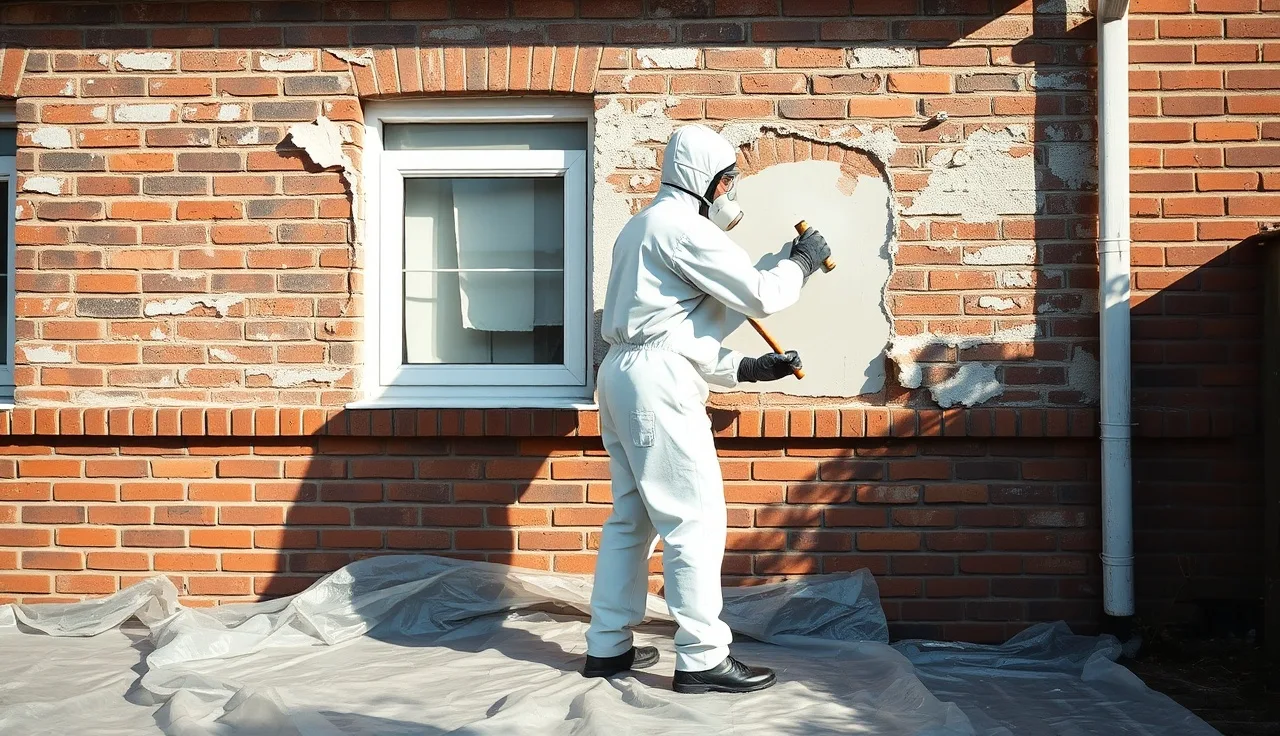
TL;DR
EPA's Renovation, Repair and Painting (RRP) rule (40 CFR Part 745) governs contractors who disturb lead paint in pre-1978 homes and child-occupied facilities. It protects the people who live there. OSHA's lead standard (29 CFR 1926.62 for construction) protects the people doing the work. Most renovation contractors have to comply with both at once, and the two rules overlap in almost no convenient ways.
What is the EPA RRP rule and who does it apply to?
The EPA's Renovation, Repair and Painting rule, almost always called the RRP rule, lives at 40 CFR Part 745 and took full effect in April 2010. It covers firms and individuals who get paid to do renovation work that disturbs lead-based paint in housing built before 1978 and in child-occupied facilities like daycares and schools built before that same year. [1]
The RRP rule is a consumer protection law at heart. It cares about the people inside the building, especially kids, and the lead dust and debris that renovation work throws around. Paint contractor, window replacement outfit, general remodeler in an older home: the RRP rule watches your practices from the point of view of the family living there, not the crew swinging the hammer.
The trigger is any paid activity that disturbs more than six square feet of painted surface per room on an interior, or more than twenty square feet on an exterior. Below those numbers you may still owe safe work practices, but the full certification and recordkeeping machine only turns on above them. Minor repair and maintenance under the thresholds is exempt. EPA reads that exemption narrowly, so don't lean on it hard. [1]
Firms have to be EPA-certified (or certified by an EPA-authorized state), and individual renovators have to finish an EPA-accredited eight-hour initial course plus a four-hour refresher every five years. The firm certification has to be posted or available at the job site. If you work in a state that runs its own EPA-authorized lead program, such as Wisconsin, Iowa, or North Carolina, you follow that state's version of the rule, not the federal one directly. [1]
What does the OSHA lead standard actually require?
OSHA has two lead standards, and which one applies depends entirely on your industry sector. Construction work, including renovation, demolition, and painting, falls under 29 CFR 1926.62. General industry work falls under 29 CFR 1910.1025. A renovation contractor is almost always under 1926.62. [2]
The OSHA lead standard is a worker health law. Its concern is what's happening inside the worker's body, not what's landing on the neighbor's carpet. The standard sets an action level of 30 micrograms of lead per cubic meter of air (30 μg/m³) and a permissible exposure limit (PEL) of 50 μg/m³ as an eight-hour time-weighted average. Once a worker's exposure meets or passes the action level, a cascade starts: exposure monitoring, medical surveillance, blood lead testing, training, and written compliance plans. Above the PEL, respirators become mandatory. [2]
The construction standard also names certain tasks as presumptively high-exposure. For those, you use specific engineering controls and respiratory protection right away, without waiting on monitoring results. Manual demolition of lead-painted structures, manual scraping, and heat gun use on lead-painted surfaces are on that list. [8]
OSHA does not care how old the building is. A brand-new building coated with lead-containing paint triggers the standard the second workers disturb those coatings above the exposure thresholds. The pre-1978 cutoff is EPA's line, not OSHA's.
How do the RRP rule and the OSHA lead standard differ from each other?
Here's the shortest honest version. EPA's RRP rule protects occupants. OSHA's lead standard protects workers. They share one hazard, lead paint disturbance, and almost nothing else.
The table below lines up the differences side by side.
| Factor | EPA RRP Rule (40 CFR 745) | OSHA Lead Standard (29 CFR 1926.62) |
|---|---|---|
| Who is protected | Residents, building occupants, children | Workers performing the work |
| Administering agency | EPA (or authorized state) | Federal OSHA or state plan |
| Building age trigger | Pre-1978 construction | No age trigger |
| Exposure trigger | Disturbing >6 sq ft interior or >20 sq ft exterior | Air concentration ≥30 μg/m³ (action level) |
| Training required | 8-hour initial RRP course, 4-hour refresher (every 5 yrs) | Lead-specific training per 1926.62(l); frequency tied to exposure results |
| Medical monitoring | Not required | Required at action level; blood lead testing |
| Written compliance plan | Not required | Required above PEL |
| Firm certification | Required before accepting work | Not applicable |
| Recordkeeping | Work order records, test results, 3 years | Exposure records 30 years, medical records 30+ years |
| Key concern | Containment, cleanup, waste disposal | Air monitoring, respiratory protection, biological monitoring |
[2][1]
The recordkeeping gap alone is worth a pause. Under OSHA, exposure monitoring records stay on file for 30 years and medical records for the length of employment plus 30 years. [3] Under the RRP rule, you keep renovation records for three years. Those two retention schedules need separate file systems, full stop.
Another hard split: firm certification. EPA requires the firm, as a legal entity, to be certified before it can accept RRP-covered work. OSHA has no equivalent firm-level certification for lead. OSHA's requirements attach to the employer's duty to protect workers, not to a license that lets the business open its doors.
Do renovation contractors have to follow both rules at the same time?
Yes, almost always. A paid renovation contractor working in a pre-1978 building has to satisfy EPA's RRP rule for the occupants and OSHA's construction lead standard for the crew. The two run in parallel. Neither one references or excuses the other. [1][2]
This is what trips up small contractors. They finish the eight-hour RRP course, get the firm certified, and figure they're done. They're done on the EPA side. OSHA is still watching what the workers breathe. If your crew is hand-scraping lead paint all day and you've never done air monitoring to know whether they're above the 30 μg/m³ action level, you may be violating 29 CFR 1926.62 no matter how clean your RRP paperwork looks.
It runs the other way too. A firm that's excellent at OSHA compliance, with proper air monitoring, respirators, and medical surveillance, can still catch an EPA enforcement action for skipping the pre-renovation information form, missing the warning signs, or failing to contain the work area. [1]
This dual burden is real and it costs real money. EPA-accredited RRP training runs roughly $150 to $300 per person for the initial eight-hour course, and OSHA lead training costs swing widely depending on how you deliver it. Neither agency accepts the other's training as a substitute for its own.
What are the penalties for violating each rule?
The numbers are big enough to notice. EPA can assess civil penalties up to $37,500 per day per violation under the Toxic Substances Control Act, the enforcement authority behind the RRP rule. That figure is adjusted for inflation, so the current cap may be higher; EPA updates its civil penalty tables annually. [4]
EPA has run multi-year enforcement sweeps against renovation contractors and has hit small firms with six-figure fines for repeated or willful failures, things like skipping the pre-renovation disclosure or not keeping post-renovation cleaning verification records.
OSHA's maximum penalty for a serious violation is currently $16,550 per violation, and willful or repeated violations run up to $165,514 per violation as of the 2024 adjustment cycle. [5] OSHA raises its penalty caps each January using a cost-of-living multiplier. A single lead inspection that finds missing air monitoring records, bad respiratory protection, and no medical surveillance program can stack several violations together in one visit.
For a small renovation firm, getting cited by both agencies in the same year is a survival question, not a paperwork headache. And neither EPA nor OSHA runs a formal penalty immunity program for RRP or lead violations you find through a self-audit, so a voluntary review won't buy you the amnesty it might in some other regulatory areas.
What training is required under each rule, and is there any overlap?
Training is one of the sharpest differences between the two frameworks, and the overlap is close to nothing.
Under the EPA RRP rule, the assigned renovator on each job must have finished an eight-hour initial renovator course from an EPA-accredited provider. The course covers lead hazard recognition, on-the-job containment and cleanup, post-renovation cleaning verification, and the work practice standards. After five years, a four-hour refresher is required. Workers who assist the assigned renovator don't need the full course but must get on-the-job instruction from the certified renovator. Firms working in states with authorized programs use that state's accredited trainers. [1]
OSHA's training requirement under 29 CFR 1926.62(l) is tied to the worker's exposure level. Every worker who may be occupationally exposed to lead at or above the action level has to get training on health effects, engineering controls, respirator use, hygiene facilities, and the medical surveillance program. That training comes before initial assignment and again every year. The standard sets no hour minimum; adequacy is judged by content, not clock time. [2]
So a certified renovator holding the EPA eight-hour card still needs separate OSHA-compliant lead training once workers meet or pass the 30 μg/m³ action level. The RRP course does not satisfy 1926.62(l). Different content, different audience, different concern. Your crew's training calendar needs a line item for each.
For crews handling other chemical hazards alongside lead, update your hazard communication program to include lead-containing products. The GHS requirements under 29 CFR 1910.1200 apply on their own and require SDS access and labeling for lead-containing paints and coatings.
How does medical surveillance work under OSHA's lead standard?
Medical surveillance is where OSHA's lead standard gets genuinely protective in a way the RRP rule never touches. Under 29 CFR 1926.62, if a worker's exposure meets or passes the action level of 30 μg/m³ for more than 30 days a year, the employer has to provide medical surveillance at no cost to the worker. [2]
The program includes an initial exam before the worker starts lead-exposed work, then periodic exams after that. Blood lead level (BLL) testing is the center of it. The standard also spells out medical removal protection: if a worker's blood lead hits 50 μg/dL, the employer has to pull that worker off lead-exposed work while keeping full pay and benefits for up to 18 months, until the blood lead drops. The return-to-work threshold is 40 μg/dL. [9]
This is not a small bureaucratic box. Medical removal with pay is a live financial obligation. For a small firm with two or three workers on a lead-heavy job for months, one worker hitting the removal threshold can reshape the whole project's economics.
The EPA RRP rule has no medical surveillance requirement at all. Its bet is that if you follow the work practice standards, containment, cleanup, and waste handling, occupant exposure stays controlled. That bet works for residents, who are exposed in short bursts. It does nothing for the chronic occupational exposure that sets off OSHA's medical monitoring.
If you're building out the written side of your OSHA compliance, SafetyFolio can generate a compliant written lead exposure control plan for construction in about the time it took to read this section, instead of starting from a blank page.
Does the RRP rule apply to DIY homeowners?
No. The RRP rule applies only to firms that get paid to perform renovation work. Homeowners doing their own work in their own home are exempt, even with children living there. [1]
This confuses a lot of people. EPA's rule is a commercial contractor rule, not a blanket lead safety rule for every paint disturbance. The logic is that EPA's authority under TSCA reaches commercial activity. A homeowner who wants to sand lead paint in their own house isn't regulated by the RRP rule, though EPA does publish guidance pushing safe practices.
OSHA doesn't reach homeowners either. OSHA covers employers and employees. So a homeowner scraping lead paint off their 1960s bungalow sits outside both frameworks. That's worth knowing when a client or property owner tries to tell you the rules don't apply because "it's their house." The second you're a paid contractor on that job, the RRP rule lands on you no matter who holds the deed.
Which states have their own RRP or lead programs, and does that change anything?
Several states have EPA authorization to run their own lead programs in place of the federal RRP rule. As of recent EPA reporting, states with authorized renovation programs include Wisconsin, Iowa, North Carolina, Mississippi, Kansas, Rhode Island, and Utah, along with others and some tribal nations. [6] In those states, the state program is the law that applies, not the federal RRP rule, and firms certify under the state program.
OSHA is its own map. 29 states and two territories run OSHA-approved State Plans covering private sector workers. [7] State Plan states have to keep lead standards at least as effective as federal OSHA's. In practice, California's Division of Occupational Safety and Health (Cal/OSHA) runs a lead standard (8 CCR 1532.1 for construction) that is stricter than federal OSHA in some respects, and California contractors need to know Cal/OSHA's numbers rather than assume the federal ones apply.
The practical takeaway: before you set up your compliance program, look up whether you're in an EPA-authorized state for lead renovation and whether you're in an OSHA State Plan state. The federal thresholds and training rules in this article are the floor. Your state may have raised it.
For a wider look at how State Plans work and where they split from federal OSHA, the osha overview on this site walks through the structure in plain terms.
What written records do you actually need to keep under each rule?
The recordkeeping rules diverge so far apart that the only honest advice is to treat them as two separate filing systems.
Under the EPA RRP rule, for each project you keep the signed pre-renovation education form (or documentation of your attempt to get the signature), a copy of the assigned renovator's training certificate, a copy of your firm's EPA certification, and records of the post-renovation cleaning verification or clearance testing. Hold those for three years. [1]
Under OSHA's 29 CFR 1926.62 and the access-to-records standard at 29 CFR 1910.1020, air monitoring exposure records for lead stay on file for 30 years, and medical surveillance records for the length of employment plus 30 years. [3] OSHA also requires that workers get access to their own exposure and medical records on request.
A small renovation firm doing EPA-regulated work should run a manila folder per job for RRP documentation that gets purged after three years, plus a separate, protected long-term file for OSHA exposure and medical records that outlasts most business cycles. If you use a third-party occupational health clinic for blood lead testing, set up a way to obtain and keep copies. The duty to maintain those records runs with the employer, not the clinic.
For OSHA's recordkeeping rules more broadly, the incident report article covers the 300-log requirements that also apply to lead-related illnesses.
What does an OSHA inspection for lead actually look like on a renovation job?
An OSHA construction inspection for lead can start from a worker complaint, a referral from another agency (including EPA), a programmed inspection, or a follow-up on an earlier citation. The compliance officer usually wants your air monitoring data first. If you haven't done any, that's a problem before the walkthrough even starts.
The officer checks whether the tasks in progress match the presumptively high-exposure list in 29 CFR 1926.62(d). If workers are hand scraping, torch burning, or running power tools on lead-painted surfaces without engineering controls or respirators matched to the exposure level, citations are likely no matter what your monitoring says. [8]
They look at hygiene facilities too. Is there a place to wash hands before eating? Is food kept away from the work area? Are workers eating lunch in the contaminated zone? The hygiene requirements under 1926.62(i) are a common trap for smaller firms because they seem minor right up until a compliance officer writes them up.
PPE documentation matters. If workers wear half-face respirators, those respirators have to be fit-tested and the workers have to be in a documented respiratory protection program under 29 CFR 1910.134. A respirator sitting in a truck that nobody has been fit-tested to use satisfies nothing. [10]
For a fuller picture of what OSHA inspections cover and how citations get classified, the osha training resources on this site can help you get ready.
Is there an RRP rule equivalent for commercial buildings?
This is genuinely unsettled, and the honest answer right now is no.
The federal RRP rule covers target housing (most pre-1978 residential buildings) and child-occupied facilities. It doesn't cover commercial buildings, schools serving only adults, or industrial buildings. [1] EPA has talked about extending RRP-type requirements to commercial buildings for years, and in 2011 it proposed a rule that would have done exactly that, but as of the most recent available information no final commercial building RRP rule is in effect at the federal level.
That gap matters because OSHA's lead standard does apply in commercial buildings any time workers disturb lead paint above the exposure thresholds. So on a commercial renovation in a pre-1978 office building, OSHA compliance is fully in play while EPA's RRP rule is not. No pre-renovation disclosure form for the building owner, no eight-hour RRP certification, no EPA-mandated post-renovation cleaning verification. But there's still a full OSHA obligation to monitor worker exposure, provide medical surveillance if thresholds are met, and use appropriate engineering controls and PPE.
Some states have stretched their own lead renovation rules to cover commercial property. California, for example, has had regulations covering certain commercial renovation work. Check with your state's environmental agency and occupational safety agency before you assume the commercial building exemption from EPA's RRP rule also means light lead compliance obligations.
Frequently asked questions
Does completing EPA RRP training satisfy OSHA's lead training requirement?
No. EPA's eight-hour RRP renovator training and OSHA's lead training under 29 CFR 1926.62(l) are separate requirements with separate content. RRP training focuses on containment, work practices, and protecting occupants. OSHA training covers worker health effects, air monitoring, respirator use, hygiene, and medical surveillance. You need both if your workers are exposed at or above OSHA's action level of 30 μg/m³.
At what blood lead level does OSHA require a worker to be removed from lead work?
Under 29 CFR 1926.62, a worker must be temporarily removed from lead-exposed work when their blood lead level reaches 50 micrograms per deciliter (μg/dL). The employer has to maintain the worker's full pay and benefits during removal for up to 18 months. The worker can return to lead work once blood lead drops to 40 μg/dL or below.
Does the RRP rule apply if the homeowner tells me they don't have kids?
The RRP rule applies to all pre-1978 target housing whether or not children currently live there. Two narrow exemptions exist: housing for elderly occupants or people with disabilities where no child under six resides, and zero-bedroom dwellings like studios. Even then, the child-occupied facility definition can override the exemption if childcare happens on premises. The homeowner's word about children doesn't erase your obligation.
How long do I have to keep RRP renovation records vs OSHA lead records?
EPA's RRP rule requires renovation records for three years from each project's completion date. OSHA's lead standard, combined with 29 CFR 1910.1020, requires air monitoring exposure records for 30 years and medical surveillance records for the length of employment plus 30 years. Treat these as two completely separate retention schedules with separate file systems.
What is the RRP rule's threshold for triggering requirements?
The RRP rule applies when paid renovation work disturbs more than six square feet of painted surface per room for interior work, or more than twenty square feet for exterior work. It also applies to window replacement regardless of square footage. Minor repair and maintenance below these thresholds may be exempt, but EPA reads that exemption narrowly, and the work has to be genuinely minor and incidental.
Does OSHA's lead standard apply to buildings built after 1978?
Yes. OSHA's construction lead standard at 29 CFR 1926.62 has no building-age trigger. It applies whenever workers are occupationally exposed to lead above the action level (30 μg/m³), regardless of when the building went up. A post-1978 building painted with lead-containing industrial coatings triggers OSHA's standard the moment workers disturb those coatings above the exposure threshold.
Can EPA and OSHA both fine me for the same lead paint job?
Yes. The two agencies have independent enforcement authority and each can issue separate penalties for its own rules arising from the same project. EPA can assess civil penalties up to $37,500 per day per violation under TSCA. OSHA's serious violation penalty currently reaches $16,550 and willful or repeated violations can hit $165,514. No joint enforcement agreement shields you from double exposure.
Who is the 'assigned renovator' under the RRP rule and what are they responsible for?
The assigned renovator is the certified individual, trained through an EPA-accredited course, whom the firm designates to direct the renovation at a specific project. They have to be on-site at the start to set up containment and work practices, perform or direct post-renovation cleaning verification, and maintain project records. They can leave the site after setup but must stay reachable for questions from the crew.
What is the OSHA lead standard's action level and why does it matter?
OSHA's action level for lead under 29 CFR 1926.62 is 30 micrograms per cubic meter of air (30 μg/m³) as an eight-hour time-weighted average. Reaching or exceeding it triggers mandatory exposure monitoring, medical surveillance, and worker training. The permissible exposure limit (PEL) is 50 μg/m³; above that, respirators become mandatory. The action level sits below the PEL to give employers and workers an early-warning buffer.
Do I need RRP certification to work on a child-occupied facility like a daycare?
Yes. EPA's RRP rule covers child-occupied facilities, defined as buildings where children under six are regularly present, including daycare centers, preschools, and kindergartens built before 1978. The same firm certification, individual renovator certification, work practice standards, and recordkeeping requirements apply as for residential target housing. Some states set stricter standards for child-occupied facilities than for housing.
What engineering controls does OSHA require for lead paint work in construction?
For high-exposure tasks like manual demolition of painted structures, manual scraping, and heat gun use, 29 CFR 1926.62 requires engineering controls such as wet methods to suppress dust, local exhaust ventilation, and HEPA vacuuming. The standard names specific tasks as presumptively high-exposure, meaning controls are required even without monitoring results. Workers also need handwashing facilities and designated clean eating areas.
What is the pre-renovation education requirement under the RRP rule?
Before starting RRP-covered work, firms must give the building owner and, in rental housing, adult occupants EPA's lead hazard information pamphlet (or an approved state version). They must get a signed acknowledgment or document good-faith attempts to get it. This disclosure has to happen before the renovation begins, not after. Failure to provide the pre-renovation information is one of the most commonly cited RRP violations.
Is lead paint testing required before renovation, or can I just assume lead is present?
Under the RRP rule you can test the painted surfaces with an EPA-recognized test kit or a certified inspector and, if no lead is found, document that and proceed without RRP restrictions. Or you can simply assume lead is present and apply all RRP work practices without testing. Most contractors in older housing assume presence rather than pay to test every job, since testing costs and false-negative risk create liability. OSHA's standard is separate and doesn't hinge on test results.
Sources
- EPA, Lead Renovation, Repair and Painting (RRP) Rule: RRP rule scope, firm and individual certification requirements, training hours, surface disturbance thresholds, pre-renovation education requirements, and three-year recordkeeping obligation under 40 CFR Part 745.
- OSHA, 29 CFR 1926.62 Lead in Construction standard: Construction lead standard action level (30 μg/m³), PEL (50 μg/m³), medical surveillance and removal requirements, training requirements, hygiene facilities, and high-exposure task list.
- OSHA, 29 CFR 1910.1020 Access to Employee Exposure and Medical Records: Exposure monitoring records must be retained for 30 years; medical records must be retained for the duration of employment plus 30 years.
- EPA, TSCA Civil Penalty Policy: EPA can assess civil penalties up to $37,500 per day per violation under TSCA authority for RRP rule violations.
- OSHA, Penalties page: OSHA maximum penalty for serious violations is $16,550 and for willful or repeated violations is $165,514 per violation as of the 2024 adjustment cycle.
- EPA, Authorized State, Tribal, and Territory Lead Programs: States including Wisconsin, Iowa, North Carolina, Mississippi, Kansas, Rhode Island, and Utah have EPA-authorized renovation programs in place of the federal RRP rule.
- OSHA, State Plans page: 29 states and two territories operate OSHA-approved State Plans covering private sector workers; state standards must be at least as effective as federal OSHA standards.
- OSHA, 29 CFR 1926.62(d) Exposure assessment and high-exposure tasks: Specific construction tasks including manual demolition, manual scraping, and heat gun use on lead-painted surfaces are presumptively high-exposure and require controls without waiting for monitoring results.
- OSHA, 29 CFR 1926.62(k) Medical surveillance and removal protection: Workers must be medically removed when blood lead reaches 50 μg/dL with pay and benefits maintained for up to 18 months; return threshold is 40 μg/dL.
- OSHA, 29 CFR 1910.134 Respiratory Protection standard: Workers using respirators for lead protection must be fit-tested and enrolled in a written respiratory protection program under 29 CFR 1910.134.
- EPA, RRP Rule Applicability: Child-Occupied Facilities guidance: Child-occupied facilities including daycare centers, preschools, and kindergartens in pre-1978 buildings are covered by the RRP rule with the same certification and work practice requirements as target housing.
- OSHA, 29 CFR 1910.1025 Lead in General Industry standard: General industry lead standard sets action level at 30 μg/m³ and PEL at 50 μg/m³, paralleling the construction standard with medical surveillance and training requirements.