Last updated 2026-07-09
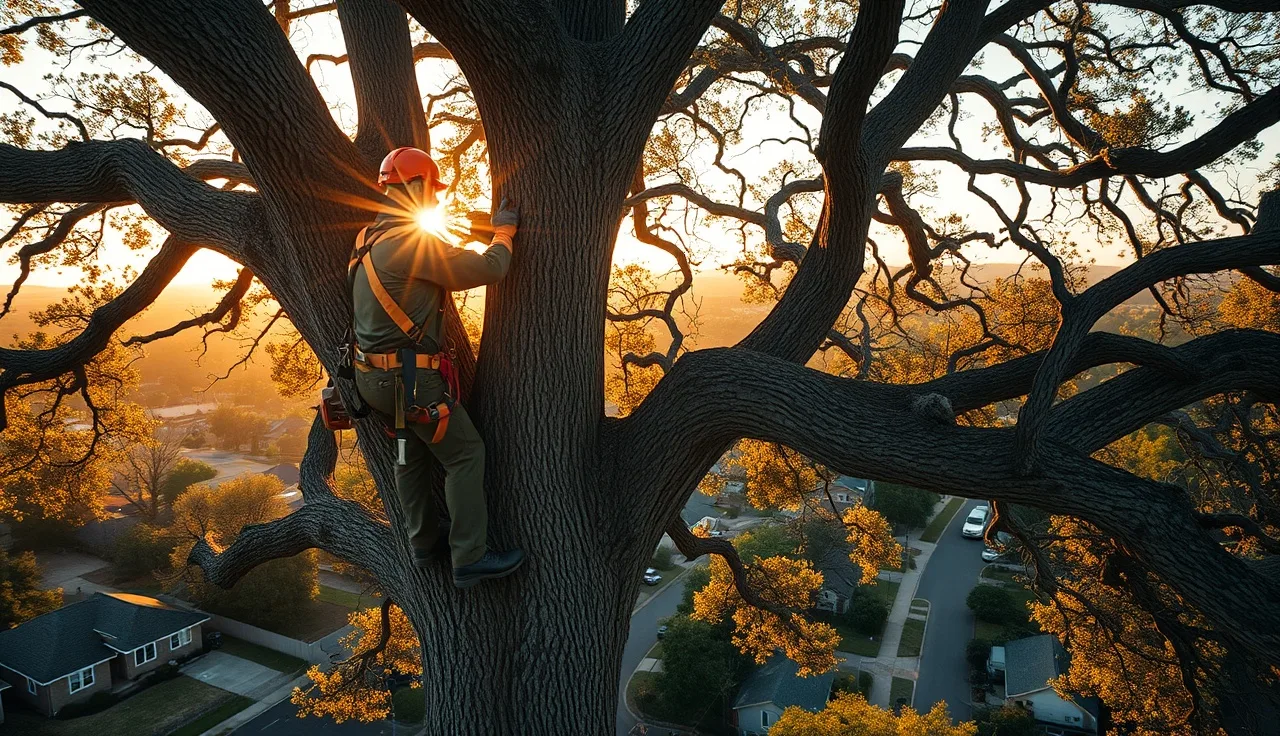
TL;DR
Small arborist companies fall under OSHA general industry standards and the General Duty Clause. The rules that bite most: 29 CFR 1910.269 for work near power lines, 1910.132 for PPE and written hazard assessments, and ANSI Z133 for climbing. Tree trimmers die on the job at roughly 110 per 100,000 workers, about 30 times the national average, which is why inspectors show up.
Which OSHA standards actually apply to tree trimming work?
There is no single "tree trimming" rule in the OSHA book. Your work falls across several overlapping standards, and which ones apply depends on what the crew is doing that day. That's the part that trips up small shops.
The two that matter most are 29 CFR 1910.269, which covers electric power work including trimming near utility lines, and the General Duty Clause of the OSH Act (Section 5(a)(1)), which applies to any recognized hazard not covered by a specific standard. The General Duty Clause requires employers to keep workers "free from recognized hazards that are causing or are likely to cause death or serious physical harm" [1]. For general landscape and tree care away from energized lines, that clause plus the industry consensus standard (ANSI Z133) is usually your benchmark.
For PPE, 29 CFR 1910.132 applies regardless of what you do. Chainsaws and hand tools bring in 29 CFR 1910.212 (machine guarding) and 1910.242 (hand and portable powered tools). Hearing protection lives at 29 CFR 1910.95. If you apply pesticides or work around chemical treatments, respiratory protection under 29 CFR 1910.134 comes in.
Most small arborist companies have never seen all of these laid out in one place. OSHA inspectors know that, and they know the injury numbers. The Bureau of Labor Statistics has reported a fatal injury rate for tree trimmers and pruners of roughly 110 per 100,000 full-time equivalent workers in recent years, more than 30 times the all-industry average [2]. That rate is why the trade gets attention.
What does 29 CFR 1910.269 require for tree work near power lines?
If your crews trim anything within 10 feet of an energized overhead line, 29 CFR 1910.269 applies. That's the rule utilities use, and OSHA extends it to line-clearance tree trimming through the standard's own definitions.
Section 1910.269(a)(2) defines line-clearance tree trimming as pruning, trimming, removing, or clearing trees to prevent interference with electric supply or communication lines. If any part of your work fits that, you comply with the full standard for those tasks. No wiggle room.
Here's what 1910.269 puts on you:
- Qualified worker designation. Anyone who works within the minimum approach distance (MAD) must be "qualified," meaning they understand the hazards of energized conductors and have the skills to work safely near them. That takes documented training. Experience alone doesn't make someone qualified.
- Minimum approach distances. These scale with voltage. For lines up to 50 kV, the MAD is 10 feet [3]. Either the utility de-energizes the line or the worker is qualified and using rated insulating equipment.
- Voltage-rated PPE. Rubber insulating gloves, sleeves, and other rated gear are required inside the MAD.
- Trained crew presence. The standard requires at least two employees when workers are exposed to certain high-hazard electrical conditions, and one worker per crew trained in first aid and CPR when a line-clearance crew works near energized parts.
1910.269 also requires a written safety program that addresses electrical hazards specifically. Do any utility line clearance without that program in writing and you're out of compliance before the first cut.
What fall protection is required for arborists climbing trees?
Fall protection is one of the most cited areas in tree care, and the rules split depending on how the worker is off the ground. A climber in a tree, a worker in a bucket truck, and someone on a construction platform each fall under different requirements.
For general industry walking-working surfaces, 29 CFR 1910.23 covers fall protection systems. A tree isn't a walking surface, so OSHA applies the General Duty Clause plus ANSI Z133 to actual climbing.
Aerial lifts are different. If your crews use bucket trucks or boom lifts, 29 CFR 1910.67 applies. It requires workers to wear a body belt or harness attached to the boom or basket, and it prohibits climbing out of the basket to reach the work [12].
For climbing, ANSI Z133 (Safety Requirements for Arboricultural Operations) is the recognized standard, and OSHA cites employers under the General Duty Clause for departing from it. OSHA cannot enforce Z133 directly, but it uses the consensus standard to show what feasible hazard abatement looks like [4]. So Z133 is effectively your climbing benchmark even though it isn't a CFR.
ANSI Z133 calls for:
- A second means of attachment (a work-positioning lanyard plus a separate climbing line) when ascending or descending
- Head protection meeting ANSI Z89.1 or equivalent
- Eye and face protection
- Cut-resistant leg protection when running a chainsaw aloft
Aerial lift operators also need OSHA training covering the specific lift type and the hazards of the site they're working.
The money side is real. OSHA's serious violation penalty runs up to $16,550 per violation as of 2024, and willful or repeat violations reach $165,514 [5]. A fall protection citation is not a rounding error for a small shop.
What PPE is required for chainsaw and tree cutting operations?
Chainsaw PPE pulls from several standards at once, and OSHA has been plain in enforcement about what it expects on a crew. The item that anchors all of it is the written hazard assessment.
29 CFR 1910.132(d) requires employers to assess each task for hazards and select PPE accordingly, and 1910.132 requires that assessment to be certified in writing with the job evaluated, the person certifying, and the date [6]. This document is often missing on small crews. It's the first thing an inspector asks for.
Here's the PPE a chainsaw assessment typically lands on:
| Body area | Required protection | Relevant standard |
|---|---|---|
| Head | Hard hat, ANSI Z89.1 Class E (arborist helmet preferred) | 1910.135 / ANSI Z133 |
| Eyes/face | Safety glasses plus face shield or a combination unit | 1910.133 |
| Hearing | Earplugs or earmuffs when noise exceeds 90 dBA 8-hr TWA | 1910.95 |
| Hands | Cut-resistant gloves | 1910.138 / ANSI Z133 |
| Legs | Cut-resistant chaps (Class A minimum) or protective trousers | ANSI Z133 |
| Feet | Cut- and puncture-resistant boots with ankle support | 1910.136 |
| Body (aloft) | Harness and lanyard with rated anchor | 1910.140 / ANSI Z133 |
Employers can't push required PPE cost onto workers. 29 CFR 1910.132(h) says the employer pays for PPE unless it's an item the employee owns and voluntarily uses, and even then there are limits [6].
Cut-resistant chaps are the item small crews skip most. They run about $60 to $150 a pair, and chainsaw leg wounds are among the worst injuries in the trade. If a worker gets cut and there were no chaps on the job, count on a serious violation.
Do small arborist companies need a written safety program?
Yes, and the requirement comes at you from several directions at once. There's no company-size exemption from the substantive standards that demand written pieces.
29 CFR 1910.269(a)(2) requires a written safety program for any employer doing line-clearance tree trimming. It has to address the electrical hazards, training, and the procedures workers actually follow.
If you have 10 or more employees at any time during the calendar year, you keep OSHA injury and illness records under 29 CFR 1904, which assumes you have a system for knowing about and logging incidents. Worth understanding how an incident report feeds that recordkeeping duty.
Several individual standards demand written programs as a condition of compliance:
- Hazard communication: 29 CFR 1910.1200(e) requires a written hazard communication program [7]
- Respiratory protection: 29 CFR 1910.134(c) requires a written program when respirators are required
- Hearing conservation: 29 CFR 1910.95(c) requires a written program when workers are exposed to 85 dBA or more over 8 hours [11]
The practical reason matters as much as the legal one. A written program is your best defense in an inspection. If an inspector shows up after an incident and you hand over a documented program with training records, hazard assessments, and inspection logs, you're showing good faith. That can be the gap between a serious violation and a minor finding.
Building this from a blank page eats time small operators don't have. Tools like SafetyFolio's safety program generator walk you through the tasks your crew performs and produce a compliant written program in about 15 minutes, which beats staring at an empty document or paying a consultant $2,000 to do it for you.
If you apply any chemical treatments, read up on how hazard communication fits your overall program.
What training do arborist employees legally need under OSHA?
Training requirements for tree crews are heavy, and documentation is where small companies fall down. "We showed him at hire" is not training in OSHA's eyes.
This is what the standards require, not what's merely good practice:
29 CFR 1910.269(a)(2) requires line-clearance tree trimmers to be trained enough to understand electrical hazards and do their jobs safely. The standard splits workers into "qualified" (can work within the MAD) and "unqualified" (must stay outside the limited approach boundary). Getting someone to qualified status takes documented training on hazard recognition, approach distances, PPE selection and use, and emergency response.
29 CFR 1910.132(f) requires training for every employee who uses PPE: when it's needed, which type, how to put it on and take it off, its limits, and how to care for it. Document it, and re-train when a worker doesn't seem to get it.
29 CFR 1910.95(k) requires training for everyone in the hearing conservation program, covering noise effects, the use of hearing protectors, and the testing program.
Aerial lift operators need training on the specific lift type before use under 29 CFR 1910.67(c)(2). A verbal sign-off doesn't cut it. You need a record [12].
First aid and CPR training is required for at least one worker per crew under 1910.269 near energized parts, and ANSI Z133 treats it as expected for all tree work where emergency services aren't close.
Keep a simple training log: employee name, date, topic, trainer signature. That's the floor, and it's what an inspector asks for. An OSHA 30 course for supervisors isn't required by any arborist standard, but it gives supervisors a solid grounding in hazard recognition that carries straight into tree work.
How does OSHA handle tree trimming near overhead power lines specifically?
Contact with overhead lines is the deadliest scenario in the trade, and one of the leading causes of tree worker deaths. OSHA treats it that way, and so should you.
29 CFR 1910.269 sets minimum approach distances by voltage. For lines up to 50 kV, the MAD is 10 feet. Lines between 50 kV and 345 kV require greater distances that scale with voltage, and Table R-6 in the standard spells them out [3].
Before work starts near any overhead line, determine the voltage. That means calling the utility. Can't determine it and can't get the line de-energized? Then everyone stays at least 10 feet away, no matter what tools or PPE they have.
The qualified worker requirement has teeth. A qualified line-clearance tree trimmer has to demonstrate the skill to tell live parts from dead ones and to determine the nominal voltage of exposed live parts. It's not a checkbox. OSHA will ask how that determination got made.
Unqualified workers have one rule: stay outside the limited approach boundary, at least 10 feet for lines up to 50 kV, at all times. No exceptions for "just a quick cut." That exact mindset has killed people.
If the utility de-energizes and visibly grounds the line, the MAD requirements drop away. Getting a utility hold is the safest path, and it's worth the scheduling headache every time.
What are the most common OSHA citations for tree trimming companies?
OSHA doesn't publish a standalone citation-frequency report for arborists, but inspection data and enforcement patterns point clearly to where small companies get hit. Most of it is preventable with paperwork and habit.
The recurring citations:
1. Fall protection failures. No personal fall arrest system, an unrated anchor, or no second tie-in aloft. These come under 1910.269, 1910.23, and the General Duty Clause.
2. PPE program gaps. Missing or incomplete written hazard assessments under 1910.132(d). It has to be in writing. Verbal doesn't count.
3. Chainsaw PPE not provided or not worn. Cut-resistant leg protection and face shields lead the list.
4. Electrical hazard violations. Working inside the MAD without qualified status, or without calling the utility to verify line voltage.
5. Hazard communication gaps. No written program, missing safety data sheets, or workers untrained on the SDSs for products they handle.
6. No first-aid-trained worker on site when emergency services aren't within reasonable reach.
During a programmed inspection (one OSHA initiates rather than one triggered by an incident), the inspector asks for your written safety program, training records, PPE hazard assessments, and equipment inspection logs. Having those ready turns what could be a stack of serious citations into observations.
Repeat violations sting. If OSHA finds the same deficiency within five years of a previous citation, the penalty can climb to as much as 10 times the base amount [5]. Fix the paperwork but not the practice after a fall protection citation, and a repeat finding hits hard.
Does OSHA have specific rules for chipper and wood chipper operations?
Yes. Chippers get overlooked because they sit on the ground and feel tamer than climbing work. The injuries say otherwise. A worker pulled into a chipper does not survive it.
Wood chippers fall under 29 CFR 1910.212 (machine guarding) and the General Duty Clause, with ANSI Z133 again supplying the industry-recognized specifics.
The machine guarding standard requires the point of operation, nip points, rotating parts, and flying chips to be guarded [13]. For a chipper, that means:
- The infeed hopper needs an anti-kickback device or equivalent protection so material isn't thrown back at the operator
- Guards stay in place whenever the machine runs
- No one reaches into the infeed chute while the chipper is operating
ANSI Z133 covers chipping in detail: a minimum distance workers keep from the infeed while others feed material, and a rule that anyone feeding the chipper stands to the side, not directly behind the material.
Most chipper deaths involve a worker pulled in by long brush, either holding on too long or getting caught in a snag. Training on proper feeding technique and an emergency stop within reach are required under ANSI Z133 and expected by OSHA under the General Duty Clause.
Document your chipper inspections. No OSHA standard mandates a written daily chipper checklist by name, but the general rule that defective equipment gets pulled from service applies to all machinery, and a dated log is what proves you're doing it.
What records does a small arborist company need to keep for OSHA compliance?
Recordkeeping splits into two buckets: injury/illness logs and program documentation. Both get pulled during an inspection.
For injury and illness records, 29 CFR 1904 applies if you had 10 or more employees at any point in the year. You keep an OSHA 300 log (work-related injuries and illnesses), an OSHA 301 form (an investigation report for each recordable case), and an OSHA 300A annual summary, posted February 1 through April 30 each year [8].
Companies under 10 employees are partially exempt from routine 1904 recordkeeping but not from reporting. A work-related fatality goes to OSHA within 8 hours. An in-patient hospitalization, amputation, or loss of an eye goes to OSHA within 24 hours [8]. No size exemption on those.
For program documentation, hold on to:
- Written hazard assessments (PPE certifications) for each job type
- Training records with names, dates, topics, and trainer signatures
- Equipment inspection logs
- Safety data sheets for all chemicals
- Competent person designations and proof of their qualifications
How long? OSHA 300 logs, 301 forms, and 300A summaries must be kept for 5 years. Training records have no single universal retention rule, but employment duration plus 3 years is defensible. Written program documents stay current and in the file as long as the program is in use.
None of this needs expensive software. A binder per crew, tabbed by category, works fine. What matters is that you can find and hand over the documents during an inspection, which usually comes with no advance notice.
What happens if OSHA inspects a small tree service company?
Inspections come two ways: programmed inspections that target high-hazard industries, and unprogrammed ones triggered by a complaint, referral, or a fatality or severe injury report. Tree care sits on the high-hazard list, so you can be selected without any incident.
With a fatal injury rate more than 30 times the all-industry average [2], OSHA has every reason to prioritize the sector.
When an inspector shows up at a job site, expect them to: 1. Present credentials and explain why they're there 2. Hold an opening conference and walk the site with a management representative 3. Watch work in progress: PPE use, climbing technique, tool condition 4. Review records, including the OSHA 300 log, training documentation, and written programs 5. Interview workers (employees have the right to speak privately with the inspector)
You can require a warrant before allowing entry to a private workspace, but that usually escalates things. For most small employers, the better move is to cooperate while asserting your right to accompany the inspector and take your own notes.
After the inspection, OSHA issues citations within 6 months. You get 15 working days to contest. OSHA's informal settlement process often cuts penalties for employers who show good faith, small size, and no prior history. A shop with fewer than 10 workers and a clean history can sometimes get a serious penalty reduced well below the maximum through informal settlement.
What the inspector wants to see is that you take safety seriously. A written program, current training records, and PPE that's actually on the crew are the three things that change the tone of an inspection fastest.
How do state OSHA plans differ from federal OSHA for arborists?
Twenty-two states run their own OSHA-approved state plans covering both private and public workers, and several more cover public employees only. State plans matter for arborists because they can be, and often are, stricter than federal OSHA [9].
Federal OSHA standards are the floor. A state plan has to be "at least as effective" as federal OSHA, and it can go further. California's Cal/OSHA, for instance, has a heat illness prevention standard for outdoor workers (Title 8 CCR 3395) that goes well past anything federal and applies directly to arborist crews working in summer heat [10].
Operate in a state-plan state and you're regulated by the state plan, not federal OSHA. The standards usually track federal ones closely by design, but specific requirements, inspection priorities, and penalty schedules can differ.
States with plans covering private employers include California, Washington, Oregon, Michigan, North Carolina, and Virginia, among others. If you're not sure whether your state has one, OSHA's State Plans page lists them all [9].
For a company working across state lines, the practical rule is simple: meet the stricter of the two sets of requirements at each job site. Bring a Washington crew to a site in Idaho (a federal OSHA state) and federal standards govern that site.
Heat illness is the most practically significant difference for outdoor trades. California's standard requires shade, water, and cool-down periods in ways that shape how you run summer tree work. Ignoring it because you're used to federal standards elsewhere is a real compliance risk.
For how OSHA is structured federally, read that before you get into state variations.
Frequently asked questions
Is a small arborist company with only 3 employees subject to OSHA?
Yes. OSHA jurisdiction applies to all private-sector employers regardless of size, with the only real exception being self-employed people with no employees. A 3-person tree service complies with all applicable safety standards, including PPE, fall protection, and electrical hazard rules. The partial exemption for companies under 10 employees applies only to routine recordkeeping under 29 CFR 1904, not to the substantive safety standards.
What is the OSHA standard specifically for tree trimming?
There is no single dedicated OSHA standard for tree trimming. The main standards are 29 CFR 1910.269 for work near electric lines, 29 CFR 1910.132 for PPE, 29 CFR 1910.212 for machine guarding (chippers), and the General Duty Clause for hazards no specific standard covers. OSHA also treats ANSI Z133, Safety Requirements for Arboricultural Operations, as the recognized industry standard for climbing and related hazards.
Do arborists need OSHA 10 or OSHA 30 certification?
No OSHA standard requires OSHA 10 or OSHA 30 cards for arborists. An OSHA 30-hour course for supervisors gives broad hazard recognition training that complements the task-specific training the standards do require. Some commercial contracts and municipalities require OSHA 10 as a condition of work, so check your contracts. The mandatory training comes from standards like 1910.269, 1910.132, and 1910.95, not from card programs.
Are chainsaw chaps legally required by OSHA for tree workers?
OSHA has no standard that literally says "chainsaw chaps required." But 29 CFR 1910.132 requires a written hazard assessment for each task, and chainsaw leg contact is a recognized hazard, so any honest assessment lands on cut-resistant leg protection. OSHA uses ANSI Z133, which explicitly requires chainsaw-protective leg covering, as the benchmark for General Duty Clause enforcement. In practice, no chaps means a citation risk.
How close can an arborist worker get to a power line without being qualified?
Under 29 CFR 1910.269, an unqualified worker stays outside the limited approach boundary, which is at least 10 feet from lines up to 50 kV. If the voltage is unknown and can't be determined, the 10-foot minimum applies. Qualified workers can work within the MAD using rated PPE and proper procedures. Qualified status requires documented training. It is more than experience or seniority.
What first aid requirements apply to arborist crews?
29 CFR 1910.269 requires at least one employee per crew trained in first aid and CPR when electrical hazards are present and emergency services aren't close. ANSI Z133 extends that expectation to all tree work, recommending at least one first-aid-trained worker per ground crew and one per climbing crew. OSHA has cited employers under the General Duty Clause for having no first-aid-trained worker at remote job sites.
What do I need to document after a chainsaw injury at a tree service?
If the worker needed medical treatment beyond first aid, the injury is recordable under 29 CFR 1904 and goes on the OSHA 300 log within 7 calendar days. If the worker was hospitalized in-patient, report it to OSHA within 24 hours by phone or online. Separately, complete an internal investigation documenting what happened, where, why, and the corrective action. Keep these records for 5 years. See how an incident report works in practice.
Can OSHA cite an arborist for not following ANSI Z133 even though it's not a federal regulation?
Yes. OSHA can't cite a company for violating ANSI Z133 directly, but it can and does cite under the General Duty Clause when an employer ignores a recognized industry standard. OSHA has issued interpretation letters confirming that consensus standards like ANSI Z133 define feasible abatement for known hazards. If a worker is injured and your practices departed from Z133, that departure becomes evidence in a General Duty Clause citation.
Do I need a written safety program if I only do residential tree trimming?
If any residential work is near utility lines, yes, 29 CFR 1910.269 requires a written safety program. Even for purely non-electrical residential work, several standards require written pieces: the PPE hazard assessment (1910.132), a hazard communication program if you use any chemicals (1910.1200), and a hearing conservation program if crew noise exposure hits 85 dBA (1910.95). None of these has a size exemption. A written program also protects you if OSHA investigates an incident.
What are the penalties for OSHA violations in the tree trimming industry?
As of 2024, OSHA serious violations carry a maximum penalty of $16,550 per violation. Willful or repeat violations reach $165,514 per violation. OSHA adjusts these upward for inflation each year. Small employers with no prior violations can receive sizable penalty reductions, but those reductions disappear on repeat findings. A single serious fall protection citation can still run several thousand dollars after reductions for a small shop.
How often do OSHA inspections happen at tree service companies?
There's no set frequency. OSHA runs programmed inspections in high-hazard industries, and tree care qualifies based on its fatal injury rate. Unprogrammed inspections triggered by worker complaints, fatalities, or hospitalizations are more common than programmed ones. OSHA doesn't announce inspections in advance. Companies with active safety programs and good records tend to resolve inspections faster and cheaper than those scrambling after a triggering event.
Does the employer have to pay for chainsaw chaps and climbing harnesses?
Yes. Under 29 CFR 1910.132(h), the employer pays for PPE required by an OSHA standard or by the employer's own hazard assessment. The narrow exceptions are non-specialty safety-toe footwear and prescription eyewear the employer lets the worker take off-site, plus gear the employee owns and voluntarily uses. Chainsaw chaps and climbing harnesses required by your hazard assessment are employer-provided and employer-funded.
Are there special OSHA heat illness rules for tree crews working in summer?
Federal OSHA has no finalized specific heat illness standard yet and addresses heat through the General Duty Clause and guidance. California's Cal/OSHA (Title 8 CCR 3395) has a mandatory heat illness prevention standard covering water, shade, rest, and emergency procedures that applies to outdoor workers including tree crews. Other state-plan states may have similar rules. Federal OSHA has a proposed heat rule working through rulemaking as of 2024.
What vehicle and driving requirements apply to arborist company trucks and chippers?
OSHA doesn't regulate on-road vehicles directly; that's the Department of Transportation and state motor vehicle law. If a chipper trailer or aerial lift moves on a public road, DOT rules on securement and CDL requirements may apply depending on weight. On private property or job sites, OSHA's 1910.178 (powered industrial trucks) can apply to forklifts used in loading. Stump grinders and aerial lifts used on site fall under the applicable OSHA machinery and aerial lift standards.
Sources
- OSHA, General Duty Clause OSH Act Section 5(a)(1): Employers must keep workers free from recognized hazards likely to cause death or serious injury even when no specific standard addresses the hazard
- Bureau of Labor Statistics, Census of Fatal Occupational Injuries, Tree Trimmers and Pruners: Fatal injury rate for tree trimmers and pruners is approximately 110 per 100,000 FTE workers, roughly 30 times the all-industry average
- OSHA, 29 CFR 1910.269 Electric Power Generation Transmission and Distribution, Table R-6: Minimum approach distance for lines up to 50 kV is 10 feet under 29 CFR 1910.269
- OSHA, General Duty Clause enforcement and ANSI Z133 arboricultural operations standard: OSHA uses ANSI Z133 Safety Requirements for Arboricultural Operations as the recognized industry standard benchmark for General Duty Clause enforcement in tree care
- OSHA, Penalties page, OSHA.gov: Serious violation maximum penalty is $16,550 per violation; willful or repeat violations can reach $165,514 as of 2024
- OSHA, 29 CFR 1910.132 General Requirements for Personal Protective Equipment: Employers must conduct and certify in writing a PPE hazard assessment; employer must pay for required PPE under 1910.132(h)
- OSHA, 29 CFR 1910.1200 Hazard Communication Standard: Employers must develop and implement a written hazard communication program under 29 CFR 1910.1200(e)
- OSHA, 29 CFR 1904 Recording and Reporting Occupational Injuries and Illnesses: Fatalities must be reported within 8 hours; in-patient hospitalizations, amputations, and eye losses within 24 hours; OSHA 300 logs retained 5 years
- OSHA, State Plans page, OSHA.gov: 22 states operate OSHA-approved state plans covering private and public workers; these plans must be at least as effective as federal OSHA and may be stricter
- OSHA, 29 CFR 1910.95 Occupational Noise Exposure: A written hearing conservation program is required when workers are exposed to 85 dBA or more averaged over an 8-hour time-weighted average
- OSHA, 29 CFR 1910.67 Vehicle-Mounted Elevating and Rotating Work Platforms: Workers in aerial lifts must wear a body belt or harness attached to the boom or basket; climbing out of the basket is prohibited
- OSHA, 29 CFR 1910.212 General Requirements for All Machines: Point of operation, nip points, rotating parts, and flying chips must be guarded on all machinery including wood chippers