Last updated 2026-07-09
TL;DR
Under 29 CFR 1910.147(c)(7)(ii), affected employees must be trained to recognize when lockout or tagout is in use and to understand they must never restart or re-energize isolated equipment. This training is narrower than authorized employee training but still mandatory. It has to be documented, and workers must be retrained whenever procedures change or deficiencies appear.
Who exactly is an "affected employee" under 1910.147?
An affected employee, defined at 29 CFR 1910.147(b), is someone whose job requires them to operate or use a machine on which servicing or maintenance is performed under lockout or tagout, or whose job requires them to work in an area where that servicing or maintenance happens. [1]
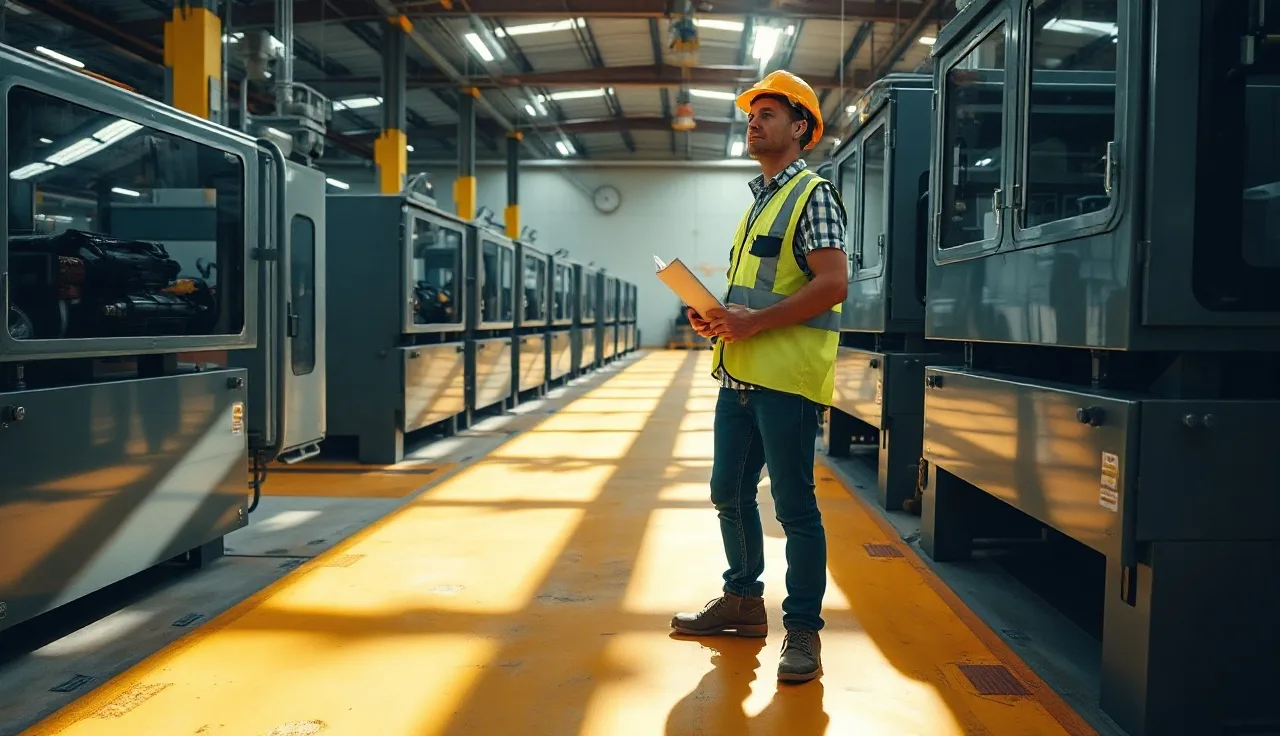
That definition matters a lot in practice. A press operator who steps away while a maintenance tech locks out the press is an affected employee. A shipping clerk who walks through the same area to reach the dock is also an affected employee, at least while the work is active. Neither person touches the energy source. Neither applies a lock. But both need to know what's happening and why they must leave the equipment alone.
The common mistake small shops make is training only the maintenance crew and skipping the production floor. OSHA's enforcement record here is consistent: inspectors look for evidence that everyone who works near locked-out equipment received the right level of training, even if that training is shorter and less involved than what an authorized employee gets.
Affected employees are not authorized employees, and the training requirements are intentionally different. Authorized employees are the ones who actually apply and remove lockout/tagout devices. If your affected employee ever touches a lock or a tag, they have crossed into authorized employee territory and need the full authorized training instead.
What does 29 CFR 1910.147 actually require for affected employee training?
The core requirement is one sentence. Under 29 CFR 1910.147(c)(7)(ii), "Each affected employee shall be instructed in the purpose and use of the energy control procedure." [1] It sounds minimal, and compared to authorized employee training it is, but OSHA letters of interpretation have fleshed out what "purpose and use" really covers.
At minimum, affected employee training must cover these three things:
1. The purpose of lockout/tagout, meaning why hazardous energy must be controlled before servicing equipment. 2. Recognition that a lockout or tagout device is in place on a machine, so the affected employee knows when the procedure is active. 3. The prohibition on restarting, re-energizing, or removing a lockout or tagout device. That last point is the one that prevents fatalities.
The standard at 29 CFR 1910.147(c)(7)(iii) adds that other employees, meaning anyone whose work operations are or may be in an area where energy control procedures may be used, shall be instructed about the procedure and about the prohibition on attempting to restart or re-energize machines that are locked out or tagged out. [1] Some employers train this broader group at the same time as affected employees, which is fine and often more efficient.
The training does not require hands-on equipment demonstration the way authorized employee training does. A well-run classroom session or video with a follow-up discussion can satisfy the requirement, provided you can document that the employee understood the content.
How does affected employee training differ from authorized employee training?
The gap between these two training tracks is wide, and mixing them up is one of the more common citation patterns OSHA sees.
| Training element | Authorized employee | Affected employee |
|---|---|---|
| Hazardous energy types and magnitudes | Required | Not required |
| Methods/means of energy isolation | Required | Not required |
| How to apply the energy control procedure | Required | Not required |
| Recognition of when LOTO is in use | Required | Required |
| Prohibition on restarting locked-out equipment | Required | Required |
| Purpose of the energy control program | Required | Required |
| Hands-on practice with specific equipment | Strongly recommended by OSHA | Not required |
The table reflects requirements at 29 CFR 1910.147(c)(7)(i) for authorized employees and (c)(7)(ii) for affected employees. [1]
Where things get complicated is the employee who does both jobs. A maintenance technician who also occasionally operates a machine is an authorized employee and must receive the full authorized training, even for the equipment they usually only operate. You can't split the training based on which hat the person is wearing that day.
OSHA's 1994 compliance directive CPL 02-00-147 (formerly CPL 2-0.147) confirms this approach and notes that when a single employee performs both roles, the authorized employee training applies. [2] Keeping role definitions clean in your written program reduces ambiguity and makes training documentation straightforward.
Does OSHA specify how long affected employee training needs to be?
No. The standard specifies content, not duration. There is no minimum hour requirement for affected employee training under 1910.147.
In practice, a focused session covering the three core content areas can run 30 to 60 minutes for most general industry settings. Some employers handle it in 20 minutes with a short video followed by a quiz. What matters is that the employee can demonstrate understanding of the purpose and use of the energy control procedure, and that you have documentation of that.
For comparison, authorized employee training in a complex facility with multiple energy sources typically takes 4 to 8 hours, sometimes spread across multiple sessions with hands-on time at specific equipment. The difference in depth matches the difference in risk exposure.
Don't confuse brevity with insignificance here. OSHA's injury data tells a clear story about why even the minimal affected employee training matters. The Bureau of Labor Statistics tracks fatal and nonfatal occupational injuries, and lockout/tagout failures contribute to a meaningful share of machine-related fatalities each year, many involving workers who didn't know the equipment was being serviced or thought they could restart it. [3]
Keep records of what was covered, who taught it, how long it ran, and how you verified understanding. A sign-in sheet alone is not enough evidence of comprehension.
When does affected employee training need to happen and be repeated?
The initial training requirement is clear: before an employee begins work in an area where lockout or tagout is used. You can't train someone after they've already been working around locked-out machines.
Retraining is where many employers fall short. 29 CFR 1910.147(c)(7)(iii) requires retraining when there is reason to believe an employee does not have the required knowledge and skills, or when there are deviations from or inadequacies in the employee's knowledge or use of the energy control procedures. [1] The standard also requires retraining when there are changes in job assignments, machines, equipment, or processes that present a new hazard.
Practically, this means:
- Any time you add a new piece of equipment or modify an existing procedure, affected employees in that area need updated training.
- If your annual periodic inspection (required for authorized employees under 1910.147(c)(6)) turns up production workers who don't recognize lockout devices or think they can restart equipment during a repair, that's a documented deficiency triggering retraining.
- New hires and transfers into the area need training before they start, not at the next scheduled training cycle.
There is no mandatory annual retraining interval written into 1910.147 the way some other standards include one. But many employers run annual refreshers anyway, partly because it's good practice and partly because it builds a defensible documentation trail. If OSHA investigates an incident and your last training record is three years old, you'll have a harder time arguing that employees had the required knowledge.
If you're building out your hazard communication training alongside your lockout program, note that both standards require documented retraining when conditions change. You can often combine the scheduling without combining the content.
What records do you need to keep for affected employee training?
The standard at 29 CFR 1910.147(c)(7)(iv) says the employer shall certify that employee training has been accomplished and is being kept up to date, and "The certification shall contain each employee's name and dates of training." [1]
That's the minimum. A name and a date. But if OSHA shows up after an incident, a bare-minimum record won't tell a strong compliance story. Build your records to answer the questions an inspector will actually ask.
A solid affected employee training record includes:
- Employee's full name and job title
- Date of training
- Training format (classroom, video, hands-on demonstration)
- Topics covered, specifically the three required content areas
- Name and qualifications of the trainer
- Evidence of comprehension: a quiz score, a signed acknowledgment that the employee understands the prohibition on restarting locked-out equipment, or a trainer's observation notes
OSHA does not specify a retention period for 1910.147 training records in the standard itself. A reasonable approach, and what most compliance consultants recommend, is to keep records for the duration of employment plus three years, which matches OSHA's general citation look-back window.
If you're building or updating your written lockout/tagout program and want a faster path to compliant documentation, SafetyFolio's safety program generator can produce a 1910.147-aligned program including training record templates in about 15 minutes. That's genuinely faster than building the forms from scratch.
Store records where supervisors can reach them to verify training status before assigning someone to work near locked-out equipment. A binder works. A shared drive works better because you can update it and search it.
Who can deliver affected employee training, and does the trainer need certification?
The standard does not require trainers to hold any specific certification to deliver 1910.147 affected employee training. What it requires is that the training effectively conveys the required content and that you can certify it happened.
In practice, the trainer should know your facility's specific energy control procedures, more than the general standard, so affected employees understand the actual devices and lockout stations they'll encounter in your building. A generic video from a safety publisher satisfies the content requirement but shouldn't stand alone if your facility has equipment or energy types the video never covers.
Many small employers use a senior maintenance technician or safety officer to deliver the training. Some hire a third-party safety consultant for the initial program rollout and then handle refreshers internally. Either approach works as long as the trainer understands the standard and your specific procedures.
For context on broader OSHA trainer credential requirements, see OSHA Outreach Trainer Requirements, which covers the authorized outreach program (OSHA 10 and 30 cards) rather than standard-specific compliance training like 1910.147. Those are different systems.
One thing worth knowing: OSHA letters of interpretation have made clear that training conducted by a competent person who understands the employer's energy control program satisfies the standard. There's no requirement to hire an outside trainer.
What are the OSHA penalties if affected employee training is missing?
OSHA cites 1910.147 violations under several penalty tiers depending on severity and whether the employer knew about the problem.
As of January 2025, OSHA's maximum civil penalty for a serious violation is $16,550 per violation. A willful or repeated violation can reach $165,514 per violation. [4] These figures adjust annually for inflation under the Federal Civil Penalties Inflation Adjustment Act. [8]
Lockout/tagout consistently ranks among OSHA's top 10 most-cited standards in general industry, usually landing between fourth and sixth on the annual list. In federal fiscal year 2023, OSHA issued 2,554 citations under 1910.147. [5] Missing or incomplete training documentation is one of the most frequent sub-violations inside those citations.
The training requirement often gets cited alongside the written program requirement (1910.147(c)(4)) and the periodic inspection requirement (1910.147(c)(6)). If training records are missing, inspectors will check whether the written program is complete and whether periodic inspections happened. One gap tends to open a broader investigation.
Beyond the financial penalty, an employer who cannot show affected employee training records after a serious injury faces potential OSHA referral to the Department of Justice for willful violations, if the pattern shows deliberate non-compliance. That's a rare outcome. But it's a real one.
How should you handle affected employee training for workers who don't speak English?
The standard requires that training be conducted in a manner the employee can understand. This comes from the general duty clause and from OSHA's compliance directive, not from a specific sentence in 1910.147, but the enforcement position is well established. [2]
For workplaces with employees whose primary language is not English, the obligation is plain. The training content, including the explanation of lockout devices, the prohibition on restarting equipment, and the recognition signals, has to be delivered in a language the employee understands. A translated handout paired with an English-language video doesn't satisfy this if the employee can't follow the video.
Options that work in practice:
- A bilingual supervisor or coworker who delivers or co-delivers the training (document their name and role)
- A professionally translated training module or video
- A trained interpreter who can accurately convey technical content, more than conversational translation
Document what language the training was delivered in. If OSHA investigates after an incident involving a non-English-speaking worker, the first question will be whether training was actually understandable to that person.
Small employers sometimes assume that having a bilingual coworker informally explain things is good enough. It isn't. The certification record has to show that proper training occurred, and a casual hallway conversation doesn't meet the standard.
How does affected employee training fit into your written lockout/tagout program?
Your written energy control program, required at 29 CFR 1910.147(c)(4)(ii), has to address training as a component. [1] The written program should name which job titles are classified as affected employees (versus authorized employees or other employees), describe the training content for each group, specify when initial and retraining occur, and identify who is responsible for delivering and documenting training.
If your written program doesn't mention affected employees by name, or lumps all employees into one training track, you have a program gap an inspector will flag before they even ask for training records.
A well-structured written program makes the annual periodic inspection easier too. The inspection required under 1910.147(c)(6) covers authorized employees and their equipment-specific procedures, but reviewing affected employee training records during that same cycle is good practice because it catches gaps before an inspection does.
If you're also running hazardous communication training programs or building out other safety documentation, keeping all written programs in one accessible location makes it easier to verify that job roles are classified consistently across standards. A worker classified as an affected employee under 1910.147 might also have specific training obligations under 29 CFR 1910.1200 for the chemical hazards present in the same work area.
SafetyFolio's safety program generator is built for this kind of multi-standard coordination, letting small businesses build a complete LOTO program (with affected and authorized employee sections) without hiring a consultant.
The bottom line on structure: keep your written program, your training records, and your equipment-specific procedures in a consistent format that any supervisor, new hire, or OSHA inspector can follow without explanation.
What are the most common mistakes employers make with 1910.147 affected employee training?
Based on OSHA citation records and the patterns documented in OSHA's compliance directive CPL 02-00-147, the most common failures cluster around a few predictable problems. [2]
First is skipping affected employee training entirely because the employer only thought about the maintenance crew. This is the single most common gap. Production operators, quality inspectors, fork truck drivers, and cleaning staff who work near or through locked-out equipment areas all qualify as affected employees and need the training.
Second is treating a generic safety orientation as a substitute. Plenty of small businesses have a new hire orientation that mentions lockout in passing. That doesn't satisfy 1910.147(c)(7)(ii). The training has to specifically cover the three required content areas for the employee's actual work environment.
Third is failing to retrain when equipment or procedures change. A facility that adds a new hydraulic press, updates its lockout procedure, or reassigns workers to different areas needs to retrain the affected employees in those areas. Training records from two years ago on different equipment don't transfer automatically.
Fourth is poor record keeping. An employer who trained everyone but can only produce sign-in sheets with no indication of what was covered has a documentation problem that looks like a training problem to an inspector.
Fifth, and less common but worth noting, is the failure to address the language access issue described above. An affected employee who received training in a language they don't understand is an untrained employee for enforcement purposes.
A practical fix for most of these: schedule an internal audit of your training records once a year, cross-reference them against your current employee roster and any equipment or procedure changes in the past 12 months, and fill the gaps before your next regulatory inspection.
Frequently asked questions
Does an affected employee need to know how to apply a lockout device?
No. Applying, removing, or managing lockout devices is an authorized employee function. Affected employees only need to recognize that a lockout or tagout is in place and understand they must not restart or re-energize the equipment. If an affected employee ever applies a lock, they must be retrained as an authorized employee under 29 CFR 1910.147(c)(7)(i).
Is there a minimum frequency for retraining affected employees under 1910.147?
No specific interval is written into the standard. Retraining is required when there's reason to believe an employee lacks the required knowledge, when job assignments change, when new equipment or processes introduce new hazards, or when procedures change. Many employers do annual refreshers anyway to keep documentation current, but 1910.147 does not mandate a yearly cycle the way some other standards do.
Can affected employee training be done online?
Yes. OSHA does not prohibit online or computer-based training for affected employees under 1910.147. The training must cover the required content, be in a language the employee understands, and be documented with a certification record. If your facility has specific equipment or unusual energy sources, supplement any generic online module with facility-specific content so employees recognize actual conditions they'll encounter.
What documentation is legally required for 1910.147 affected employee training?
29 CFR 1910.147(c)(7)(iv) requires a certification containing each employee's name and dates of training. That's the minimum. In practice, also document the topics covered, the trainer's name, and evidence of comprehension. OSHA does not set a specific retention period in this standard, but keeping records for employment duration plus three years is widely recommended to cover the inspection look-back window.
Does a temporary or contract worker need affected employee training under 1910.147?
Yes. If a temporary or contract worker will be in an area where lockout or tagout is used, they qualify as an affected employee and must receive the required training. OSHA holds both the staffing agency and the host employer responsible in shared employment situations. Confirm with your staffing agency who delivers and documents the training before the worker starts.
What is the difference between an affected employee and an "other employee" under 1910.147?
Affected employees operate or use machines being serviced, or work in the area where servicing occurs. Other employees are those who work in areas where energy control procedures may be used but who don't fit the affected employee definition. Both groups must be instructed not to restart or re-energize locked-out equipment, per 29 CFR 1910.147(c)(7)(iii). The content requirement for other employees is slightly narrower.
Can you use the same training session for both affected and authorized employees?
You can run them together logistically, but you can't deliver the same content and call it done for both groups. Authorized employees need the full training covering energy types, isolation methods, and hands-on procedure application. Affected employees need the purpose and recognition content. One approach is to train both groups together on the shared content, then continue with authorized employees separately for the procedure-specific material.
Does OSHA require a written test after affected employee training?
No. The standard requires a certification of training completion, not a specific test format. But a short written or oral quiz is the easiest way to document that the employee understood the content, more than that they attended. If OSHA investigates after an incident, evidence of comprehension (a quiz score, a signed acknowledgment) is far stronger than a sign-in sheet alone.
What happens if an affected employee removes a lockout device?
Removing someone else's lockout or tagout device is a serious violation of the standard and a potentially fatal action. It's prohibited under 29 CFR 1910.147(c)(7)(ii) as part of the training requirement. Beyond the regulatory issue, it can cause serious injury or death if the equipment energizes unexpectedly. Employers should treat unauthorized removal as a significant disciplinary matter and document it clearly in their written program.
If we update our lockout procedures, do all affected employees need retraining?
Any affected employee whose work area or assigned equipment is covered by the updated procedure needs retraining before the new procedure takes effect. If the change is minor and doesn't affect what affected employees observe or how they recognize a lockout in progress, you can make a documented judgment that retraining isn't required for that specific group. Just put that reasoning in writing in case it's questioned later.
How do small businesses with no safety staff handle 1910.147 affected employee training?
A knowledgeable supervisor or senior maintenance employee can deliver the training. The trainer doesn't need external certification. Use OSHA's free small business resources at osha.gov and the OSHA 1910.147 standard text as your content guide. Document the trainer's name and their basis for knowledge in your records. Third-party consultants or online training platforms are options if internal expertise is thin, but they're not required.
Are there state plan states with stricter affected employee training requirements than federal OSHA?
Possibly. State plans must be at least as effective as federal OSHA but can adopt stricter requirements. California (Cal/OSHA), Michigan, and Washington run active state plans with their own energy control standards. Check your state plan agency directly if you operate in a state plan state. California's Title 8 CCR 3314, for example, covers lockout with some procedural differences from federal 1910.147.
Sources
- OSHA, 29 CFR 1910.147 - The Control of Hazardous Energy (Lockout/Tagout): Definitions of affected employee, authorized employee, other employee; training requirements at (c)(7)(i)(ii)(iii)(iv); written program requirement at (c)(4)(ii)
- OSHA, Compliance Directive CPL 02-00-147 (CPL 2-0.147) - The Control of Hazardous Energy: Authorized employee training applies when a single employee performs both authorized and affected roles; training must be conducted in a manner employees understand
- Bureau of Labor Statistics, Injuries, Illnesses, and Fatalities program: BLS tracks fatal and nonfatal occupational injuries; lockout/tagout failures contribute to a meaningful share of machine-related fatalities each year
- OSHA, OSHA Penalties: Maximum civil penalty for a serious violation is $16,550; willful or repeated violation maximum is $165,514 as of January 2025
- OSHA, Top 10 Most Cited Standards FY2023: OSHA issued 2,554 citations under 1910.147 in federal fiscal year 2023; lockout/tagout is consistently among the top-cited general industry standards
- OSHA, Control of Hazardous Energy (Lockout/Tagout) Safety and Health Topics: Overview of energy control requirements, employer obligations, and affected vs. authorized employee distinctions
- OSHA, Small Business: Free compliance assistance resources for small businesses including safety program guidance
- OSHA, OSHA Penalties: OSHA penalty maximums adjust annually for inflation under the Federal Civil Penalties Inflation Adjustment Act
- California Department of Industrial Relations (Cal/OSHA), Title 8 CCR Section 3314 - Lockout/Tagout: California's energy control standard with some procedural differences from federal 29 CFR 1910.147
- OSHA, State Plans: State plans must be at least as effective as federal OSHA and may adopt stricter requirements