Last updated 2026-07-09
TL;DR
You have 15 working days from receiving an OSHA citation to request an informal conference with the Area Director. Employers who show up prepared often walk away with reduced penalties, reclassified violations, or withdrawn citation items. The conference is free, and you do not need a lawyer for a routine case. Preparation decides the outcome.
What is an OSHA informal conference and when does it happen?
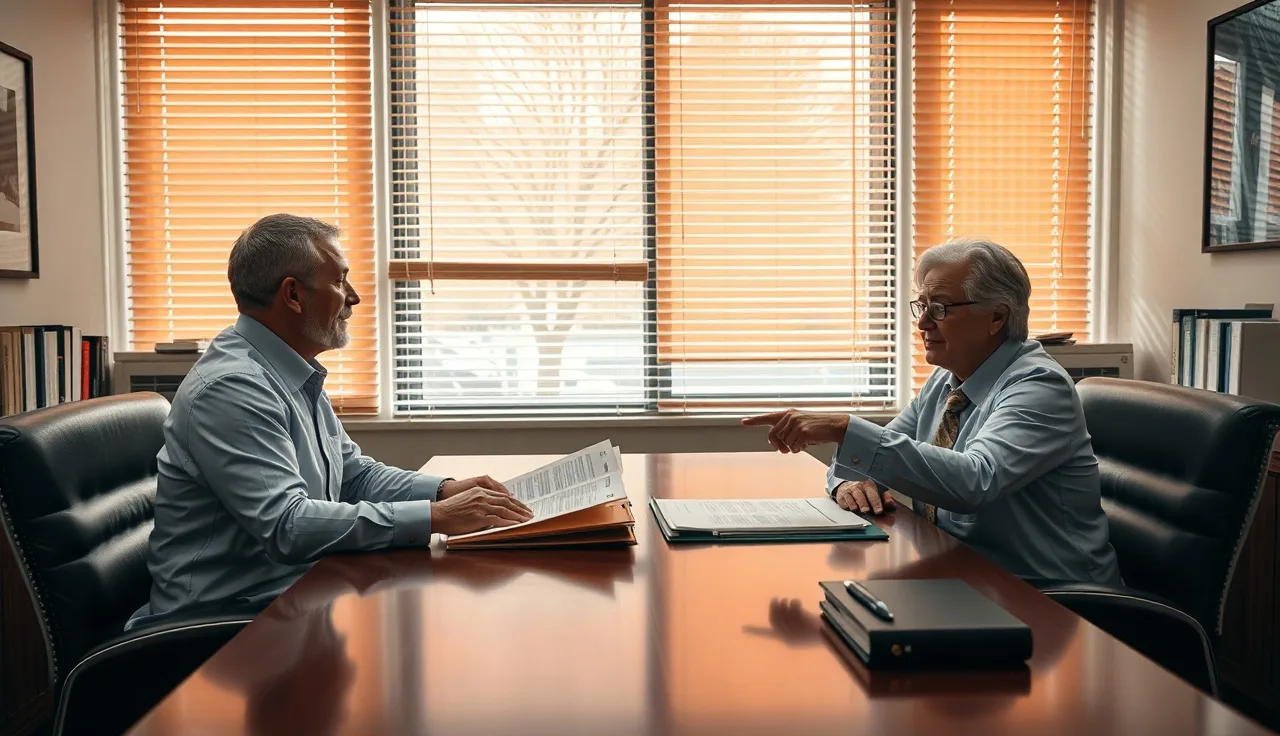
An informal conference is a meeting between you (the cited employer) and the OSHA Area Director or a designee, held before any formal contest gets filed. OSHA's regulations at 29 CFR 1903.19 and the agency's Field Operations Manual both describe it as a voluntary chance to talk through citations, penalties, abatement dates, and possible settlement before the case reaches the Occupational Safety and Health Review Commission (OSHRC) [1].
Timing is the part people get wrong. You have 15 working days from the day you receive the citation to request the informal conference and, separately, to file a formal Notice of Contest [2]. Both deadlines run at the same time. Requesting a conference does not pause the 15-day contest clock unless OSHA agrees in writing to toll it. So you do two things: send a written request for the conference, and guard that 15-day window like your penalty depends on it, because it does.
Area Offices hold these meetings all the time and genuinely want to close cases this way. Litigation at the Review Commission costs everybody time and money. The Area Director has real authority: reduce penalties, reclassify willful or repeat violations down to serious or other-than-serious, extend abatement deadlines, and sometimes withdraw a citation item outright.
You can bring an attorney, but you do not have to. Plenty of small business owners run these meetings themselves and do fine.
What happens if you miss the 15-working-day deadline?
Miss it and the citation becomes a final order of the Review Commission. The violation is locked in, the penalty is due, and your right to contest is gone [2]. Recourse after that is close to nonexistent, short of a petition to the Review Commission for extraordinary relief, which almost never succeeds.
Count the 15 working days from the date you received the citation, not the date OSHA issued it. Citations usually arrive by certified mail or get handed to you in person at the end of the inspection. The day of receipt is day zero. Day one starts the next working day. Weekends and federal holidays do not count.
Not sure your count is right? Call the Area Office and ask. They will tell you. Better a two-minute phone call than a lost window.
Send your conference request in writing, by email or certified mail, so you have proof of the date. Keep a copy.
How much can penalties actually be reduced at an informal conference?
Penalty cuts at informal conferences are common and often big. OSHA's penalty structure already bakes in reductions for size (up to 70% for employers with 25 or fewer workers), good faith, and history before a citation ever hits your desk [3]. At the conference, you negotiate further reductions on top of that starting number.
OSHA publishes no standard "informal conference discount," but the agency's settlement authority lets Area Directors drop penalties hard when an employer shows abatement, good faith, and cooperation. Employers who arrive with documentation of corrective action already done routinely see penalties fall 30 to 80 percent off the proposed amount [4].
Here are OSHA's current maximum penalty levels by violation type, so you can see the stakes:
| Violation Type | Maximum Penalty (as of 2025) |
|---|---|
| Other-than-serious | $16,550 per violation |
| Serious | $16,550 per violation |
| Willful or Repeat | $165,514 per violation |
| Failure to Abate | $16,550 per day beyond abatement date |
These figures adjust every January for inflation under the Federal Civil Penalties Inflation Adjustment Act [3]. The gap between a willful and a serious classification is roughly 10 to 1, which is why a reclassification at the conference is often the single most valuable thing you can win.
Small employer, clean inspection history, hazard fixed fast? A 50 percent penalty reduction is a realistic baseline. Walk in with documentation and you can beat that.
How do you prepare for an OSHA informal conference?
Preparation is the whole game. The Area Director will not research your case for you. You walk in, you present evidence, and the outcome tracks how well you made your case.
Start by reading the citation carefully. Every citation item has three parts: the standard allegedly violated (cited by CFR number), the description of the alleged violation, and the proposed penalty. Read all three for each item. Sometimes OSHA cites the wrong standard, describes a condition that does not match what the inspector actually saw, or builds a penalty on a wrong employee count or severity rating. Each of those is a negotiating point.
Then gather the following before the meeting:
1. Proof of abatement. Photos, invoices, purchase receipts, maintenance logs, anything showing the hazard is fixed. Date everything. If you bought new guardrails, bring the invoice and a photo of the installed guardrails with a visible date stamp or a dated newspaper in the frame.
2. Your written safety program for the cited topic. If you have a lockout/tagout program and OSHA cited a lockout violation, bring the written program and training records. A documented program shows good faith even when there was a lapse.
3. Training records. Show that affected employees were trained before the inspection. If training was incomplete, show what you have done since.
4. Your safety history. Pull your OSHA 300 log. Few or no prior citations and a low injury rate is a mitigating factor worth raising.
5. Employee count and payroll documentation. Small-size penalty reductions are based on total employment at the time of inspection. If OSHA used a wrong number, correct it with documentation.
6. A written statement of your good-faith efforts. One or two pages describing your safety program, the measures you already had in place, and your immediate response to the inspection finding. Keep it factual and specific.
Organize the materials in a folder, one section per citation item. Walk in ready to take each item on its own.
What should you actually say at the informal conference?
Be straightforward and professional. This is a settlement talk, not a fight. The compliance officer who ran the inspection may or may not be in the room. You are talking to the Area Director or a senior compliance officer, and they have sat through hundreds of these.
Open by thanking them for the meeting and stating plainly that you take safety seriously. Then go item by item. For each one, you are making one or more of these arguments:
The violation did not happen as described. If the citation language does not match the actual conditions at your workplace, say so calmly and show your evidence. Quote the specific wording in the citation and explain exactly where it is wrong.
The standard cited does not apply. Less common, but it happens. If OSHA applied a general industry standard to a construction operation, or cited a standard your industry is exempt from, make that argument.
You corrected the hazard. Show the documentation. Ask for the penalty to reflect prompt abatement. OSHA's Field Operations Manual tells compliance officers to credit good faith when employers move quickly to fix problems [4].
The severity or probability rating is too high. OSHA sets penalty amounts based on severity (how bad the injury could be) and probability (how likely an injury was). If OSHA rated a condition high severity when the realistic worst case was minor, make that argument with specifics.
A willful classification is not supported. A willful violation requires that you knew about the hazard and consciously disregarded it, or showed plain indifference to employee safety [5]. A written program, training records, or other evidence of good-faith effort directly cuts against a willful finding. Push hard here. The penalty gap is about 10 to 1.
You are a small employer acting in good faith. If your employee count qualifies you for the small-employer reduction and OSHA did not apply it correctly, point that out.
Don't argue about whether OSHA had the right to inspect. Don't get emotional. Don't promise abatement timelines you cannot hit. And don't sign anything at the meeting without reading it carefully.
Should you bring a lawyer to the informal conference?
For most small business owners with straightforward citations, a lawyer is not necessary at the informal conference. The meeting is informal by design. Attorneys are allowed, not required.
Bring a lawyer if the citation includes willful violations with large proposed penalties (over $50,000 total), if the inspection followed a fatality or catastrophic event, if there is a real factual or legal fight over whether a violation happened, or if you think the case is heading to formal contest no matter what.
If you do hire counsel, get one who does OSHA law specifically. General employment attorneys often do not know the regulatory weeds well enough. The OSHA defense bar (attorneys who focus on management-side OSHA defense) is a real specialty, and a good one earns the fee on a complex case.
For a citation with one or two serious items and a total proposed penalty under $20,000, an experienced owner who prepares well can handle the conference without counsel and often lands the same result.
What outcomes can you realistically get from the informal conference?
Five things the Area Director can actually do at an informal conference:
Reduce the monetary penalty. The most common outcome. The Area Director signs a settlement that lowers the proposed penalty in exchange for your commitment to abate and stay compliant.
Amend the citation. The classification can change, say from willful to serious, or serious to other-than-serious. That matters for the penalty and for your OSHA history, since willful and repeat violations carry more weight in future inspections.
Modify the abatement date. If OSHA gave you 30 days to fix something that genuinely takes 90 (ordering equipment, building a guardrail system), you can ask for more time. Bring documentation showing why you need it and what interim protection you put in place.
Withdraw a citation item. If the evidence shows the violation did not occur or the standard does not apply, the Area Director can withdraw the item entirely. Less common, but it happens when the employer makes a strong factual case.
Sign an informal settlement agreement. This is the document that records whatever you agreed to. Read it line by line before you sign. Make sure it says what you actually agreed to and does not slip in language you never negotiated.
One thing the conference cannot do: erase the citation from OSHA's records. Even a settled case shows up in OSHA's inspection database. But a settled case with a lower penalty and an amended violation type reads far better than a contested case you lose.
What is the difference between an informal conference and a formal contest?
The informal conference happens at the Area Office level and is off the record, meaning no transcript is made and your settlement statements cannot be used against you in a formal proceeding. It is a negotiation.
A formal Notice of Contest is a legal filing that sends your case to the Occupational Safety and Health Review Commission, an independent federal agency that works as an administrative court [6]. Once you contest, you are in litigation. There is discovery, there are legal deadlines, and there are hearings before an Administrative Law Judge. Most contested cases settle before the hearing, but the process runs months to years and carries real legal costs.
You can do both. Request the informal conference and file a protective Notice of Contest before the 15-day deadline expires. Filing a protective contest while the conference is pending is standard practice if there is any chance the talks fall apart. You can withdraw the contest later if you settle at the conference.
If the conference does not resolve the case to your satisfaction, the formal contest still moves forward. The two tracks are not mutually exclusive.
For small employers, the informal conference settles the large majority of cases. OSHA's own enforcement data show most penalty disputes close through settlement rather than formal contest [7].
What written safety program documentation helps most at the conference?
The most persuasive document you can bring is a written safety program that covers the cited hazard and predates the inspection. It proves you thought about the hazard before OSHA showed up. That is the definition of good faith.
Programs that carry real weight:
A hazard communication program (required under 29 CFR 1910.1200) with SDS binders and training records, if you were cited for chemical hazards. See our hazard communication overview for what that program needs to cover [9].
A lockout/tagout program (29 CFR 1910.147) with machine-specific procedures and documented annual audits, if the citation involves energy control. A properly written lockout tagout program with training records has helped employers get willful citations reclassified [8].
A written PPE hazard assessment and certification (29 CFR 1910.132(d)), if citations involve personal protective equipment [10].
A written emergency action plan or fire prevention plan, if the citation involves egress or emergency preparedness.
Training records tied to each program matter just as much. A written program with no evidence anyone was trained is half a story. Bring both.
If your written programs are thin or missing, that is a problem, and it is also an honest signal to build them out before the next inspection. SafetyFolio's safety program generator produces OSHA-aligned written programs in about 15 minutes, which at minimum gives you a documented starting point for future compliance and good-faith arguments.
Bring whatever you have. Partial documentation beats none. And frame any gaps as things you have since fixed.
What should you not say or do at an informal conference?
A few moves will hurt you, and all of them are easy to avoid.
Don't admit you knew about the hazard before the inspection and did nothing. That statement supports a willful finding and can surface in a formal proceeding on penalty disputes. Keep your language on what you did do, not what you failed to do.
Don't argue OSHA had no right to inspect. That ship sailed. The inspection happened. Challenging jurisdiction at the conference burns goodwill and time.
Don't make up facts or exaggerate. Compliance officers are experienced. Claim you had a training program you did not have, and it can come out in a formal proceeding and wreck your credibility for the whole case.
Don't raise issues unrelated to the citation items. Complaints about how the inspector behaved go through a separate process. Bringing them here muddies the negotiation.
Don't sign the informal settlement agreement on the spot if you have not read it carefully. You are allowed to take it home, read it overnight, and mail it back signed. If the language differs from what you discussed out loud, ask for a correction before you sign.
Don't miss the formal contest deadline while you wait for the conference. If OSHA has not scheduled your conference by day 10, file a protective Notice of Contest.
How do repeat violations change your strategy?
A repeat violation means OSHA found a substantially similar violation at any of your workplaces within the past five years [5]. The penalty multiplier runs up to 10 times the penalty for a serious violation. That changes the math in a hurry.
Facing a repeat classification, your first goal at the conference is reclassification. The argument is usually one of two things: the current citation is not substantially similar to the prior one (the hazard, the standard, or the conditions are meaningfully different), or the prior citation was itself improperly classified.
Bring documentation of everything you did to address the prior violation. Show you corrected it, retrained employees, and updated your program. An employer who fixed the earlier problem and then had a new lapse looks nothing like one who never dealt with it. The Area Director can reclassify a repeat to serious when the facts support it.
For willful violations, the argument runs the same direction but OSHA's bar is higher. Under OSHA's Field Operations Manual, a willful citation requires evidence that management had actual knowledge of the violating condition or met a plain-indifference standard [4]. A written safety program, even an imperfect one, makes the actual-knowledge argument harder for OSHA to hold.
Know your inspection history before the meeting. Pull your establishment's record from OSHA's public data portal at osha.gov/data before the conference so you know exactly what is in the file.
After the conference: what happens next?
If you settle, OSHA prepares an informal settlement agreement. Read it carefully. It should state the amended penalty amount, any changes to violation classifications, the abatement deadlines, and any other conditions you agreed to. Once signed, it is binding.
You will owe the settled penalty, typically within 15 days of the settlement date. Most Area Offices take payment online through pay.gov.
You still have to abate the cited conditions by the agreed deadlines and certify abatement in writing to OSHA. Keep your abatement documentation. OSHA can follow up.
If you did not settle, or you want to keep contesting, your Notice of Contest (the one you filed before the 15-day deadline) stays active and the case proceeds to the Review Commission. At that point, get a lawyer.
Either way, treat the citation as a signal. Review your whole safety program for related hazards. The standards OSHA cited are almost always neighbors to other standards you should audit. Cited under a machine guarding standard? Look at your entire OSHA training program for equipment operation. Cited for recordkeeping failures? Review your full incident report process.
A citation is genuinely useful if you treat it as a gap analysis. Most small business owners who take that view come out of an inspection cycle with a much better safety program than they walked in with.
Frequently asked questions
How do I request an OSHA informal conference?
Send a written request to the OSHA Area Office that issued the citation. Email or certified mail both work; just get something dated in writing. Include your establishment name, the citation number, and a request for an informal conference. Do this within the 15-working-day window from the date you received the citation. The Area Office will contact you to schedule the meeting, in person or by phone.
Can the informal conference be held by phone or video?
Yes. OSHA Area Offices have run informal conferences by phone for years and, since 2020, increasingly by video. If travel is a hardship or you just prefer remote, ask when you schedule. The substance is the same either way. Have your documentation ready to share electronically if the meeting is remote.
Does requesting an informal conference extend my 15-day contest deadline?
No, not automatically. The 15-working-day contest deadline runs on its own. Some Area Offices will agree in writing to toll the deadline while the conference is pending, but do not assume it. The safe move is to file a protective Notice of Contest before the deadline, even with a conference scheduled. You can withdraw the contest later if the conference resolves the case.
What is an informal settlement agreement and am I required to sign one?
It is a written document recording whatever you and OSHA agreed to at the conference: amended penalties, reclassified violations, abatement deadlines. You are not required to sign one. If negotiations fail, you proceed to formal contest. If you do sign, the agreement is binding and the settled penalty is due, typically within 15 days. Read it fully before signing.
Can OSHA use what I say at the informal conference against me later?
The informal conference is a settlement discussion, not a sworn proceeding. Statements made during settlement talks have some protection under general negotiation principles, but OSHA can use independently documented facts. Don't volunteer admissions about knowing of a hazard and doing nothing. Focus on the corrective actions you took. If you are worried about legal exposure, bring an attorney.
What if I disagree with only some of the citation items?
You can negotiate each item separately. Accept some items, contest others, and negotiate amended terms on the rest. Tell the Area Director which items you accept and which you want to discuss. A partial settlement on accepted items is possible while other items stay contested. This is common, and the Area Office is set up to handle it.
How long does an informal conference typically take?
Most run 30 minutes to 2 hours, depending on the number of citation items and how complex the facts are. Simple citations with one or two items and clear abatement documentation often close in under an hour. Cases with multiple items, a willful classification, or disputed facts take longer. OSHA schedules a block of time; plan to be available for up to two hours.
What is a 'serious' versus 'willful' OSHA violation and why does it matter for the conference?
A serious violation means OSHA believes the hazard could cause death or serious physical harm and the employer knew or should have known. Maximum penalty is $16,550. A willful violation means the employer knew about the hazard and consciously disregarded it. Maximum penalty is $165,514. Getting a willful knocked down to serious at the conference is often worth tens of thousands of dollars and strips a damaging label off your inspection history.
Will an OSHA citation show up on my record even if I settle at the informal conference?
Yes. Settled citations stay in OSHA's public inspection database. The amended terms (lower penalty, reclassified violation type) will show, but the inspection and citation do not disappear. That is why reclassification matters: a settled serious violation reads far better than a settled willful violation in any future inspection or bid where a client checks your OSHA history.
Can I bring employees or witnesses to the informal conference?
Yes. Bring employees, supervisors, your safety manager, or other witnesses with relevant knowledge of the conditions at the time of the inspection. Employees can also request their own representation at the conference under OSHA regulations. If an employee's firsthand account directly contradicts the citation description, having that person present can be effective.
What happens if I just ignore the OSHA citation and do not respond?
The citation becomes a final order of the Occupational Safety and Health Review Commission once the 15-working-day deadline passes. The full proposed penalty is owed, the violations are locked in as-is, and OSHA can pursue collection. Ignoring citations also sets you up for repeat classifications in any future inspection. There is no upside to ignoring one.
Does having an OSHA written safety program actually help at the informal conference?
Yes, materially. A written safety program covering the cited hazard, with employee training records attached, is direct evidence of good faith. OSHA's penalty adjustment factors count good faith as a mitigating element, and the Field Operations Manual directs compliance officers to consider it. Employers with documented programs routinely get larger penalty reductions than those with none, even when a lapse occurred.
How does OSHA calculate the initial proposed penalty before the informal conference?
OSHA starts with a gravity-based penalty set by severity (how bad the potential injury is) and probability (how likely injury is). The compliance officer rates both scales and computes a base penalty. OSHA then applies reductions for employer size (up to 70% for 25 or fewer employees), good faith (up to 25%), and history (10% if no prior violations in 5 years). The conference can cut the resulting figure further.
Sources
- OSHA, 29 CFR 1903.19, Abatement verification, and Field Operations Manual, Chapter 6 (Informal Conference process): Informal conferences are described in OSHA regulations as a voluntary opportunity to discuss citations, penalties, and abatement with the Area Director before formal contest.
- OSHA, 29 CFR 1903.17, Employer and employee contests before the Review Commission: Employers have 15 working days from receipt of a citation to file a Notice of Contest; missing this deadline makes the citation a final order.
- OSHA.gov, Penalties page, current maximum penalty amounts: Maximum penalties as of 2025: serious and other-than-serious up to $16,550 per violation; willful or repeat up to $165,514 per violation, adjusted annually under the Federal Civil Penalties Inflation Adjustment Act.
- OSHA Field Operations Manual (FOM), CPL 02-00-163, Chapter 6: The Field Operations Manual instructs compliance officers and Area Directors to give penalty credit for good faith and prompt abatement, and describes Area Director settlement authority at informal conferences.
- OSHA Field Operations Manual (FOM), CPL 02-00-163, Chapter 4, Violation classification criteria: A willful violation requires that the employer had actual knowledge of the violating condition or showed plain indifference to employee safety; a repeat violation is one substantially similar to a prior violation within five years.
- Occupational Safety and Health Review Commission, About OSHRC: OSHRC is an independent federal agency that functions as an administrative court for contested OSHA citations; cases are heard by Administrative Law Judges.
- OSHA, Enforcement and inspection data: The large majority of OSHA penalty disputes are resolved through informal settlement rather than formal contest before the Review Commission.
- OSHA, 29 CFR 1910.147, The Control of Hazardous Energy (Lockout/Tagout): 29 CFR 1910.147 requires written lockout/tagout programs with machine-specific procedures and documented periodic inspections; documented compliance supports good-faith arguments at informal conferences.
- OSHA, 29 CFR 1910.1200, Hazard Communication Standard: 29 CFR 1910.1200 requires a written hazard communication program; bringing this program and SDS records to an informal conference supports good-faith penalty reductions when chemical hazard citations are at issue.
- OSHA, 29 CFR 1910.132, Personal Protective Equipment general requirements: 29 CFR 1910.132(d) requires a written PPE hazard assessment and certification; this document is relevant evidence of good faith when PPE citations are contested.
- Federal Civil Penalties Inflation Adjustment Act Improvements Act of 2015, Public Law 114-74: Requires annual inflation adjustment to OSHA civil penalty maximums; this is why published maximum penalties change each January.