Last updated 2026-07-10
TL;DR
The closing conference is the meeting at the end of an OSHA inspection where the compliance officer explains every hazard found, the likely violations, and what could become a citation. You can ask questions, dispute facts, and take notes. Nothing is final yet. Penalties get proposed later in writing, and you have 15 working days to contest them after the citation arrives.
What is a closing conference after an OSHA inspection?
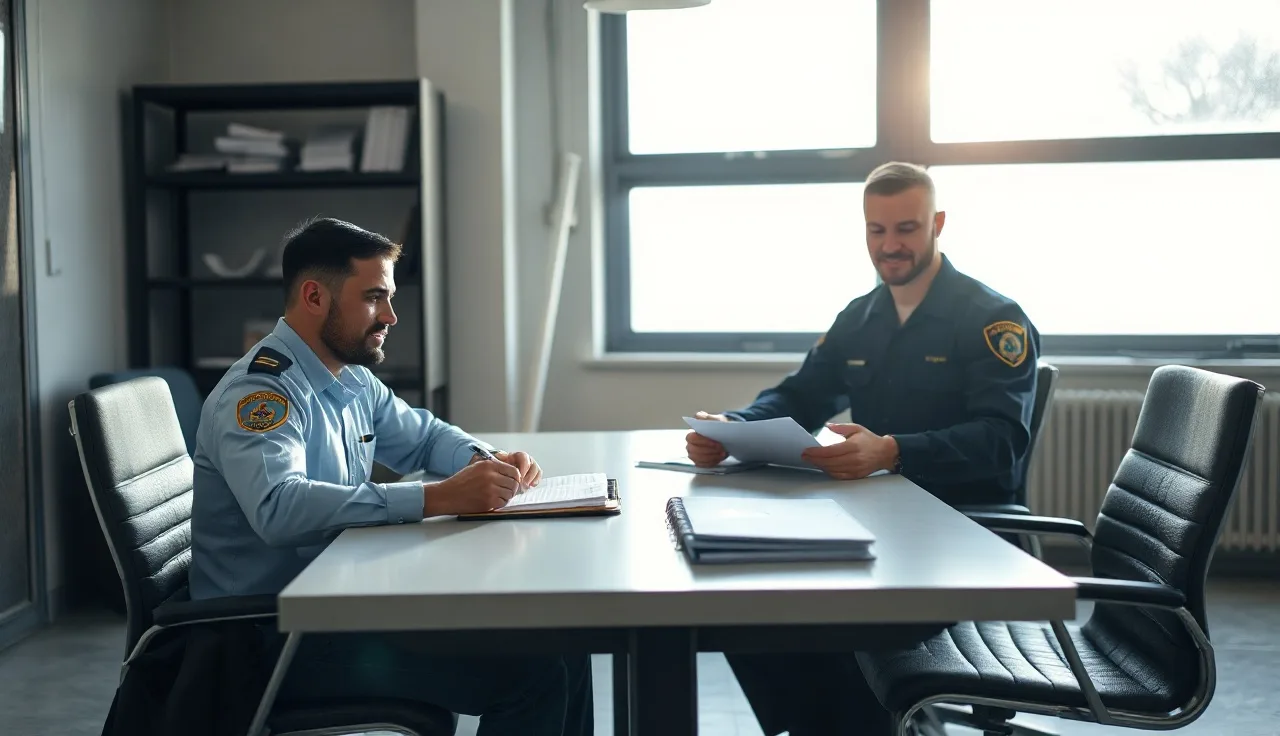
The closing conference is the meeting that ends the on-site part of an OSHA inspection. You (or your representative) sit down with the compliance officer (CO), and OSHA is required to hold it. The CO walks through every condition they observed, explains which standards they think you violated, and gives you an early read on what citations might follow. It's the inspector showing their cards before the official hand is dealt.
This usually happens the same day the inspection ends. A simple one-day inspection of a small shop might mean 20 to 45 minutes in the closing conference. A complex multi-day inspection involving a fatality, process safety, or dozens of alleged violations can run several hours.
Citations don't get issued here. The actual citation document comes later by certified mail, sometimes weeks after the inspector leaves. Everything the CO tells you in the closing conference is still preliminary, and what lands in the citation can differ from what got discussed. That gap is your opening. The closing conference is your first and best chance to hand over information that changes the CO's mind before a word of the citation is written. [1]
Is OSHA required to hold a closing conference?
Yes. OSHA's Field Operations Manual tells compliance officers to hold a closing conference at the end of every inspection. The obligation traces back to the OSH Act itself. Section 8(e) of the Occupational Safety and Health Act of 1970 says the CO "shall with reasonable promptness" advise the employer of any violations found. [2] The closing conference is how OSHA meets that duty.
In rare cases the CO runs a phone or written closing conference instead of an in-person one, usually when lab samples still need analysis or documents are still under review. If the CO tries to skip the meeting entirely, ask for one. That request is on solid legal footing.
Employee representatives can have their own separate closing conference, or they can join the employer's if everyone agrees. If you have a union, expect the shop steward or safety rep to request their own session. OSHA allows both to happen. [1]
What does the OSHA inspector actually say at the closing conference?
The CO goes through the findings one item at a time. For each alleged hazard, expect them to tell you:
- The specific standard they believe you violated (the CFR number, like 29 CFR 1910.147 for lockout tagout)
- The condition or practice behind the alleged violation
- The proposed classification (serious, other-than-serious, willful, or repeat)
- A preliminary penalty estimate, which can move
- The abatement period they plan to require
The CO will also mention things they saw but decided not to cite, and may give you informal guidance on those. Take that guidance seriously. It's a free map of where the agency thinks your program is thin, even when they're not writing it up this time.
Here's the part people get wrong: the CO isn't the final word on penalties. The Area Director reviews everything before the citation goes out. Any dollar figure you hear in the closing conference is the CO's field estimate, not a locked-in number. The Area Director can cut it, and you can push it lower during the informal conference that follows. [1][3]
What are the different OSHA violation classifications and what do they mean for penalties?
The classification the CO names at the closing conference matters a lot, because it drives the dollar figure. Here's how OSHA sorts violations and their maximum penalties as of 2024 (OSHA adjusts these every year for inflation under the Federal Civil Penalties Inflation Adjustment Act):
| Violation Type | Maximum Penalty Per Violation |
|---|---|
| Other-than-Serious | $16,131 |
| Serious | $16,131 |
| Repeat | $161,323 |
| Willful | $161,323 |
| Failure to Abate | $16,131 per day |
A "serious" violation means there's a substantial probability that death or serious physical harm could result. Most citations are serious. "Willful" means the employer knew about the violation and did nothing, or showed plain indifference. A repeat violation gets issued when you've been cited for a substantially similar condition within the last five years. [3][4]
Serious-violation penalties come down based on your business size, history, and good faith. Small employers (typically under 25 employees) can shave up to 60 percent for size alone. A clean inspection history adds up to another 10 percent. A documented safety program can bring a good-faith reduction of up to 25 percent. [3]
This is one reason a written safety program pays off before an inspector ever shows up. If you're still building yours, the SafetyFolio program generator can produce OSHA-compliant written programs in about 15 minutes, which at minimum documents good faith.
What should you do during the closing conference to protect yourself?
Bring a notebook, more than your phone. Write down every standard number the CO cites, every alleged condition, every abatement period mentioned, and every preliminary penalty figure. That record matters. If the written citation differs from what got discussed, your notes taken in the moment back up a contest.
Ask clarifying questions. If the CO says your hazard communication program violated 29 CFR 1910.1200, ask exactly which element fell short. The written program? The labeling? The SDS availability? The training records? The more specific the CO's answer, the better your position to fix it before the citation issues or contest it after.
Hand over corrective information on the spot if you have it. Say the CO claims employees weren't trained on a piece of equipment and the training records are sitting in your filing cabinet. Go get them. The CO is still writing the report. A record shown during or right after the closing conference can head off a citation or knock a serious down to an other-than-serious.
Don't argue, but don't just nod along either. Calm, factual pushback is fine. If the CO describes a condition that doesn't match what you saw, say so and explain why. You're under no legal obligation to agree with anything said in the closing conference.
Ask about the informal conference. Every employer can request one with the OSHA Area Director within 15 working days of getting the citation. The closing conference is a good moment to ask how to request it, who to contact, and roughly when the citation will land. [1][5]
Can employees or their representatives attend the closing conference?
Yes, and OSHA treats it as a right, not a favor. Under OSHA's regulations, authorized employee representatives, including union reps, can take part in a separate closing conference or join the employer's if all parties agree. [1]
If the CO holds separate conferences, they're bound to give employees the same substantive information. Workers can't be shut out of learning what the inspection found.
For most small non-union workplaces, the employer's closing conference is the only one that happens. But if a worker asked to walk with the CO during the inspection (their right under Section 8(e) of the OSH Act), expect that person to ask their own questions and maybe request separate time with the inspector. That's legally protected activity. Retaliating against a worker for taking part in an OSHA inspection is itself a serious violation under Section 11(c). [2][6]
What happens after the closing conference and before citations arrive?
The CO heads back to the Area Office and writes the inspection report. That report documents every condition observed, the evidence gathered (photos, measurements, interview notes, documents you provided), and the CO's recommended citations and penalties. The Area Director reviews it, can change the recommended citations, and signs off before anything reaches you.
This takes time. OSHA has to issue citations within six months of the violation occurring, but a standard inspection usually produces a citation in four to eight weeks. Complex inspections, fatality investigations, or cases with air sampling that needs lab work run longer.
While you wait, get moving. Start abating the hazards the CO flagged. Do it because it's the right thing, and do it because starting abatement before the citation arrives shows good faith and can factor into penalty reductions. Document all of it: timestamped photos, receipts for new equipment, revised procedures with dates, updated training records.
If you already have a written safety program and the CO found gaps, close them now. No written program at all? Building one before your informal conference tells the Area Director you're taking compliance seriously. A well-documented safety program is one of the factors OSHA weighs when it calculates penalty reductions. [1][3]
What is an informal conference with OSHA and how is it different from the closing conference?
The closing conference happens on-site, right after the inspection. The informal conference is a separate, later meeting you request after the written citation arrives, held at the OSHA Area Office. Different timing, different purpose.
You get 15 working days from the date you receive the citation to request an informal conference. This is your main negotiating shot. The Area Director or a senior compliance officer sits down with you to talk penalty reductions, abatement extensions, or changes to violation classifications. Settlements here can cut what you pay by a lot. [5]
The informal conference isn't a formal legal proceeding. No judge, no transcript, no oath. It's closer to a conversation with the regulator. Bring your abatement documentation, your safety program, your training records, anything that shows you're fixing the problem and running a good-faith operation.
Can't resolve it at the informal conference? Your next step is filing a Notice of Contest with the Occupational Safety and Health Review Commission (OSHRC) within 15 working days of receiving the citation. Miss that window and it's fatal to your appeal rights. The citation becomes a final order, and you owe the penalty as written. [5][7]
What if you disagree with what the OSHA inspector said at the closing conference?
You disagree. That's fine. The closing conference is preliminary, and you get several shots to push back.
Right after: if the CO is still on-site or reachable by phone, hand over any evidence that contradicts the alleged violation. Training records, maintenance logs, equipment calibration reports, the actual text of your written procedures. Get it in front of the CO while the report is still being drafted.
At the informal conference: after the citation arrives, request the meeting and bring your rebuttal documentation. Area Directors settle a large share of contested citations at this stage, often through reduced penalties or reclassified violations.
At the OSHRC: if the informal conference doesn't fix it, you can contest the citation to the Occupational Safety and Health Review Commission, an independent federal agency that decides OSHA disputes. Its administrative law judges hear the case, and their decisions can be appealed to the full Commission and then to a federal circuit court. [7]
The legal route is expensive and slow. For a small business with a marginal case, it usually isn't worth it. But for large penalties or willful citations that could hit your insurance or future contracts, contesting and negotiating deserves real attention. Get an attorney who knows OSHA law involved before the 15-working-day contest window closes.
How long does a closing conference take, and when does it happen?
For most small business inspections, the closing conference runs 30 to 60 minutes. It happens the same day the inspection wraps, usually at the end of the workday on the final on-site visit.
Longer inspections mean longer closing conferences. A multi-day inspection of a manufacturing plant with 15 alleged violations might produce a two-hour session. An inspection that started as a fatality investigation, where the CO found willful or repeat conditions across several standards, can eat most of a morning.
If the CO needs to analyze air samples or review documents you submitted, they may delay the closing conference or run a partial one on-site with a follow-up by phone. Ask upfront what the plan is so you can have the right people in the room.
Your general manager, safety director, or whoever has authority over workplace conditions should be there. Many small employers keep an employment attorney present or at least on call. The CO can't stop you from having legal counsel in the closing conference. [1]
What records and documents should you have ready for the closing conference?
The closing conference isn't only about listening. It's a chance to put evidence on the table. Have these ready:
- Your written safety program (or the sections covering the hazards the CO focused on)
- Training records for every employee named or implied in the inspection
- Equipment maintenance and calibration logs
- SDS binders or electronic SDS access records (relevant if hazard communication came up)
- OSHA 300 and 300A logs going back five years (the CO has already seen these, but organized copies help)
- Any corrective actions you already took during the inspection itself
- Records of previous OSHA inspections and how you handled prior citations
Here's what small employers miss most: if you fix something during the inspection, document it right then. A timestamped phone photo showing a guard reinstalled or a chemical relabeled is worth more than a promise to fix it later. The CO is watching for responsiveness, and so is the Area Director when they review the file. [1][8]
Does what you say at the closing conference hurt you later?
It can, and the honest answer has some nuance. Statements you make to the CO during the inspection, closing conference included, can be used as evidence in later proceedings. Tell the CO "we've known about that machine guard for three months" and that line can support a willful classification.
You don't have a Fifth Amendment right to stay silent in a civil OSHA enforcement proceeding the way you would in a criminal case. OSHA inspections are civil matters. You're not under oath during the closing conference. Depending on state law, the CO may record the conversation with or without your consent, and their notes go into the record either way.
Most OSHA attorneys give the same advice: be truthful, be cooperative, be precise. Don't speculate. Don't volunteer information nobody asked for. Don't guess how long a problem has existed. "I'd need to check the maintenance log to confirm the date" beats a guess that turns into evidence of prolonged knowledge.
None of this means going adversarial. Cooperation is genuinely in your interest. The point is to be deliberate, not chatty.
What should you do after the closing conference to prepare for the citation?
Start a dedicated inspection file the day the closing conference ends. Put in your notes, any documents you handed the CO, before-and-after photos of conditions, and a running log of every abatement action you take.
Set a calendar reminder for 20 working days out. Citations arrive by certified mail, and the 15-working-day clock for requesting an informal conference starts when you receive the citation, not when OSHA mails it. If the mail sits unsigned at your building for three days, those are days off your clock. Assign one person to watch for the certified mail.
Compare your written safety program against the standards the CO cited. No written procedures for those areas? Build them. Already have them but the CO found gaps? Update them and record the update date. A revised program handed over at the informal conference shows the Area Director the problem is fixed, more than promised.
If your OSHA training records were incomplete, schedule the training now and document it. Retrain, test, sign off, file. That paperwork is the difference between a 10 percent good-faith reduction and a 25 percent one. [3]
For employers rebuilding safety documentation from scratch, the SafetyFolio program generator produces written safety programs keyed to specific OSHA standards in about 15 minutes, which gives you something real to bring to an informal conference.
Frequently asked questions
Can I record the OSHA closing conference on my phone?
OSHA doesn't prohibit recording the closing conference. In one-party consent states you can record without telling the CO. In two-party consent states, you must disclose it. The CO may also be recording. Safest approach: take detailed written notes no matter what, and if you record, say so out loud at the start of the meeting. The CO's own notes are already part of the official record.
What if the OSHA inspector skips the closing conference?
Request one in writing immediately. OSHA's Field Operations Manual requires a closing conference. If the CO declines or is unavailable, contact the Area Office directly and ask for a closing conference with the CO or the Area Director. Document your request. Skipping the closing conference is procedurally improper, and while it rarely voids a citation by itself, it's a legitimate procedural objection worth raising.
How long do I have to fix the hazards identified at the closing conference?
The formal abatement deadline is set in the written citation, not at the closing conference. The CO may mention a proposed abatement period during the meeting, which gives you a preview. Typical periods range from immediate to 30 to 90 days depending on severity and what the fix actually requires. You can request an extension in writing before the deadline expires, and OSHA routinely grants reasonable extensions for employers making documented progress.
Will OSHA come back to check if I fixed the violations?
Yes. OSHA runs follow-up inspections to verify abatement, especially for serious, willful, or repeat violations. You're also required to certify abatement in writing after correcting each cited violation, and for serious violations you may need to submit photos or other proof. Failure to abate carries a per-day penalty of up to $16,131 as of 2024. Follow-ups are more likely when the Area Office doubts your corrective actions.
Can the penalty go up after the closing conference?
Yes, though it's uncommon. The Area Director reviews the CO's recommended penalties and can raise them if they think the CO underestimated severity or if new evidence surfaces during report review. In practice, most changes between the closing conference and the written citation go downward. If something changed materially, such as the CO learning about a prior citation you didn't disclose, the classification can shift too.
Do I need a lawyer at the OSHA closing conference?
For a routine inspection with a few minor findings, probably not. For a fatality investigation, a willful citation, or a case with potential criminal referral, yes. You can have counsel present at the closing conference and OSHA can't prohibit it. If you expect a large penalty or a repeat or willful classification, consult an OSHA attorney before the informal conference, which is where penalties actually get negotiated.
What is the difference between a closing conference and an informal conference?
The closing conference happens on-site at the end of the inspection, before any citation issues. The informal conference happens after you receive the written citation, at the OSHA Area Office, and is your formal chance to negotiate penalties, reclassify violations, or extend abatement deadlines. You must request the informal conference within 15 working days of receiving the citation. The two meetings serve completely different purposes.
What happens if I miss the 15-working-day deadline to contest a citation?
The citation becomes a final order of the Occupational Safety and Health Review Commission, and you lose all rights to contest it. The penalty is due as written, and the violation goes on your OSHA inspection history. That history is public and can be checked by customers, insurers, and general contractors. Missing the deadline is one of the costliest mistakes employers make. Set a hard calendar reminder the day the certified mail arrives.
What is a good faith penalty reduction and how do I qualify?
OSHA can cut proposed penalties by up to 25 percent for good faith, meaning you have a written safety program that meets OSHA standards, an active safety and health management system, and evidence of real commitment to compliance. Employers with no written program don't qualify. Updating and documenting your safety program before the informal conference is one of the most direct ways to capture this reduction.
Can I negotiate the abatement period at the closing conference?
You can raise concerns about abatement timelines, and the CO factors that into what they recommend in the report. But the abatement period isn't final until the written citation arrives. If the deadline in the citation is unrealistic, request a formal abatement extension in writing before the deadline. OSHA grants extensions when you show good-faith progress and a documented plan, which beats missing the deadline and triggering failure-to-abate penalties.
Does having a safety program before the inspection actually reduce my penalty?
Yes, explicitly. OSHA's penalty calculation includes a good-faith adjustment of up to 25 percent for employers with documented safety programs. The program has to be real: written, specific to your hazards, backed by training records. A template you printed last week with no training behind it won't move the needle. A program your employees actually work under will. Size-based reductions are separate: employers under 25 workers can get up to 60 percent off for size alone.
What OSHA standards come up most often at closing conferences for small manufacturers?
Based on OSHA's annual top-10 citation data, the most frequently cited general industry standards include 29 CFR 1910.147 (lockout/tagout), 29 CFR 1910.1200 (hazard communication), 29 CFR 1910.212 (machine guarding), 29 CFR 1910.305 (electrical wiring), and 29 CFR 1910.132 (personal protective equipment). Recordkeeping violations under 29 CFR 1904 also show up regularly. Knowing these before an inspection helps you predict what the CO will focus on.
Can an employee file a complaint saying I retaliated against them for talking to the OSHA inspector?
Yes, and it's serious. Section 11(c) of the OSH Act prohibits retaliating against any employee who exercises rights under the Act, including walking with an inspector or taking part in the closing conference. Employees have 30 days to file a retaliation complaint. OSHA investigates these separately from the underlying inspection. If they find merit, they can seek reinstatement, back pay, and other relief in federal court on the employee's behalf.
Sources
- OSHA, Field Operations Manual (CPL 02-00-163): OSHA's Field Operations Manual requires compliance officers to conduct a closing conference at the end of every inspection and to advise employers of all violations found.
- Occupational Safety and Health Act of 1970, Section 8(e) and Section 11(c), via OSHA.gov: Section 8(e) requires the compliance officer to advise the employer with reasonable promptness of violations found; Section 11(c) prohibits retaliation against employees for exercising rights under the Act.
- OSHA, Penalties (Penalty Reduction and Adjustment): OSHA applies penalty reductions for size (up to 60% for employers with 25 or fewer employees), good faith (up to 25% for documented safety programs), and history (up to 10% for clean inspection records).
- OSHA, Penalties (2024 Federal Civil Penalties Inflation Adjustment): Maximum penalty per serious or other-than-serious violation is $16,131 and maximum per willful or repeat violation is $161,323 as of 2024.
- OSHA, Workers' Rights (OSHA 3021): Employees and their authorized representatives have the right to participate in OSHA inspections and closing conferences.
- Occupational Safety and Health Review Commission, About OSHRC: OSHRC is the independent federal agency that adjudicates contested OSHA citations; decisions of administrative law judges can be appealed to the full Commission and then to a federal circuit court.
- OSHA, Recordkeeping Requirements (29 CFR 1904): OSHA 300 and 300A logs covering five years of injury and illness records are commonly reviewed during inspections.
- OSHA, Top 10 Most Frequently Cited Standards: 29 CFR 1910.147 (lockout/tagout), 1910.1200 (hazard communication), and 1910.212 (machine guarding) are among the most frequently cited general industry standards.
- OSHA, Hazard Communication (29 CFR 1910.1200): 29 CFR 1910.1200 governs written hazard communication programs, labeling, SDS availability, and employee training.
- OSHA, Control of Hazardous Energy (Lockout/Tagout, 29 CFR 1910.147): 29 CFR 1910.147 is one of the most frequently cited OSHA standards and requires a written energy control program.
- Bureau of Labor Statistics, Injuries, Illnesses, and Fatalities: BLS tracks fatal and nonfatal workplace injury data used as background context for OSHA enforcement priorities.