Last updated 2026-07-09
TL;DR
OSHA does not publish one master training list. Instead, more than 100 individual standards in 29 CFR 1910 (general industry), 1926 (construction), and 1915 (maritime) each contain their own training requirements. Employers must identify every standard that applies to their workplace, then train workers before exposure, document it, and repeat on the schedule each standard specifies.
What does OSHA actually require for training?
There is no single "OSHA training list" you can download and check off. What OSHA has done instead is bury training requirements inside each specific safety standard. The agency estimates that more than 100 standards in general industry alone contain explicit training requirements [1]. Each one tells you who must be trained, on what topics, by when, and how often.
The legal authority comes from the OSH Act of 1970, which requires employers to provide workplaces free from recognized hazards and to comply with all applicable OSHA standards [2]. When a standard says "the employer shall train each employee," that sentence is a legal obligation, not a suggestion. Failing to meet it exposes you to citations under that specific standard, not some generic training rule.
OSHA's guidance document "Training Requirements in OSHA Standards" sorts requirements into two buckets: standards that mandate training (you must do it) and standards that recommend training (you should). The mandatory ones are the only ones that generate citations on their own [1]. The recommended ones can still show up in a citation if OSHA uses the General Duty Clause, 29 USC 654(a)(1), to argue you knew about a hazard and failed to address it.
Your first job is simple to state and tedious to do. Inventory the hazards and processes in your workplace, match them to the CFR sections that apply, and read the training paragraph inside each one. Most small businesses in general industry face the same 10 to 15 standards over and over, so the list is shorter than it sounds.
Which specific OSHA standards have mandatory training requirements?
Below are the standards that come up most often in OSHA inspections and citations. This is not exhaustive, but it covers the majority of small business workplaces in general industry and construction.
| Standard (29 CFR) | Topic | Who it covers | Frequency |
|---|---|---|---|
| 1910.132 | Personal protective equipment (PPE) | All general industry | Before initial use; when conditions change |
| 1910.134 | Respiratory protection | Workers who wear respirators | Annually |
| 1910.147 | Lockout/tagout (control of hazardous energy) | Authorized and affected workers | Before initial assignment; when procedures change |
| 1910.178(l) | Powered industrial trucks (forklifts) | Forklift operators | Before initial operation; every 3 years at minimum |
| 1910.1200 | Hazard communication (HazCom/GHS) | All workers who use or may be exposed to chemicals | Before initial assignment; when new hazards are introduced |
| 1910.157 | Portable fire extinguishers | Workers designated to use them | Annually |
| 1910.38 | Emergency action plans | All employees | Before initial assignment; when plan changes |
| 1910.1030 | Bloodborne pathogens | Workers with occupational exposure | At hire; annually |
| 1926.21 | Construction safety training (general) | All construction workers | Before exposure |
| 1926.503 | Fall protection (construction) | All workers exposed to fall hazards | Before exposure; when new hazards arise |
| 1926.1427 | Crane operator certification and training | Crane operators in construction | Before operation |
| 1910.1450 | Laboratory chemical hygiene | Lab workers | Before initial assignment; annually |
For lockout/tagout, 29 CFR 1910.147(c)(7) specifically says "the employer shall provide training to ensure that the purpose and function of the energy control program are understood by employees." That is a direct quote from the standard [3]. Authorized employees (those who actually lock out machines) need more detailed training than affected employees (those who work nearby), and the standard treats the two groups differently.
For hazard communication, 29 CFR 1910.1200(h) requires training on the hazards of the chemicals in the work area, the details of your written HazCom program, and how to read Safety Data Sheets (SDSs) like an HCl safety data sheet [4]. This one trips up small businesses constantly because it reaches almost every workplace, from restaurants using cleaning chemicals to auto shops handling solvents.
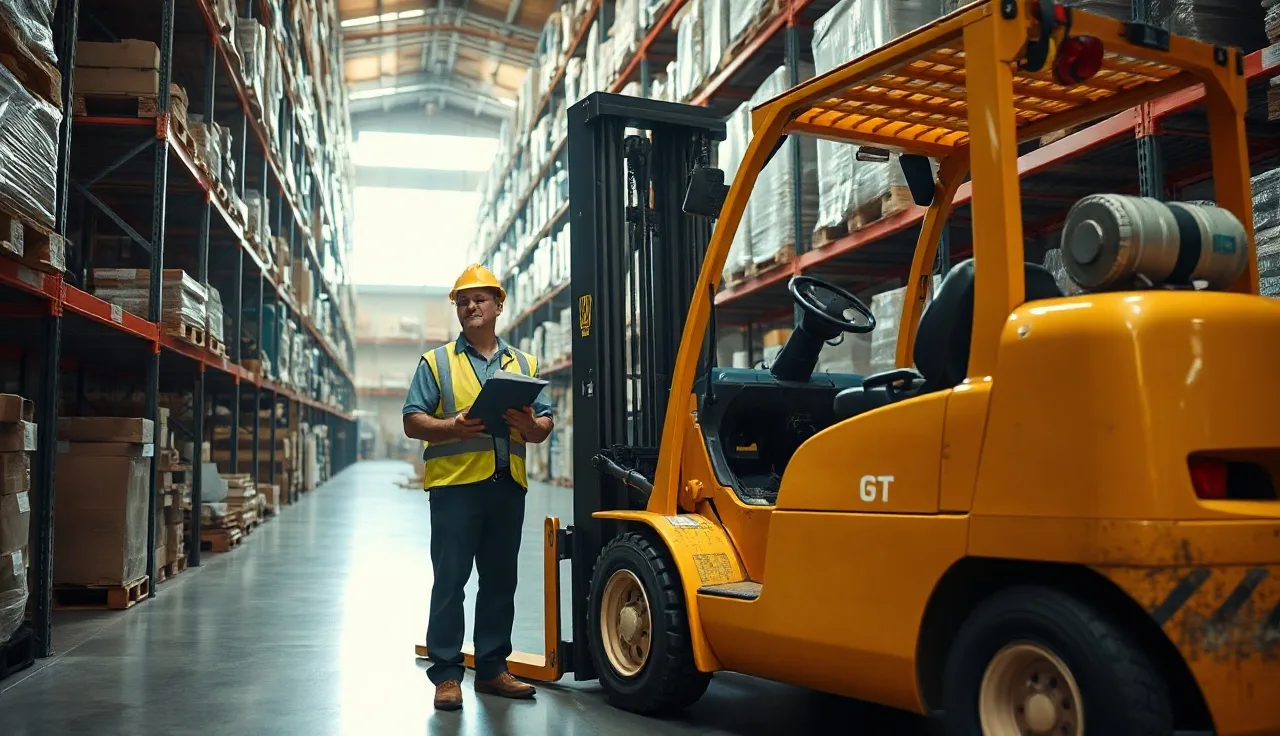
Forklift certification under 29 CFR 1910.178(l) requires both formal instruction and hands-on training, plus an evaluation. A wallet card from a third-party course does not satisfy the standard on its own. You, as the employer, still have to evaluate the operator in your specific workplace on your specific equipment [5].
How often does OSHA training need to be repeated?
The refresher schedule is different for every standard, and that is where a lot of employers get tripped up. There is no universal "annual OSHA training" requirement. Some standards require annual retraining. Others only require it when conditions change, when an employee is observed working unsafely, or when a new hazard shows up.
Here is a quick breakdown of the most common refresh triggers:
Annual refreshers required by the standard: Respiratory protection (1910.134), bloodborne pathogens (1910.1030), portable fire extinguisher use if employees are designated to use them (1910.157), and laboratory chemical hygiene (1910.1450).
Every three years (minimum): Forklift operators (1910.178(l)), though you must also retrain if the operator is observed operating unsafely, is involved in a near-miss or accident, or gets a new type of truck to operate.
When conditions change or unsafe behavior is observed: Lockout/tagout (1910.147), hazard communication (1910.1200), and most construction standards work this way. If the job site or equipment does not change and no performance problems come up, the initial training carries forward.
Before each new exposure: 29 CFR 1926.21 and many other construction standards tie training to the exposure event, not to a calendar. A worker going onto a new project with a different fall hazard profile needs fall protection training specific to that site.
The safest habit for documentation is plain. Record the date of each training session and the standard it satisfies, so you can show an inspector exactly when training happened and why a gap does not trigger a retraining obligation. More on recordkeeping in the next section.
Does OSHA require training records and documentation?
Some standards explicitly require written records. Others say nothing about documentation, but OSHA's compliance officers will ask for proof, and without records your defense basically does not exist.
Standards that specifically mandate written training records include:
- 29 CFR 1910.147 (lockout/tagout): certification records required, including employee name, date, and the standard covered.
- 29 CFR 1910.178(l) (forklifts): written certification of each operator, including name, date, and the trainer's identity.
- 29 CFR 1910.134 (respiratory protection): records of fit testing and medical evaluations, though the training itself has no separate recordkeeping mandate.
- 29 CFR 1910.1030 (bloodborne pathogens): training records must be kept for three years and include dates, content, trainer qualifications, and names of attendees.
For standards that do not specify a format, OSHA's own training guidance says to keep records anyway because they "provide documentation to OSHA that training was conducted" [1]. A simple spreadsheet with employee name, training topic, CFR standard covered, date, and trainer signature is enough.
How long to keep them? The bloodborne pathogen standard says three years from the training date. Other standards do not name a retention period. A reasonable default is five years, which matches how long OSHA can pursue most willful citations.
For guidance on documenting workplace incidents that may trigger retraining obligations, see the incident report process.
Does OSHA require training to be done in the employee's language?
Yes, and this is one of the most commonly cited training failures in workplaces with multilingual crews. OSHA's training standards repeatedly say training must be conducted in a manner employees can understand. That phrase carries legal weight.
OSHA's Field Operations Manual instructs compliance officers to verify that employees actually understood the training, more than that the employer delivered it [6]. An English-only session given to workers who speak primarily Spanish does not satisfy the standard, even if the trainer checked every box on the agenda.
For hazard communication specifically, 29 CFR 1910.1200(h)(1) says the employer shall provide employees with "effective information and training" on hazardous chemicals. OSHA has issued letters of interpretation making clear that if a large part of your workforce does not read or speak English, you must either train in their language or use a translator who can confirm comprehension [4].
You do not need bilingual trainers for every possible language. You do need to assess your workforce and make reasonable accommodations. For small businesses, that often means pairing with a bilingual supervisor who can co-facilitate, or buying training materials produced in the relevant language.
Are OSHA 10 and OSHA 30 mandatory?
Short answer: not under federal OSHA rules. OSHA 10-hour and 30-hour courses, delivered through the OSHA Outreach Training Program, are voluntary at the federal level. They give general awareness training and cover a good part of many standard-specific requirements, but no federal OSHA standard requires them.
State law is a different story. Roughly 15 states plus some municipalities require OSHA 10 or 30 for construction workers, either through legislation or as a condition of public contracting [7]. New York, Massachusetts, Nevada, New Hampshire, Rhode Island, and Connecticut have statutes mandating one or both courses for workers on public construction projects. If you do business in a state-plan state or work on government contracts, verify the requirements for that jurisdiction specifically.
So why do so many employers treat OSHA 10 and 30 as mandatory? A few reasons. Some general contractors require them as a condition of being allowed on site. Some insurance policies reference them. And they are an efficient way to satisfy the awareness-level content in several standards at once. An OSHA 30 course does not replace standard-specific hands-on training for forklifts or lockout/tagout, but it covers a lot of ground fast.
If you want to know what the full OSHA 30 training covers and whether an OSHA 30 hour online course satisfies your state requirements, those are worth looking at separately.
What are the penalties for not providing required OSHA training?
OSHA citations for training failures are typically issued under the specific standard that contains the training requirement, not under a general "training" rule. That matters for how the penalty gets calculated.
OSHA's penalty caps adjust every year for inflation. For 2024, the maximums are:
- Other-than-serious violation: $16,131 per violation [8]
- Serious violation: $16,131 per violation
- Willful or repeated violation: $161,323 per violation
Training violations are most often cited as serious or other-than-serious. But if OSHA finds you had a prior citation for the same standard and failed to fix the underlying training gap, a repeat designation can multiply the penalty by up to 10. A repeat forklift training citation could reach $161,323 for a single standard.
Small employers with no prior citations and demonstrated good faith often get real penalty reductions. OSHA's small employer penalty reduction gives businesses with 10 or fewer employees an automatic 60% cut, and businesses with 11 to 25 employees get 40% [8]. Still, the base amounts climb every year, and a willful citation for a training failure that preceded a fatality can go far past the per-violation caps in later litigation.
The numbers make the case on their own. BLS reported 5,283 fatal work injuries in the U.S. in 2023, with contact with objects and equipment (often tied to weak lockout/tagout and forklift training) accounting for roughly 17% of fatalities [9]. Prevention is cheaper than any penalty.
Can online training satisfy OSHA requirements?
It depends on the standard, and this question gets a lot of muddled answers online.
For awareness-level and knowledge-based training, online delivery is generally fine. Hazard communication, bloodborne pathogens, emergency action plan training, and PPE selection awareness all transfer reasonably well to an online format. OSHA has said in multiple letters of interpretation that the method of delivery (classroom, video, computer-based) matters less than whether employees actually understood the material [1].
For standards that require hands-on demonstration or practical evaluation, online training alone is not enough. Forklift operator training is the clearest example. 29 CFR 1910.178(l)(2)(ii) requires "practical training (demonstrations performed by the trainer and practical exercises performed by the trainee)" [5]. You can use an online course for the classroom part, but you still need a qualified person to evaluate each operator on the actual equipment in your actual facility.
The same logic covers lockout/tagout. Employees need to show they can apply an energy control procedure on the specific equipment they service, more than answer quiz questions about the concept.
A reasonable approach: use online training to deliver the knowledge component fast, document completion, then layer on a practical evaluation where the standard requires it. Some platforms let you build the practical sign-off into the same workflow, which keeps recordkeeping cleaner. If you need a starting point for structuring your full written safety program (including training schedules), SafetyFolio's program generator can produce a compliant training matrix in about 15 minutes by mapping your operations to the applicable CFR sections.
What is "new employee" OSHA training and when does it need to happen?
Most OSHA standards that include training requirements specify "before initial assignment" or "before the employee is exposed to the hazard." That phrasing is the whole game. Training must happen before the work starts, not at the end of orientation week.
Here is what before-exposure training usually means for common hazards:
- Forklift operation: trained and evaluated before the first solo operation.
- Lockout/tagout: trained before the employee is assigned to service or maintain equipment.
- Hazard communication: trained before the employee handles or is exposed to hazardous chemicals in the work area.
- Bloodborne pathogens: trained at the time of initial assignment to tasks where exposure may occur.
- Respiratory protection: medically evaluated, fit-tested, and trained before the respirator is worn in a hazardous environment.
One practical wrinkle: some employers train everyone on day one before they touch anything, which satisfies most standards. Others stagger training with task introduction. The staggered approach works if you are disciplined about it, but it requires that new employees physically cannot reach a hazard until their training for that hazard is done and documented. Most small businesses find a structured first-day or first-week training block easier to run consistently.
For new hires going into operations with multiple hazards, build a written onboarding checklist that maps each training requirement to the day it needs to be finished and the standard it satisfies. An OSHA compliance officer reviewing a new employee's file should be able to see training dates that come before the first day on that task.
Do state-plan states have different mandatory training requirements?
Yes, and the differences can be real. Twenty-two states (plus the U.S. Virgin Islands and Puerto Rico) run their own OSHA-approved state plans [10]. State plans must be "at least as effective" as federal OSHA, but they are allowed to be stricter, and several are.
Some examples of how state requirements differ:
California (Cal/OSHA): Has an Injury and Illness Prevention Program (IIPP) standard under 8 CCR 3203 that requires employers to train workers on the specific hazards of their job at hire and whenever new hazards are introduced. That is broader than any single federal standard. California also has a heat illness prevention standard with its own training requirements that federal OSHA does not have.
Washington (L&I/WISHA): Requires specific confined space training under WAC 296-809, and has a falls standard with more detailed training provisions than 1926.502.
Michigan, Oregon, Nevada: Each has state-specific training mandates for industries prominent in those economies, particularly agriculture, logging, and mining variants.
If your business operates in a state-plan state, check both the federal standard and the state equivalent. Do not assume federal compliance is enough. OSHA's website lists all state plans with links to each agency [10], and most state plan agencies publish their own training requirement guides.
For a broader overview of how OSHA works and what the agency actually enforces, that context is useful before you audit your training obligations.
How do you build a mandatory training program that actually holds up to inspection?
An OSHA compliance officer reviewing your training program looks for three things: that the right people were trained, that the training covered the right content, and that it happened at the right time. Everything else is secondary.
Here is a practical framework:
Step 1: Hazard inventory. Walk every part of your operation and list every hazard, piece of equipment, chemical, and process. This is your trigger list for which standards apply.
Step 2: Standard mapping. For each hazard, identify the applicable CFR standard. Use OSHA's online eTools and the standard's text directly, not a summary from a blog post. Look for the paragraph labeled "training" or "employee information and training" inside each standard.
Step 3: Training matrix. Build a table with job title, standard, training topic, required frequency, training method (classroom/online/hands-on), and who is qualified to deliver it. This is your compliance backbone.
Step 4: Qualified trainers. Some standards specify trainer qualifications. 29 CFR 1910.178(l)(2)(iii) says forklift training must be conducted by "a person who has the knowledge, training, and experience to train powered industrial truck operators" [5]. Many other standards name no credential, but you need to show the trainer understood the material.
Step 5: Documentation system. A signed attendance sheet with the standard number and training date is the minimum. For standards that require certification (lockout/tagout, forklifts), keep a dedicated certification file per employee.
Step 6: Recurring calendar. Set reminders for annual refreshers and for the three-year forklift evaluation cycle. Training that was perfect at hire can become a violation two years later if refreshers slip.
If you want a pre-built framework, SafetyFolio's safety program generator produces a training matrix keyed to your specific operations and the applicable standards, which you can then use as the core of your documentation system.
For more on what a complete OSHA training approach looks like, including how to structure delivery for different job roles, that resource goes deeper on the methodology.
Frequently asked questions
Is OSHA training required by law?
Yes, but through more than 100 individual standards, not a single law. The OSH Act of 1970 requires employer compliance with all applicable OSHA standards, and each standard that covers a workplace hazard typically includes its own training mandate. So the legal obligation exists, but its exact content depends on which standards apply to your operations.
What happens if an employee refuses OSHA training?
The employer is still legally responsible for ensuring training occurs. OSHA does not cite the employee. If a worker refuses, document the refusal, explain the legal and safety implications, and decide whether letting that employee continue the task is safe and defensible. In most cases, refusing mandatory training is grounds for reassignment or disciplinary action under your own personnel policies.
How long does OSHA training need to be?
OSHA standards do not specify minimum hours for most training requirements. They specify the topics that must be covered and the competency that must result. A forklift operator evaluation might take 30 minutes; full bloodborne pathogen training might take 90 minutes. The standard is comprehension and demonstrated competency, not seat time.
Does OSHA require a written training plan?
Some standards require written programs (hazard communication, lockout/tagout, respiratory protection) that include training as a component. None of the major general industry standards require a standalone written training plan by itself, but having one is the best way to demonstrate compliance during an inspection. It also protects you if you are cited, because you can show the training was systemic, not accidental.
What training is required for general industry under OSHA?
The most broadly applicable general industry training requirements are: hazard communication (29 CFR 1910.1200), PPE (29 CFR 1910.132), emergency action plans (29 CFR 1910.38), lockout/tagout if machinery is serviced (29 CFR 1910.147), and forklift operation if powered industrial trucks are used (29 CFR 1910.178). Businesses with specific exposures, such as respiratory hazards or bloodborne pathogen risk, face additional requirements.
What OSHA training is required for construction?
Construction falls under 29 CFR 1926. Key mandatory training areas include fall protection (1926.503) before any exposure to fall hazards, scaffolding (1926.454), excavation hazard recognition, and general safety and health provisions under 1926.21. Employers must also meet any applicable general industry standards for equipment used on the site. State plan states like California and Washington add construction-specific requirements.
Does OSHA training need to be in-person?
No. Online and computer-based training is acceptable for knowledge and awareness components. OSHA has confirmed in letters of interpretation that delivery method matters less than whether employees understood the material. But standards that require practical demonstrations (forklift operation, lockout/tagout procedures) still need hands-on components. Online training alone cannot satisfy those requirements.
How do I know which OSHA trainings my business needs?
Start with a hazard inventory: walk every part of your operation and list every process, chemical, piece of equipment, and hazardous condition. Then match each hazard to the applicable OSHA standard. Look inside each standard for the training paragraph. OSHA's website has an eTools section and industry-specific pages that help with the mapping. A written safety program generator can speed this up by prompting you through common hazard categories.
Are there OSHA training requirements for small businesses with fewer than 10 employees?
Yes. OSHA's training requirements apply regardless of company size. Businesses with fewer than 10 employees are exempt from programmatic requirements like the OSHA 300 log, but not from standard-specific training mandates. The only small-employer benefit tied to training violations is the automatic 60% penalty reduction OSHA applies if you have 10 or fewer employees and receive a citation.
What is the difference between OSHA required training and recommended training?
Mandatory training is written into a specific standard with language like 'the employer shall train.' Recommended training appears in OSHA guidelines, voluntary protection programs, or general guidance documents with permissive language. Only mandatory training generates direct citations under that standard. Recommended training can still be used against you through the General Duty Clause if OSHA argues you knew about a hazard and failed to act.
How long do OSHA training records need to be kept?
It varies by standard. The bloodborne pathogen standard (1910.1030) requires three years. Most other standards do not specify a retention period. A practical default is five years, which matches OSHA's statute of limitations for willful violations. Keep records longer if you operate in a state-plan state, since some state plans have stricter retention rules.
What qualifications does an OSHA trainer need to have?
Requirements vary by standard. Forklift training (1910.178) requires a trainer with 'the knowledge, training, and experience' to train operators on that type of equipment. Respiratory protection training must be conducted by or under the supervision of a physician or other licensed health care professional in some cases. Many standards name no explicit trainer credential, but you must be able to demonstrate the trainer was competent in the subject matter.
Does OSHA require safety training for temporary workers?
Yes. OSHA's position, stated in a 2013 memorandum, is that both the host employer and the staffing agency share responsibility for temporary worker safety and training. In practice, the host employer handles site-specific and task-specific training because the staffing agency cannot train workers on hazards they have not seen. Staffing agencies typically cover general safety orientation.
What OSHA training is required for office workers?
Office environments have fewer standard-specific requirements, but some still apply. Emergency action plan training (29 CFR 1910.38) applies to all employees. If office workers handle any hazardous chemicals, such as cleaning products or toner, hazard communication training (1910.1200) applies. Fire extinguisher training applies if those employees are designated to use them. Workers in shared facilities may also face exposure-triggered requirements.
Sources
- OSHA, 'Training Requirements in OSHA Standards' (OSHA 2254-09R 2015): More than 100 OSHA standards contain explicit training requirements; mandatory vs. recommended training distinction
- OSH Act of 1970, 29 USC 654 (General Duty Clause): Legal foundation requiring employer compliance with all applicable OSHA standards
- OSHA, 29 CFR 1910.147 Control of Hazardous Energy (Lockout/Tagout): Standard text: 'the employer shall provide training to ensure that the purpose and function of the energy control program are understood by employees'
- OSHA, 29 CFR 1910.1200 Hazard Communication: Training requirements including effective information and training on hazardous chemicals; language comprehension obligation
- OSHA, 29 CFR 1910.178 Powered Industrial Trucks: Requires practical demonstrations by trainer and exercises by trainee; trainer qualification requirements; three-year evaluation cycle
- OSHA Field Operations Manual, CPL 02-00-163: Compliance officers instructed to verify employees actually understood training, not just that employer delivered it
- OSHA, OSHA Outreach Training Program Overview: OSHA 10 and 30 hour courses are voluntary under federal OSHA; some states require them for construction workers
- OSHA, Penalties (2024 inflation-adjusted maximums): 2024 maximum penalties: $16,131 per serious/other-than-serious violation; $161,323 per willful or repeat violation; small employer reductions of 40-60%
- Bureau of Labor Statistics, National Census of Fatal Occupational Injuries 2023: 5,283 fatal work injuries in the U.S. in 2023; contact with objects and equipment approximately 17% of fatalities
- OSHA, State Plans: 22 states plus U.S. Virgin Islands and Puerto Rico operate OSHA-approved state plans; must be at least as effective as federal OSHA
- OSHA, 29 CFR 1910.134 Respiratory Protection: Annual retraining required; medical evaluation and fit testing required before respirator use in hazardous environment
- OSHA, 29 CFR 1910.1030 Bloodborne Pathogens: Annual training required; records must be maintained for three years including dates, content, trainer qualifications, and attendee names