Last updated 2026-07-09
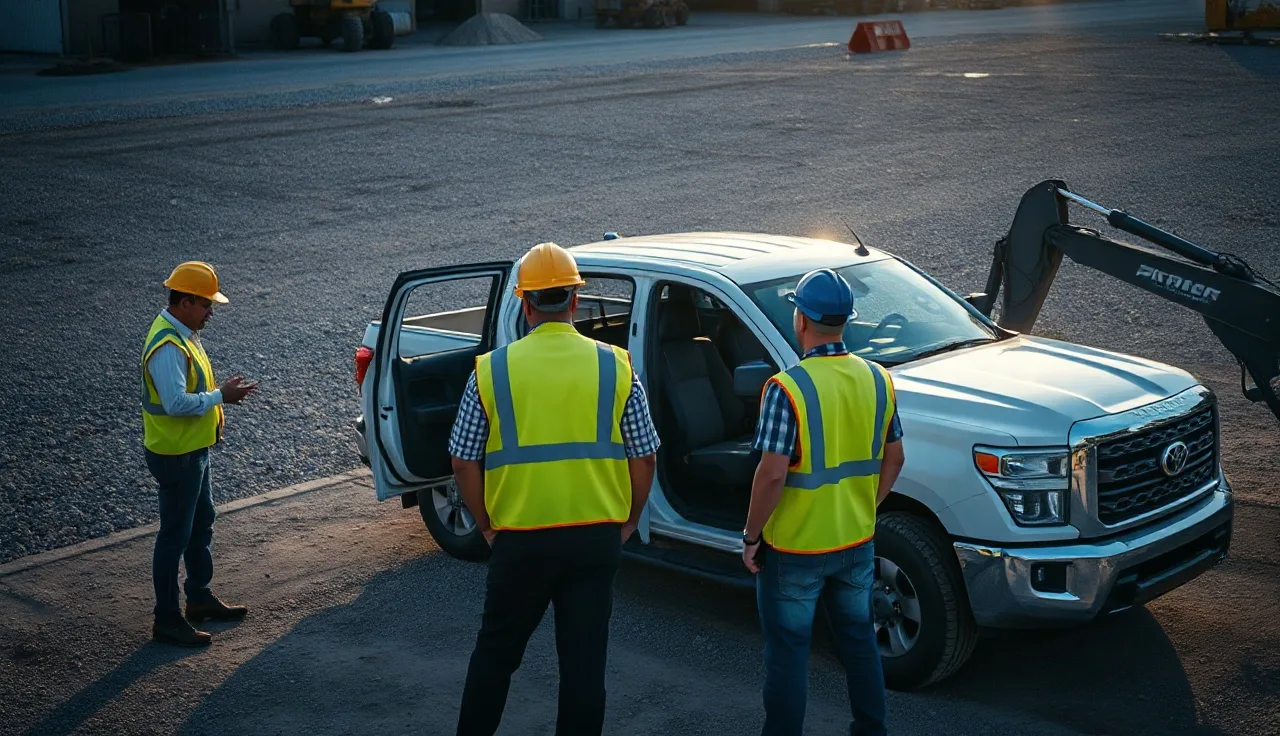
TL;DR
A safe driving toolbox talk is a short team meeting (10-15 minutes) that reviews one specific driving hazard before a shift or season. Motor vehicle crashes are the leading cause of occupational death in the US. The Bureau of Labor Statistics counted 1,075 fatal transportation incidents in 2022. A good talk is conversational, tied to a real local hazard, and ends with one clear action drivers will take that day.
Why does a driving toolbox talk matter for small businesses?
Motor vehicle crashes are the single leading cause of work-related death in the United States. The Bureau of Labor Statistics counted 1,075 fatal occupational injuries involving transportation incidents in 2022, which works out to roughly three workers killed every day just from roadway crashes. That number has barely moved in a decade. [1]
For small businesses, the money exposure is lopsided. A single fatal crash can cost an employer $1.5 million or more in direct costs (medical, legal, property damage) before you factor in OSHA fines, higher insurance premiums, and the time your operation simply stops running. OSHA's general duty clause, Section 5(a)(1) of the OSH Act, requires employers to keep workplaces free from recognized hazards. Driving is a workplace activity when employees are behind the wheel for company business. [2]
A toolbox talk is cheap protection. Fifteen minutes before a shift, one hazard covered clearly, and any supervisor can run it with no special equipment and no outside trainer. The hard part is making it real instead of a box you tick.
What exactly is a toolbox talk and how is it different from formal safety training?
A toolbox talk (also called a tailgate talk or safety briefing) is a short, informal conversation about a single safety topic. It runs 10 to 20 minutes. Nobody needs a classroom, a projector, or a certification to lead one. It is not a substitute for formal OSHA training on specific standards, but it keeps safety top of mind between formal sessions.
Formal driver safety training (defensive driving courses, CDL requirements under 49 CFR, fleet telematics coaching) builds knowledge and skill over hours or days. A toolbox talk is about awareness and behavior in the next few hours. The two work together. Formal training builds the foundation, and the toolbox talk activates it for today's conditions.
OSHA does not have a single standard that says "you must hold a driving toolbox talk every week." What it does have is 29 CFR 1910.132, which requires hazard assessments and training for recognized hazards, and the general duty clause, which catches everything else. Driving hazards fall under that umbrella. For operators of commercial motor vehicles, FMCSA regulations at 49 CFR 391 and 392 add more requirements. [3]
For small shops with no formal safety department, the toolbox talk is often the only proactive safety communication that happens all week. That makes running them well genuinely important.
What topics should a safe driving toolbox talk cover?
The best talks cover one topic per session. Try to cover five things in fifteen minutes and nothing sticks. Here is a working list, organized by category.
Distracted driving Distracted driving killed 3,308 people on US roads in 2022, according to NHTSA. [4] For your workers, the hazard is the phone ping at mile marker 47. Cover your written cell phone policy, the real penalty for a violation, and what drivers should do instead (pull over, use voicemail).
Fatigue The FMCSA's Hours of Service rules (49 CFR 395) exist because drowsy driving degrades reaction time about as badly as drunk driving. Commercial drivers know the rules. Your non-commercial drivers often do not. A fatigue talk can cover the warning signs: frequent yawning, drifting between lanes, no memory of the last few miles.
Following distance and speed Tailgating is the most common pre-crash behavior in rear-end crashes, which make up about 29% of all crashes per NHTSA. The three-second rule (four seconds in bad conditions) is simple to teach and easy to check.
Pre-trip vehicle inspection Tires, lights, brakes, mirrors, washer fluid. A pre-trip inspection takes five minutes and catches most mechanical failures before they turn into crashes. Walk drivers through your checklist.
Winter driving (see the dedicated section below)
Backing and blind spots More than half of non-traffic roadway fatalities involve backing, according to the Network of Employers for Traffic Safety. Cover spotter procedures, the "Get Out And Look" rule, and what backup cameras miss.
Impairment (alcohol, drugs, medication) Legal cannabis in many states does not mean safe to drive. Prescription opioids, antihistamines, and muscle relaxants all impair driving. Ask workers to tell a supervisor if they are on a medication that might affect them, with no penalty for the honesty.
Rotate topics. A monthly or quarterly calendar posted somewhere visible tells supervisors what to cover next and shows OSHA you have a system.
How do you run a toolbox talk on winter driving specifically?
Winter driving earns its own talk, and you run it before the first ice or snow of the season, not after the first skid. It is one of the highest-value fifteen minutes you can spend with a crew, because the hazard is time-limited and very predictable. [5]
Here is a structure that works.
Open with a local fact (2 minutes). Pull your state DOT's crash numbers for winter months, or mention a recent nearby crash your crew already knows about. Numbers from your own region land harder than national averages.
Cover vehicle prep (3 minutes). Tires (tread depth minimum 2/32", better at 4/32" for snow), battery (cold cuts battery capacity by up to 50% at 0 degrees F per AAA), antifreeze levels, wiper blades, emergency kit (scraper, blanket, jumper cables, sand or kitty litter). [9]
Cover driving technique (5 minutes). Accelerate slowly. Brake early. Never brake in a curve on ice. ABS does not shorten stopping distance on snow and ice. It only lets you steer while braking. Following distance on ice should be at least 8 to 10 seconds, not three. Black ice forms first on bridges and overpasses.
Cover the decision to stop (3 minutes). Give drivers explicit permission to pull over, call in, and wait. Plenty of serious crashes happen because a driver felt pressure to make the delivery or clock back in on time. Your policy has to say clearly that stopping is the right call and there is no punishment for it.
Close with a question (2 minutes). Ask: "What's the worst stretch of road on your route in snow?" Getting drivers to name a specific hazard out loud beats passive listening every time.
For seasonal workers or fall new hires, this talk pairs with a written winter driving policy that spells out tire chain requirements, when drivers should call in for weather holds, and who has the authority to cancel a run.
What does OSHA actually require for driver safety programs?
OSHA has no single standard dedicated to motor vehicle safety for non-commercial drivers. That surprises people. What it has is a patchwork that adds up to real obligations. [2]
The general duty clause (OSH Act Section 5(a)(1)) is the main hook. OSHA has cited employers under this clause for weak driver safety programs when crashes were foreseeable, including cases where the employer had no written distracted driving policy and no training records. Employer-required driving is a covered workplace activity.
29 CFR 1910.132 requires employers to assess hazards and train workers to handle them. If driving is part of a job, driving hazards have to be assessed and training has to happen. [10]
For commercial motor vehicle operators, FMCSA regulations at 49 CFR Parts 380 through 395 govern CDL requirements, hours of service, drug and alcohol testing, and pre-trip inspections. These sit separate from OSHA and layer on top. [3]
For companies with written safety programs, the OSHA training records from toolbox talks are your evidence of compliance. Date, topic, attendees, and who led the talk. Keep them at least three years. If OSHA shows up after a crash, training records are the first thing they ask for.
Here is the practical takeaway. If any employee drives for company business, you need a written driver safety policy, documented training, and periodic refreshers. Toolbox talks fill the refresher requirement cheaply and consistently.
What should a toolbox talk sign-in sheet include?
Documentation is the difference between a talk that happened and a talk you can prove. Your sign-in sheet should capture the date, the location (job site, shop, dispatch area), the topic covered, the name and signature of whoever led the talk, and the printed name plus signature of each attendee.
Some supervisors add a one-line note on the main point, which helps if you ever need to reconstruct what was said. "Covered black ice on the Route 9 bridge, stopping distances on snow, and the company weather hold procedure" is a useful record. "Safe driving" is not.
File these with your general safety records. If you use an incident report system, keep the toolbox talk logs in the same place so you can cross-reference a crash against what training had or had not happened before it.
Digital signatures on a tablet or safety app work fine, as long as the record is retrievable and tamper-evident. Paper works fine too. The medium does not matter. The habit does.
How long should a driving toolbox talk be, and how often should you hold them?
Ten to fifteen minutes is the sweet spot. Long enough to cover one topic with real detail, short enough that drivers still listen at the end. Talks that run 30 minutes turn into lectures and lose the room.
Frequency depends on your operation. For fleets or crews that drive daily, monthly is a reasonable baseline. Seasonal triggers (first snow, summer heat, harvest, construction zone changes) should prompt an extra talk no matter the schedule. After a near-miss or a crash anywhere in your industry, run one within 24 to 48 hours. That is when the hazard feels most real to your crew.
The Network of Employers for Traffic Safety recommends that motor vehicle safety programs include regular training refreshers, with frequency scaling to crash exposure. Drivers with more miles or higher-risk routes need more frequent contact. [6]
Avoid one trap: holding a toolbox talk only after a bad event. Reactive safety communication teaches workers that talks mean something went wrong, which is the opposite of a safety culture. Regular scheduled talks, even short ones, make safety conversation a normal part of the job.
What are the most common mistakes supervisors make running a driving toolbox talk?
Reading straight off a handout is the biggest one. Workers can tell when a supervisor is going through the motions, and it signals that nobody actually cares about the content. Even a two-minute prep, where the supervisor lands on one real local example to mention, makes the talk feel legitimate.
Covering too many topics is the second most common. If the agenda says "distracted driving, fatigue, following distance, and winter tires," you hit all of them thin and workers keep none of them. Pick one. Cover it well.
Inviting no response is another. A talk where the supervisor speaks for fifteen minutes and nobody else does is a monologue. Ask at least one question that needs a real answer: "Who has driven that county road in ice? What did you do?" You will often hear hazards you did not know about.
Skipping documentation is common in small shops. The talk happened, nobody wrote it down. That is a real problem, because without records, OSHA and your insurer have no proof training occurred. It takes 90 seconds to fill out a sign-in sheet. Do it every time.
And ignoring the follow-up. If a driver raised a concern and nothing happened, that worker will not raise concerns again. A quick "we looked into the brake issue you flagged and scheduled the shop visit" closes the loop and builds trust.
How does a driving toolbox talk fit into a broader written safety program?
A toolbox talk is a tactic. A written safety program is the strategy. The talk should reinforce policies already written down, not stand in for them.
A full driver safety program for a small business includes a written vehicle safety policy (cell phone rules, seat belt policy, drug and alcohol testing policy, accident reporting procedure), a pre-trip inspection checklist, a driver qualification file for each driver (license verification, MVR checks), training records, and an accident investigation procedure. [2]
The toolbox talk plugs into that framework by delivering policy content in small, memorable pieces over time. Your cell phone policy lives in the handbook. The toolbox talk is what makes your drivers actually think about it on Tuesday morning.
No written safety program yet? Start there. Building one from scratch used to take days with a consultant billing $150 to $300 an hour. SafetyFolio's safety program generator produces a customized, OSHA-aligned written program in about 15 minutes, which gives you the foundation to hang your toolbox talks on.
For small operations, the written program and the toolbox talk schedule can both stay simple. A one-page vehicle safety policy and a twelve-month toolbox talk calendar (one topic per month) cover most of what a small fleet needs to show reasonable care. See how OSHA training fits the bigger picture of your written program if you want to understand where these pieces connect.
What topics should go on an annual driving toolbox talk calendar?
Here is a working twelve-month rotation that hits the highest-risk scenarios across seasons. Adapt it to your region and fleet type.
| Month | Topic | Trigger |
|---|---|---|
| January | Winter driving: ice, stopping distance | Peak winter condition season |
| February | Fatigue and Hours of Service basics | Short days, post-holiday fatigue |
| March | Backing and blind spots | Increased foot traffic in spring |
| April | Distracted driving: phones and in-cab tech | Distracted Driving Awareness Month |
| May | Pre-trip inspection walkthrough | Spring equipment maintenance season |
| June | Work zone and construction zone driving | Highway construction ramp-up |
| July | Heat: vehicle fires, tire blowouts, hydration | Peak summer heat |
| August | Following distance and speed management | Back-to-school pedestrian and bus traffic |
| September | Impairment: alcohol, drugs, prescriptions | Fall harvest season, longer social events |
| October | Fall driving: leaves, wet roads, deer | Peak deer-vehicle crash season |
| November | Winter driving preview [5] | Before first significant storm |
| December | Accident reporting procedure | Year-end review, incident reporting reminder |
This calendar doubles as a documentation tool. Check off each month as it happens, note the date and who led it, and you have a year-end training record that took no extra effort to create.
For businesses with heavy seasonal driving exposure (landscaping, construction, delivery, agriculture), double up in the highest-risk months instead of sticking to one per month. A landscaping company in the upper Midwest might run three winter driving talks in November and December because the exposure is simply that high.
How do you make a toolbox talk actually land with experienced drivers?
Experienced drivers are the hardest audience. They have been driving for twenty years, and they know it. Open with basics they mastered decades ago and you lose them inside two minutes.
Tie the talk to something new or local. A recent crash on a route your crew actually uses. A new construction zone that opened last week. A change in your fleet (new vehicles, new payload limits). Something they have not already processed. New information earns attention that recycled information never will.
Ask for their expertise. "You've driven that mountain pass in snow for fifteen years. What do newer drivers get wrong?" Veteran drivers tell you things you did not know, and they stay engaged because you acknowledged they have something to contribute. The talk becomes a knowledge transfer instead of a lecture.
Use real numbers. Stopping distance on dry pavement at 60 mph runs about 180 feet. On wet pavement it is closer to 220 feet. On ice it can top 400 feet. Concrete specifics are harder to shrug off than vague warnings. [4]
Keep it honest. If the company made a policy change that annoys drivers (required 10-second following distance, no phone even hands-free), say why, and admit the friction. Drivers who understand the reason behind a rule follow it better than drivers who were just told to.
For workers whose primary language is not English, check whether your materials need translation. OSHA enforcement guidance says training must be conducted in a language workers understand. Spanish-language toolbox talk cards are available from OSHA and NIOSH at no cost. [7]
What should you do after a crash or near-miss before the next driving toolbox talk?
Run a talk within 48 hours. Wait until next month's scheduled session and you miss the window when the hazard is most real to your team.
Keep it factual, not punitive. "Here is what happened, here is what we know about the contributing factors, here is what we are changing" is productive. "Here is why that driver messed up" is not, because it teaches everyone else that crashes bring public blame, so they stop reporting near-misses.
Use the incident as a teaching case, not a cautionary tale about one person. The questions that matter: Was there a policy gap? Did the driver have the training they needed? Was there a vehicle maintenance issue? Was the route hazard known and communicated? Answer those out loud with your crew.
File an incident report promptly. OSHA requires employers to report fatalities within 8 hours and hospitalizations of three or more workers within 24 hours under 29 CFR 1904.39. Even crashes below those thresholds belong in your own records as part of your injury and illness log. [8]
Then look at your written program. If the crash exposed a gap (no policy on driving in fog, no procedure for a vehicle breakdown on the highway), close the gap in writing before the next toolbox talk so the talk reinforces a real policy change.
Frequently asked questions
What is a safe driving toolbox talk?
A safe driving toolbox talk is a short, focused safety meeting (10-15 minutes) held before a shift or season where a supervisor covers one specific driving hazard with the team. It is informal and conversational, not a classroom course. The goal is to keep a single hazard front of mind for the workday ahead. Documentation (a sign-in sheet with date, topic, and attendee names) should be kept with your safety records.
Does OSHA require driving toolbox talks?
OSHA has no regulation that says "hold a driving toolbox talk every month." But OSHA's general duty clause and 29 CFR 1910.132 require employers to assess driving hazards and train workers to handle them when driving is part of the job. Toolbox talks are one of the most practical ways to meet that training obligation and document it happened. Lack of training records has been cited in OSHA enforcement cases following fatal crashes.
How long should a driving toolbox talk be?
Ten to fifteen minutes is the practical standard. That is long enough to cover one topic with real detail and a short discussion, short enough that drivers stay engaged at the end. Talks that stretch past twenty minutes start losing the room. Cover one topic well rather than several topics thin. Consistent short talks over months beat a single long session.
What should I cover in a winter driving toolbox talk?
Cover vehicle prep first (tire tread, battery, antifreeze, wiper blades, emergency kit), then driving technique (slow acceleration, early braking, extended following distance of 8-10 seconds on ice, ABS limitations), then the decision to stop (explicitly give drivers permission to pull over or call in without penalty). Run this talk before the first major storm, not after. Include a question that asks drivers to name a specific hazard on their actual routes.
How often should you hold a driving toolbox talk?
Monthly is a reasonable baseline where employees drive regularly. Add an extra talk any time a seasonal hazard arrives (first snow, construction zone changes), after a crash or near-miss in your fleet or industry, or when a new policy takes effect. The Network of Employers for Traffic Safety recommends scaling frequency to driving exposure. Drivers with higher mileage or riskier routes need more frequent contact than once a month.
What are the most important safe driving topics for a small business fleet?
Distracted driving (especially phone use) and fatigue rank highest by fatality data. Following distance and speed management prevent the most common crash type (rear-end). Pre-trip inspections catch mechanical failures before they cause crashes. Winter driving and backing/blind spots are the most seasonal and situational. For small fleets with occasional drivers (not CDL holders), impairment including legal prescriptions is often overlooked and worth covering.
How do I document a driving toolbox talk for OSHA?
Use a simple sign-in sheet capturing the date, location, topic, the name of whoever led the talk, and the printed name plus signature of every attendee. Add a one-sentence description of the specific points covered. File these with your general safety documentation and keep them at least three years. Digital signatures are acceptable. After a crash, these records are what show OSHA and your insurer that training occurred.
Can a non-supervisor employee lead a driving toolbox talk?
Yes. The person leading needs to know the topic, but there is no OSHA requirement that it be a certified trainer or supervisor. Many companies rotate the lead role among experienced drivers, which has the bonus of peer-to-peer knowledge sharing. Whoever leads it should do a brief prep, know one local or recent example to reference, and be able to answer basic questions. Document the leader's name on the sign-in sheet.
What is the leading cause of occupational death in the US and how does it relate to driving?
Transportation incidents are the leading cause of occupational fatality in the US. The Bureau of Labor Statistics recorded 1,075 fatal transportation incidents in 2022, with roadway incidents accounting for the majority. That is more deaths than falls, caught-in equipment, and struck-by incidents combined. For businesses with mobile workers (delivery, construction, field service, agriculture), driving is almost certainly the highest-probability fatal risk in the operation.
What should a toolbox talk on distracted driving include?
Cover your company's written cell phone policy and the penalty for a violation. Include the crash risk data: NHTSA found that texting while driving takes eyes off the road for an average of 4.6 seconds, which at 55 mph is like driving the length of a football field blind. Cover what to do instead: let calls go to voicemail, pull over safely to respond, use Do Not Disturb While Driving. Ask drivers when they were last distracted and what triggered it.
Do seasonal or temporary workers need driving toolbox talks?
Yes, especially because seasonal workers often have less familiarity with local routes, seasonal hazards, and your company's specific policies. OSHA's training requirements do not exempt temporary or seasonal workers. Run a driving orientation talk before a new seasonal worker makes a solo run. Include your weather hold policy, your accident reporting procedure, and the pre-trip inspection checklist. Brief and timely beats thorough and three weeks late.
What is black ice and how should it be covered in a winter driving toolbox talk?
Black ice is a thin, nearly transparent layer of ice on pavement that looks like a wet road. It forms most often when temperatures hover just below freezing, especially on bridges, overpasses, and shaded stretches where the pavement stays colder. It is called "black" because the dark pavement shows through. In a talk, have drivers name the bridges and shaded curves on their actual routes. The hazard is real only if drivers can picture where they will hit it.
How do toolbox talks connect to a written fleet safety program?
Toolbox talks deliver your written policies in small, memorable doses. The written program is the foundation (cell phone policy, accident reporting procedure, pre-trip inspection checklist, weather hold policy). The toolbox talk is how workers absorb and remember those policies over time. Without a written program, talks lack authority. Without talks, the written program sits in a binder and changes nobody's behavior. The two reinforce each other.
Where can I find free driving toolbox talk templates?
OSHA's website (osha.gov) has free materials under its Motor Vehicle Safety topic page. The Network of Employers for Traffic Safety (trafficsafety.org) offers free fleet safety resources including talk outlines. The National Safety Council publishes driving safety toolbox talks, some free. State DOT websites often have seasonal driving safety materials tailored to local conditions. For a framework tied to a written safety program, a generator like SafetyFolio can produce customized materials faster than assembling templates from multiple sources.
Sources
- Bureau of Labor Statistics, Census of Fatal Occupational Injuries Summary 2022: 1,075 fatal occupational injuries involving transportation incidents in 2022
- OSHA, Motor Vehicle Safety: OSHA general duty clause applies to employer-required driving; lack of driver safety programs has been cited
- Federal Motor Carrier Safety Administration, 49 CFR Parts 390-395: FMCSA regulations govern CDL requirements, hours of service, drug and alcohol testing, and pre-trip inspections for commercial drivers
- NHTSA, Distracted Driving 2022 Data: Distracted driving killed 3,308 people in 2022; texting removes eyes from road an average 4.6 seconds
- NHTSA, Winter Driving Tips: Winter driving hazards including black ice, bridge freezing, and reduced stopping distances on snow and ice
- Network of Employers for Traffic Safety (NETS), Fleet Safety Program Guidance: Motor vehicle safety programs should include regular training refreshers; frequency should scale to crash exposure
- OSHA, Training Standards Policy Statement: Training must be conducted in a language and vocabulary workers understand
- OSHA, 29 CFR 1904.39, Reporting Fatalities and Catastrophes: Employers must report fatalities within 8 hours and hospitalizations of 3 or more workers within 24 hours
- AAA, Battery Performance in Cold Weather: Cold weather can reduce battery capacity by up to 50% at 0 degrees F
- OSHA, 29 CFR 1910.132, Personal Protective Equipment General Requirements: Requires employers to assess hazards and train workers; driving hazards fall under this obligation
- NHTSA, Traffic Safety Facts: Rear-End Crashes: Rear-end crashes account for approximately 29% of all crashes; tailgating is the most common pre-crash behavior
- NIOSH, Motor Vehicle Safety at Work: Transportation incidents are the leading cause of work-related death in the US; employer programs reduce crash risk