Last updated 2026-07-09
TL;DR
A toolbox talk is a short, informal safety meeting, usually 5 to 15 minutes, held before a shift or task starts. OSHA doesn't mandate a program by that name, but several standards require the regular safety communication toolbox talks provide. Run consistently, they're the cheapest injury-reduction tool a small business has.
What is a toolbox talk?
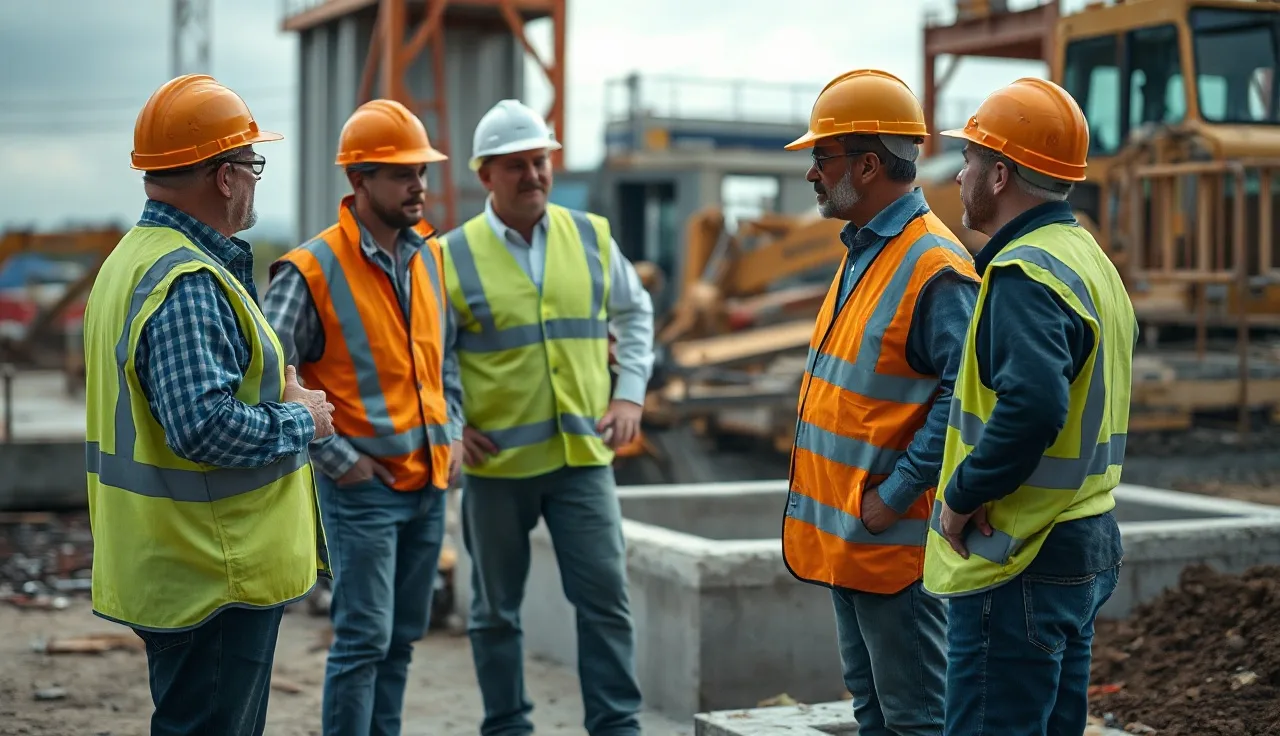
A toolbox talk is a short safety conversation held on-site, usually right before work starts. The name comes from construction crews who gathered around the toolbox at the start of a shift. One person, often a supervisor or crew lead, picks a single hazard, talks it through for five to fifteen minutes, and the crew asks questions. That's the whole thing.
No classroom. No slides required. The point is to keep safety visible in the actual place where work happens, on a daily or weekly basis.
Different industries use different names. Manufacturing calls it a "safety briefing" or "tailgate meeting." Healthcare says "huddle." Construction, especially in California, says "tailgate talk." Same thing every time: a short, recurring, job-site safety conversation.
The topic almost always ties to what the crew is doing that week. Roof work Tuesday? Tuesday's talk covers fall protection. Forklift near-miss last Thursday? That drives Friday's talk. That immediate relevance is what separates a toolbox talk from the annual training everybody sleeps through.
Does OSHA require toolbox talks?
OSHA has no regulation that says "you must hold toolbox talks." The phrase doesn't appear anywhere in the Code of Federal Regulations. But that's a narrow way to read the question, because several OSHA standards require the recurring safety communication toolbox talks deliver.
Under 29 CFR 1926.21(b)(2), construction employers must instruct workers to recognize and avoid unsafe conditions and must explain the regulations that apply to their work [1]. Regular toolbox talks are the most common way contractors document that they did it.
29 CFR 1910.132(f) requires general industry employers to train workers on PPE, including when and how to use it, before they use it and whenever a new hazard shows up [2]. A quick talk before you introduce a new chemical or a new task is a defensible way to show the training happened.
For process safety, 29 CFR 1910.119 (Process Safety Management) requires employee participation in safety procedures and hazard analysis [3]. Toolbox talks are named in OSHA's PSM compliance guidelines as one mechanism for that participation.
The General Duty Clause, Section 5(a)(1) of the OSH Act, requires employers to provide a workplace free from recognized hazards [4]. Inspectors pull training records and safety meeting logs when they investigate an incident. A consistent toolbox talk log is direct evidence you took the hazard seriously.
The legal case for toolbox talks is strong even though no single regulation uses the term. In construction especially, they've become a de facto standard of care.
How often should toolbox talks happen?
Weekly is the norm in construction, and many general contractors require it by contract rather than choice. OSHA's construction compliance officers expect to see some form of regular safety communication, and weekly logs are what they ask for during an inspection.
In general industry, manufacturing, and warehousing, the frequency varies more. Monthly talks are common in lower-hazard settings. High-hazard operations (chemical plants, confined space work, heavy equipment) often run daily or pre-task talks.
The honest answer: match frequency to your hazard level. A landscaping crew working near traffic every day needs a quick daily talk more than a three-person cabinet shop does. A roofing contractor doing the same tasks all week can run a strong weekly program without wearing anyone out.
Don't turn frequency into the goal. A real ten-minute conversation once a week beats a rushed two-minute checkbox every morning. Research on safety climate, including work published in the journal Safety Science, keeps finding that perceived authenticity of safety communication matters more than raw frequency [5].
What topics should a toolbox talk cover?
The best topic is whatever your crew is doing next or whatever nearly went wrong last. That isn't a platitude, it's practical. Workers pay attention when the topic touches their actual day.
Beyond that, here are the common topic areas by industry.
Construction: Fall protection (the leading cause of construction deaths, at 395 of 1,069 construction fatalities in 2022 [6]), scaffolding, struck-by hazards, electrical safety, ladder safety, trenching and excavation, heat illness, hand and power tools.
Manufacturing and warehousing: Lockout/tagout, machine guarding, forklift certification and safe operation, hazard communication and SDS review, ergonomics, housekeeping.
General industry: Fire extinguisher use, emergency evacuation, slip-trip-fall prevention, PPE selection and care, first aid response, back safety.
Cross-industry: Situational awareness, near-miss reporting, fatigue, distraction and phone use, heat and cold stress, violence prevention.
Situational awareness earns its own line. It's one of the most-searched toolbox talk topics online (plenty of people hunting for a "situational awareness toolbox talk pdf"), and it's genuinely useful. The core message is simple: know what's happening around you before you act. For anyone working near vehicles, heavy equipment, or live electrical systems, that's a foundational habit, not a soft skill.
OSHA's website keeps a library of free safety topic pages and PDFs organized by hazard at osha.gov [7]. The navigation is clunky, but the content is solid and citable. Cal/OSHA's Injury and Illness Prevention Program resources also include sample meeting topics in Spanish and English.
How do you actually run a toolbox talk? A step-by-step format
A good toolbox talk needs three things: five minutes of prep the night before, a real conversation during the talk, and a signed sheet afterward. Here's what that looks like on the ground.
1. Pick the topic (night before, five minutes). Look at what the crew does tomorrow. Check for a near-miss, a new piece of equipment, or a change in conditions. Pick one hazard. One. Cover three things in ten minutes and nobody remembers any of them.
2. Gather at the start of the shift. At the job site, not the break room if you can help it. Standing next to the equipment or the work area makes it concrete.
3. Open with the hazard, skip the pleasantries. "We're pouring concrete near the east wall today. The trench is five feet deep. Here's what I need everyone watching for." Direct wins.
4. Explain the hazard and the control. What can go wrong? What's the right protection? Reference the OSHA standard if it applies, but don't read the CFR to your crew. Translate it: "OSHA requires any trench over five feet to be sloped, shored, or shielded. We're using a trench box. Here's how the entry ladder works and why you never get in without it."
5. Ask questions and get answers. "Anyone seen this go wrong on a job before?" "What do you do if the trench walls start to crack?" The conversation is where the learning happens.
6. Sign the attendance sheet. Everyone present signs and dates it. You keep the sheet. This is your documentation, and it's how you show an OSHA inspector or your insurance carrier that training happened on a specific date for a specific hazard.
7. File it. Keep toolbox talk records for at least three years. Some contracts require longer. If an injury happens and OSHA investigates, your record from six months ago is relevant. Digital storage is fine; a folder of signed PDFs works.
The whole thing runs seven to fifteen minutes. If it regularly runs longer, you're either covering too much or not doing it often enough.
What should a toolbox talk sign-in sheet include?
The sign-in sheet is your legal record. At minimum it needs:
- Date
- Location or job site
- Topic covered
- Name of the person who led the talk
- Printed name and signature of each attendee
- Space for comments or questions raised
Some employers add the relevant standard number (29 CFR 1926.502 for fall protection, say) to tie the topic to the regulation. It's a small detail that makes the record more useful if you ever need it in a legal or inspection context.
Free templates come from OSHA's website [7] and many state plan agencies. If you want something that feeds a broader written safety program, SafetyFolio's safety program generator produces documentation that includes toolbox talk logs formatted for OSHA compliance.
One practical note. If you have workers who don't read English well, have them sign with a witness who confirms they understood the talk, and document the language used. OSHA standards require training "in a manner employees can understand," so language access isn't optional [8].
Where can I find free toolbox talk topics and PDFs?
Several free sources are genuinely good. Here's an honest ranking.
OSHA.gov: The site has a library of safety and health topic pages, each with guidance documents, fact sheets, and sometimes ready-to-use handouts [7]. The content is authoritative and citable. Navigation is frustrating, so search the topic plus "fact sheet" and you'll usually land on something usable.
CPWR (The Center for Construction Research and Training): CPWR publishes a large library of free, downloadable toolbox talks built for construction. Many come in Spanish. Quality is high and the format is made for the field [9].
OSHA's Construction eTool: This online resource covers the major construction hazards with guidance you can adapt straight into a talk.
Cal/OSHA: California's Division of Occupational Safety and Health publishes sample meeting outlines and topic guides that hold up even outside California [10].
AGC, ABC, and other trade associations: If you belong to a contractor association, check your member resources. Many publish quarterly toolbox talk packets as a member benefit.
For situational awareness specifically, CPWR and several state plan agencies have published dedicated handouts. Search "situational awareness toolbox talk pdf" on CPWR's website or osha.gov and you'll find real material. The core content covers 360-degree awareness near equipment, avoiding phone distractions, and verbal communication in high-noise areas.
A word of caution. A lot of toolbox talk PDFs floating around the internet come from third-party consulting sites and haven't been touched since the mid-2000s. Check the date. Standards change, and a talk citing an outdated permissible exposure limit or an obsolete SDS format does more harm than good.
How do toolbox talks connect to a written safety program?
A written safety program is the document that describes how your company manages safety: who's responsible for what, which hazards exist, and how they're controlled. Toolbox talks are what keep that program alive day to day.
Think of it this way. The written program says: "We will train workers on fall protection before they work at heights above six feet." The toolbox talk is how that training actually happens. The signed attendance sheet is the proof.
Under OSHA's Recommended Practices for Safety and Health Programs (the I2P2 framework OSHA has promoted but never finalized as a federal standard), regular safety meetings are one of the six core elements of an effective safety management system [11]. They sit alongside hazard identification, incident investigation, and management commitment.
No written program yet? Toolbox talks are a good place to start. They're low-cost, immediately visible to workers, and they generate records. But they don't replace a written program. The written program is the first thing an OSHA inspector asks for. The toolbox talk log is what backs it up.
For small businesses that need both, an OSHA training course like the OSHA 30 gives supervisors the background to lead better talks, while a written program generator handles the documentation.
Do toolbox talks actually reduce injuries?
Honest answer: the research on toolbox talks specifically is mixed, but the underlying mechanism is well-supported.
A 2012 study in the Journal of Safety Research found that construction workers who reported more frequent safety meetings also reported fewer injuries, with statistically significant results after controlling for company size and hazard exposure [5]. That's an association, not proof the talks caused the drop.
The stronger evidence points to safety climate, the shared sense among workers that management takes safety seriously. Genuine, consistent toolbox talks are one of the most direct ways to build it. BLS data shows the private sector recordable case rate was 2.7 per 100 full-time workers in 2022, down from 5.0 in 2003 [6]. OSHA and industry analysts credit a meaningful share of that decline to better safety management systems, and regular worker communication is a core piece of those.
The situational awareness angle deserves weight. OSHA's data keeps showing that a large share of struck-by fatalities and machinery accidents involve workers who simply didn't see the hazard coming. A regular, specific talk on awareness habits can change behavior in ways a one-time annual class never does.
Here's how I'd put it. A toolbox talk program won't cut your injury rate in half on its own. But a company running consistent, relevant talks as part of a real safety culture almost always beats one that doesn't.
What are common mistakes that make toolbox talks ineffective?
The number one mistake is treating it as a checkbox. You can spot it: the talks are always exactly five minutes, the topic never matches what the crew is doing that day, and nobody asks a question. Workers notice. Once they decide the talk is theater, they tune out, and you've lost the tool.
Second most common: reading straight from a preprinted handout with no conversation. The handout is a prompt, not a script. If the crew is staring at their boots while you read a PDF, you're not training anyone.
Third: picking topics that don't match the work. A confined space talk for a crew that hasn't entered one in two years isn't useless, but it loses to a talk on the hazards actually present that week. Rotate topics, sure, but anchor them to the real work first.
Fourth: not documenting. This one has a direct legal cost. If an injury happens on a day you skipped the log, OSHA and a plaintiff's attorney will both notice. The signed sheet protects you too.
Fifth: making them too long. Past fifteen minutes, attention drops and workers start resenting the time. If a topic honestly needs thirty minutes, it belongs in a formal training session, not a toolbox talk. The incident report process is a good example: it's a separate procedure, not something you cover in a ten-minute talk.
Last one: never adapting to feedback. If workers keep asking the same question about a hazard, that question is telling you something. Either the procedure isn't clear or the control isn't working. Follow the thread.
How do toolbox talks differ from formal OSHA training?
This distinction matters because people assume toolbox talks replace the formal training OSHA requires. They don't.
OSHA's training requirements for specific standards are precise. 29 CFR 1910.178(l) requires powered industrial truck operators to be formally evaluated by a qualified trainer before they run a forklift [12]. A toolbox talk about forklift safety doesn't satisfy that. Neither does a quick supervisor walkthrough. The standard spells out the evaluation process, and it has to be documented that way. (Our full forklift certification article walks through what that involves.)
Same with hazard communication training under 29 CFR 1910.1200. It must cover specific elements: how to read an SDS, how to interpret labels, what hazards the workplace chemicals carry. A toolbox talk can supplement that, but the initial training has to be thorough and documented on its own.
The practical rule: use formal training to meet the letter of a specific standard. Use toolbox talks to reinforce it, update it, and keep awareness high between formal training cycles. They work together.
| Feature | Toolbox Talk | Formal OSHA Training |
|---|---|---|
| Duration | 5-15 minutes | 30 minutes to several hours |
| Format | Informal conversation | Structured, often evaluated |
| Documentation | Sign-in sheet | Training record, certificates |
| Frequency | Daily or weekly | Defined by standard (often annual) |
| Satisfies specific CFR training requirement | Rarely | Yes, when done properly |
| Cost | Near zero | Varies: $25-$400+ per worker |
Can toolbox talks help during an OSHA inspection?
Yes, and it's underappreciated. OSHA compliance officers evaluate your safety program partly by asking workers whether they've been trained on specific topics. When a worker says "yeah, we talked about that last week" and you have a signed log confirming it, that carries weight.
OSHA's Field Operations Manual instructs compliance officers to review employer records of safety and health activities, including meeting logs, when assessing whether a General Duty Clause or training-related violation occurred [13]. Consistent toolbox talk records can be the difference between a citation and a warning, or between a "willful" and a "serious" classification. The money gap is real: willful violations carry fines up to $156,259 per violation as of 2024, while serious violations top out at $15,625 [14].
One specific scenario. If a worker gets hurt and OSHA investigates, inspectors ask whether the employer trained workers on the relevant hazard. A toolbox talk log showing that hazard came up in the weeks before the incident is concrete evidence of good faith. It won't erase liability if the underlying conditions were unsafe, but it's real documentation.
Having no training records at all, even for a small business that genuinely does talk about safety, is a preventable problem. The records protect you. Keeping them costs almost nothing.
Frequently asked questions
What is a toolbox talk in simple terms?
A toolbox talk is a short safety meeting, usually 5 to 15 minutes, held at the start of a shift or before a specific task. One person leads the group through a single safety topic tied to the day's work. Workers ask questions, the topic gets discussed, and everyone signs an attendance sheet. It's informal by design, meant to keep safety visible daily or weekly.
Does OSHA require toolbox talks?
OSHA doesn't use the term "toolbox talk" in any regulation, but several standards require regular safety communication that toolbox talks satisfy. 29 CFR 1926.21(b)(2) requires construction employers to instruct workers on recognizing unsafe conditions. The General Duty Clause requires addressing recognized hazards. Toolbox talk logs are strong documentation of compliance with both.
How long should a toolbox talk be?
Five to fifteen minutes is the standard range, and most experienced safety managers aim for ten. Shorter than five minutes and you're probably not covering the topic with enough depth. Longer than fifteen and you're pushing into formal training territory, which is fine but should be documented differently. Focusing on one topic is what keeps the length manageable.
How often should toolbox talks be held?
Weekly is standard in construction and most high-hazard industries. General industry settings with moderate hazards often run monthly. High-hazard operations, such as chemical plants or sites with frequent new tasks, may run daily pre-task talks. Match frequency to your actual hazard exposure. A genuine weekly talk beats a rushed daily checkbox every time.
What topics should I cover in a toolbox talk?
Always start with what the crew is actually doing. Fall protection, struck-by hazards, electrical safety, heat illness, lockout/tagout, forklift safety, and situational awareness are the most common high-frequency topics. OSHA's website and CPWR both offer free topic libraries. Near-misses from your own site are the best topics of all because they're immediately relevant.
Where can I find free toolbox talk PDFs?
OSHA's website (osha.gov) has free topic-specific fact sheets and guidance documents. CPWR publishes a large library of free, field-ready toolbox talk PDFs for construction, many in Spanish. Cal/OSHA also publishes sample meeting guides. For situational awareness specifically, search "situational awareness toolbox talk" on CPWR's site to find dedicated handouts made for the field.
What is a situational awareness toolbox talk?
A situational awareness toolbox talk focuses on the habit of knowing what's happening around you before and during a task. It usually covers 360-degree awareness near moving equipment, avoiding phone distractions, verbal communication in noisy environments, and recognizing when a situation has changed and stopping to reassess. It's especially relevant for workers near forklifts, heavy equipment, or live electrical systems.
Do I need to document toolbox talks?
Yes. Documentation is what makes a toolbox talk legally useful. Keep a signed attendance sheet for every talk with the date, location, topic, name of the person who led it, and signatures from every attendee. Store records for at least three years. In an OSHA inspection or injury investigation, these records are direct evidence that training occurred.
Can a toolbox talk replace formal OSHA training?
No. OSHA's specific training standards, such as forklift operator evaluation under 29 CFR 1910.178(l) or hazard communication training under 29 CFR 1910.1200, require structured training with defined content and documentation. A toolbox talk reinforces that training but doesn't substitute for it. Use formal training to meet the letter of a standard, and toolbox talks to keep knowledge fresh.
Who should lead a toolbox talk?
Usually the immediate supervisor or crew lead. They know the day's work, the crew's experience level, and any recent hazards better than anyone. For topics needing specific expertise, like confined space or electrical work, bring in someone with that knowledge. The leader doesn't need to be an OSHA expert, just someone who knows the topic well enough to answer real questions from the crew.
What should a toolbox talk sign-in sheet include?
At minimum: date, job site or location, topic covered, name of the person leading the talk, and printed name plus signature of each attendee. Some employers add the applicable CFR standard number. If workers aren't fluent in English, document the language used and have a witness confirm understanding. Free templates are available from OSHA's website and most state plan agencies.
How do toolbox talks help during an OSHA inspection?
OSHA compliance officers review training records and meeting logs when investigating incidents or evaluating your safety program. Consistent toolbox talk records show good-faith effort to address hazards. They can influence whether a violation is classified as "serious" versus "willful," which matters because willful penalties can reach $156,259 per instance compared to $15,625 for serious violations as of 2024.
Are toolbox talks required in construction?
Not by that exact name, but 29 CFR 1926.21(b)(2) requires construction employers to instruct workers on recognizing and avoiding unsafe conditions. Weekly toolbox talks are the standard way contractors document compliance with this and related provisions. Many general contractor contracts also require subcontractors to hold weekly safety meetings as a condition of the project.
What is the difference between a toolbox talk and a tailgate meeting?
They're the same thing with different names. "Tailgate meeting" or "tailgate talk" is more common in California and the western U.S., reflecting a crew gathering at the tailgate of a pickup truck. "Toolbox talk" is more common in the eastern U.S. and internationally. The format, purpose, and documentation requirements are identical.
Sources
- OSHA, 29 CFR 1926.21 Safety Training and Education: Construction employers must instruct workers to recognize and avoid unsafe conditions and explain applicable regulations.
- OSHA, 29 CFR 1910.132 Personal Protective Equipment (General Requirements): General industry employers must train workers on PPE before use and when new hazards arise.
- OSHA, 29 CFR 1910.119 Process Safety Management of Highly Hazardous Chemicals: PSM standard requires employee participation in safety procedures and hazard analysis.
- OSHA, OSH Act Section 5(a)(1) General Duty Clause: Employers must provide a workplace free from recognized hazards likely to cause death or serious physical harm.
- Journal of Safety Research, Vol. 43, Issue 4, 2012 — Safety climate and injury rates in construction: Construction workers who reported more frequent safety meetings also reported fewer injuries with statistically significant results after controlling for company size and hazard exposure.
- Bureau of Labor Statistics, National Census of Fatal Occupational Injuries in 2022: Falls accounted for 395 of 1,069 construction fatalities in 2022; private sector total recordable case rate was 2.7 per 100 full-time workers in 2022, down from 5.0 in 2003.
- OSHA, Training Requirements in OSHA Standards (OSHA 2254): OSHA standards require that training be conducted in a manner employees can understand, addressing language access.
- CPWR — The Center for Construction Research and Training, Toolbox Talks Library: CPWR publishes a large free library of downloadable toolbox talks for construction, many available in Spanish.
- OSHA, Recommended Practices for Safety and Health Programs (I2P2): Regular safety meetings are one of the six core elements of an effective safety management system under OSHA's I2P2 framework.
- OSHA, 29 CFR 1910.178(l) Powered Industrial Trucks — Operator Training: Powered industrial truck operators must be formally evaluated by a qualified trainer before operating a forklift.
- OSHA, Field Operations Manual (FOM), CPL 02-00-164: OSHA compliance officers are instructed to review employer records of safety and health activities including meeting logs when assessing violations.
- OSHA, Penalties: As of 2024, willful violation penalties reach up to $156,259 per violation; serious violations are up to $15,625 per violation.