Last updated 2026-07-09
TL;DR
Toolbox talks are short job-site safety meetings, usually 5 to 15 minutes, that a supervisor runs before a shift or task. OSHA sets no universal topic list or frequency for most employers, but the talks hit the leading causes of workplace injuries head-on. Your best topics come from your own incident reports, near-misses, and seasonal hazards, not a generic handout.
What are toolbox talks, exactly?
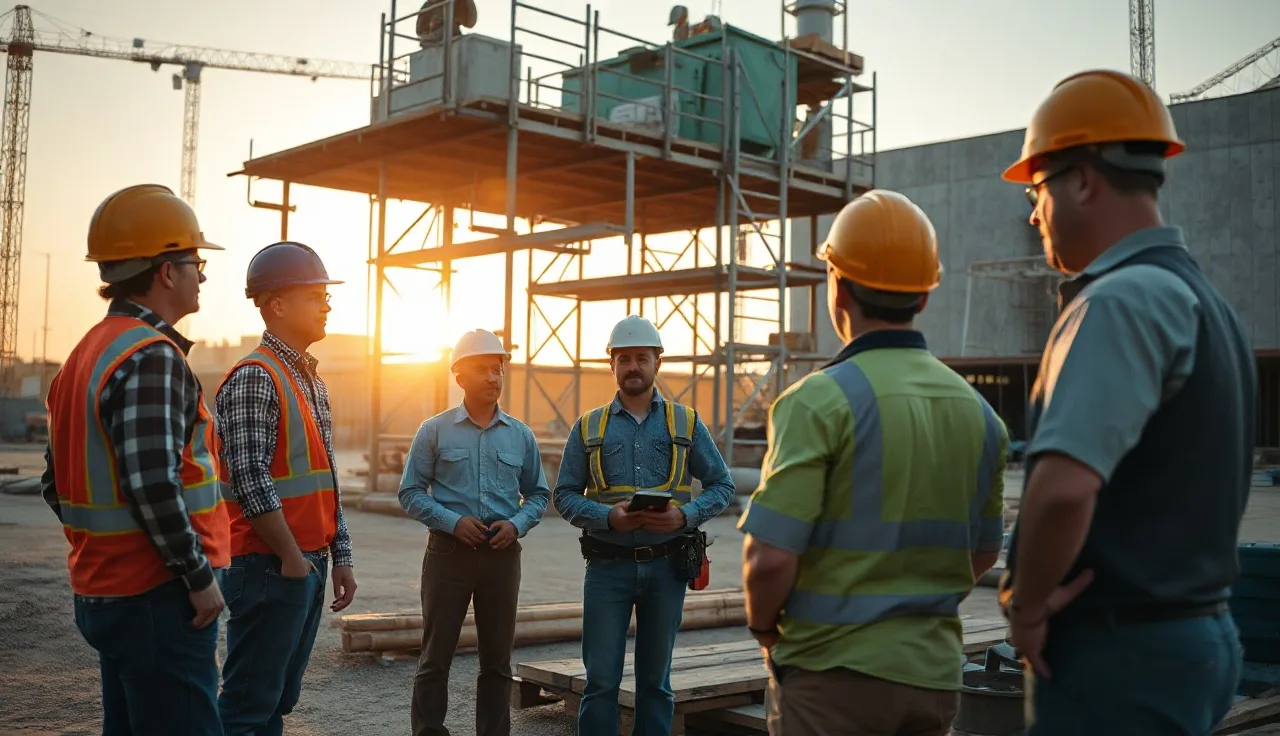
A toolbox talk is a short safety meeting held at or near the work area, usually at the start of a shift or right before a specific task. The name comes from construction, where crews once gathered around an actual toolbox. The format stuck because it works. It puts safety information in front of the people who need it, in the spot where the hazard lives, minutes before the work starts.
Most talks run 5 to 15 minutes. A supervisor or lead picks a topic, walks through the key points, asks a few questions, and lets the crew talk back. No slides. No classroom. Brevity and relevance are the whole point.
OSHA does not define "toolbox talk" anywhere in the Code of Federal Regulations, but the agency backs the practice in its Small Business Safety and Health Handbook and across several compliance assistance publications [1]. Some standards, like the construction training requirements under 29 CFR 1926, assume regular pre-task safety communication is already part of a working safety program, even without using that phrase.
For a small business, the toolbox talk is often the cheapest safety training you have. No consultant. No learning management system. No training room. You need a topic, five minutes, and a supervisor who treats it like it matters.
Does OSHA require toolbox talks?
Not by that name, and not on a fixed schedule that covers every employer. Several OSHA standards do require exactly the kind of pre-task communication a toolbox talk delivers, so in practice they often become mandatory in disguise.
Under 29 CFR 1910.132(f), you have to train workers on personal protective equipment before assigning them to any task that needs it [2]. Under 29 CFR 1910.147 (lockout/tagout), workers must get training specific to the equipment and energy sources they touch [3]. The lockout tagout standard never says "hold a toolbox talk," but a focused pre-task briefing before work on energized equipment covers part of that training duty and puts it on paper.
The construction standards under 29 CFR Part 1926 spell out pre-task communication in several areas. Excavation work (29 CFR 1926.651), confined space entry in construction (29 CFR 1926.1209), and crane operations (29 CFR 1926.1430) all require site-specific briefings before work begins. Those are toolbox talks with a citation number attached.
General industry under 29 CFR Part 1910 is less explicit but no softer. The General Duty Clause, Section 5(a)(1) of the OSH Act, requires a workplace "free from recognized hazards that are causing or are likely to cause death or serious physical harm." Communicating about those hazards on a regular basis, and documenting it, is strong evidence you are meeting that duty.
Here is the honest bottom line. Toolbox talks are not universally mandated, yet they satisfy training requirements in multiple standards and leave a paper trail that protects you in an inspection or after an injury.
What topics cause the most injuries and should come first?
The Bureau of Labor Statistics publishes injury and illness data by event type and industry every year, and that data should build your calendar for you. In 2022, the leading causes of workplace fatalities in private industry were transportation incidents (2,066 deaths), exposure to harmful substances or environments (798 deaths), falls, slips, and trips (727 deaths), and contact with objects and equipment (705 deaths) [4]. For nonfatal cases, overexertion, slips and trips, and contact with objects lead the count.
Let that steer you. If your crew works at height, fall protection topics belong in month one and should rotate back through the year. If your people drive for work, back-over hazards, distracted driving, and vehicle inspection are high-priority subjects, not afterthoughts.
Construction's "Fatal Four" (falls, struck-by, caught-in/between, and electrocution) account for more than half of all construction worker deaths in a typical year [5]. Any contractor who hasn't built those four into a regular rotation is leaving the topics with the highest body count off the schedule.
For general industry, these were the leading nonfatal injury events by case count in 2022 [4]:
| Event type | Cases with days away from work (2022) |
|---|---|
| Overexertion and bodily reaction | ~247,390 |
| Falls, slips, trips | ~211,640 |
| Contact with objects/equipment | ~152,820 |
| Violence and injuries by persons or animals | ~76,280 |
| Transportation incidents | ~26,560 |
Source: Bureau of Labor Statistics, Survey of Occupational Injuries and Illnesses, 2022 [4]
Those five categories are your anchor topics. Build outward from there based on your own equipment, chemicals, and work environment.
What are the best toolbox talk subjects for construction?
Construction has the best-documented hazard profile of any industry, and OSHA's resources reflect it. Here are the highest-priority topic categories with the CFR citations that back them.
Fall protection. 29 CFR 1926.502 sets the criteria. Cover guardrail systems, personal fall arrest, ladder safety, scaffold inspection, and leading-edge work. Fall protection is OSHA's most-cited standard year after year [6].
Scaffolding. 29 CFR 1926.451 and 1926.454. Daily inspection, capacity limits, access and egress, and falling-object hazards.
Struck-by hazards. Tool and material handling, overhead work, PPE for flying debris, working near vehicles and mobile equipment. This gets sharper when the public or other trades are close.
Electrical safety. Temporary wiring, ground fault circuit interrupters, extension cord inspection, and overhead power lines (29 CFR 1926.416 and 1926.955).
Excavation and trenching. 29 CFR 1926.652. Competent person requirements, soil classification, protective systems, and how fast a trench can bury someone.
Crane and rigging safety. The 29 CFR 1926.1400 series. Pre-lift planning, load charts, rigging inspection, exclusion zones.
Heat illness prevention. Cal/OSHA wrote the first heat illness standard, and federal OSHA now cites heat hazards under the General Duty Clause. Water, rest, shade, and acclimatization for new workers carry the message.
Hand and power tool safety. Guards, the right tool for the task, PPE, inspection before use.
Silica dust exposure. 29 CFR 1926.1153. Table 1 controls, wet methods, respirator fit, and medical surveillance triggers.
Confined space entry. 29 CFR 1926.1203. Permit-required versus non-permit spaces, atmospheric testing, attendant duties, rescue procedures.
What are the best toolbox talk subjects for general industry and manufacturing?
General industry runs a broader hazard profile, so the topic list stretches. These are the areas where OSHA citations and BLS injury data line up most consistently.
Lockout/tagout. 29 CFR 1910.147. Machine-specific procedures, authorized versus affected employee roles, and what to do when you find a machine with no lock. The lockout tagout standard sits in the top 10 most-cited standards for general industry nearly every year.
Hazard communication. 29 CFR 1910.1200. Safety data sheet location and use, label reading, chemical storage compatibility, and the specific chemicals your workers actually handle. A talk on the acid your crew uses every day beats a generic overview. For a worked example of reading a data sheet, see our article on the hcl safety data sheet.
Forklift and powered industrial truck safety. 29 CFR 1910.178. Pre-operation inspection, pedestrian right-of-way, load capacity, and speed inside the facility. Forklift certification requirements are specific under this standard, and talks should reinforce what each operator is certified to run.
Machine guarding. 29 CFR 1910.212. Point of operation, ingoing nip points, rotating parts, and what to do when a guard goes missing.
Ergonomics and lifting. OSHA's ergonomics standard was withdrawn in 2001, but ergonomic hazards are still citable under the General Duty Clause. Repetitive motion, awkward postures, and lifting technique earn regular airtime given how often overexertion tops the BLS injury count.
Slip, trip, and fall prevention. Housekeeping, wet floors, cord management, footwear. Simple topics. Slips and trips still cost U.S. employers an estimated $11 billion a year in direct costs, per National Safety Council data [7].
Emergency action plans. 29 CFR 1910.38. Evacuation routes, assembly points, who calls 911, and any special steps for the chemicals or equipment on site.
Electrical safety (general industry). 29 CFR 1910.303 through 1910.399. Extension cords, GFCI protection, lockout before electrical work, working near energized conductors.
Respiratory protection. 29 CFR 1910.134. Required versus voluntary use, fit test schedules, cartridge change-out, and medical evaluation.
PPE selection and use. 29 CFR 1910.132. Matching PPE to the hazard, inspection before use, donning and doffing, and why a torn glove is worse than none.
What toolbox talk topics work for office and low-hazard workplaces?
Offices have real hazards, just quieter ones. Ergonomics, emergency procedures, and behavioral safety topics are the foundation.
Ergonomics and workstation setup drive the most common office injuries: musculoskeletal disorders from a monitor at the wrong height, a keyboard at the wrong angle, a chair that fights the spine. A ten-minute talk on monitor height, wrist position, and movement breaks earns its keep.
Emergency action plans matter everywhere. Plenty of office workers have never walked the evacuation route or thought about what they'd do in a medical emergency. A fire drill debrief or an active-threat overview can save lives.
Slips and trips live in offices too: wet floors at the entrance, cords across walkways, boxes stacked in aisles. Housekeeping talks are beneath no workforce.
Stress and fatigue are legitimate safety topics. Tired workers make more errors and react slower. This is not wellness fluff. The research tying fatigue to workplace incidents is solid [8].
Driving safety applies to anyone who drives for work, company vehicle or personal car for a client visit. Distracted driving, safe following distance, and what to do after a crash protect people off-site where you can't see them.
Violence prevention and harassment awareness belong here as well. Workplace violence is the fourth leading cause of occupational fatalities in the BLS data [4], and many incidents show early warning signs a trained workforce can spot and report.
How often should you run toolbox talks?
Weekly is the construction norm, and often daily on larger projects or during high-hazard phases. General industry ranges wider, from daily to monthly. There is no single right answer, but the research leans hard toward higher frequency.
A 2018 study in the journal Safety Science reported that firms with more frequent pre-task safety briefings had statistically lower injury rates, even after controlling for firm size and hazard exposure [9]. More contact with safety information produces better retention and a stronger safety culture, especially when the topic matches what people are doing that day.
Here is what I would do for most small businesses. Run weekly talks as your baseline. Add a short brief, even two or three minutes, any time a new hazard shows up, an incident happens, or the work changes in a real way. That last piece carries the most weight. A pre-task briefing before a non-routine job is often the single most valuable safety communication you can deliver, because non-routine work is where the serious incidents cluster.
Document every one. Date, topic, attendees, supervisor's name. A sign-in sheet stapled to a one-page outline is enough. That record is your evidence if OSHA shows up and your proof of due diligence after an event. See our article on the incident report process for what to do when something does happen and you need it documented right.
How do you build a toolbox talk topic calendar for the year?
Start with your own injury and near-miss data. If you've kept records (and under 29 CFR 1904, most employers with more than 10 employees have to), your OSHA 300 log tells you exactly where your injuries come from. Begin there, not with a handout.
Layer in seasonal hazards. Heat illness belongs in spring and early summer, before the worst heat lands. Winter topics (ice, cold stress, driving on slick roads) belong in late fall. Fire safety often rides along with fire prevention month in October.
Add your regulatory checkpoints. If respirator fit tests run annually, schedule the respiratory protection talk the same month. If lockout/tagout requires annual retraining, pin a toolbox talk series to it.
Fill the rest with your industry's high-priority hazards on a rotation. Don't run the same topic back-to-back. Don't wait two years to circle back to fall protection just because you covered it in January either.
Here is a sample annual structure for a small construction contractor:
| Month | Primary topic | Supporting topic |
|---|---|---|
| January | Winter weather / cold stress | Slip and trip prevention |
| February | Hand and power tool safety | Electrical safety |
| March | Fall protection basics | Ladder safety |
| April | Scaffold inspection | Struck-by hazards |
| May | Heat illness prevention | Hydration and acclimatization |
| June | Excavation and trenching | Soil classification |
| July | Crane and rigging | Exclusion zones |
| August | Silica dust | Respiratory protection |
| September | Eye and face protection | Hazard communication |
| October | Fire extinguisher use | Emergency action plan |
| November | Vehicle and equipment safety | Backing accidents |
| December | Housekeeping | Incident reporting |
That's a starting point, not a rule. Bend it to your actual work and your actual hazards.
How long should a toolbox talk be, and what should it include?
Five to fifteen minutes is the standard range, and the research on training retention favors short and frequent over long and rare [9]. If your talks routinely stretch to 20 or 30 minutes, they're covering too much or drifting into a general staff meeting.
A solid toolbox talk has four parts:
1. The hazard. What can go wrong, and where it actually happens in this workplace. Specific beats generic every time. 2. The rule or standard. What OSHA requires, or what your written program says. Keep it short. 3. The correct practice. What workers should do, step by step if needed. A hands-on demonstration beats a verbal description. 4. Questions and discussion. Ask the crew something real: "Has anyone here seen this happen?" or "What would you do if you found a guard missing?" Engagement improves retention and surfaces things supervisors don't know.
Close with the sign-in sheet. Never skip it.
The common failure is the one-way lecture. The more the crew talks, the more the meeting is worth. Workers who've done the job for years often know hazards that never made it into any written program, and a good talk gives them room to say so.
If you're building a full written safety program alongside your toolbox talk habit, SafetyFolio's safety program generator produces OSHA-compliant written programs in about 15 minutes, which gives you the documented foundation your talks should point back to.
What OSHA standards require documented training that toolbox talks can satisfy?
Several OSHA standards require documented safety training, and a well-run talk with a sign-in sheet can cover part of the obligation. Here is where they connect.
29 CFR 1910.132(f) requires you to verify that each employee received and understood PPE training. A documented toolbox talk can serve as that verification for basic PPE topics, though initial training before assignment is still required [2].
29 CFR 1910.1200(h) (hazard communication) requires training on the hazardous chemicals in the work area. Regular talks on specific chemicals, with sign-in sheets, build your hazard communication training record [10].
29 CFR 1926.21(b)(2) (construction safety training) requires that employers "instruct each employee in the recognition and avoidance of unsafe conditions." Toolbox talks are the most common way construction employers meet this.
29 CFR 1910.38(e) requires you to review the emergency action plan with each covered employee when the plan is set up or the employee moves to a new job. A documented EAP talk satisfies it.
Here is the qualifier that matters. Toolbox talks work as training documentation only when they carry the date, topic, attendees, and who led the session. An undocumented talk never happened, as far as OSHA is concerned. OSHA's compliance guidance is blunt on this point: employers must maintain training records to demonstrate compliance, though the format is often left to the employer [1].
For a broader map of which OSHA training requirements hit your business, see our article on osha training.
How do you make toolbox talks actually effective, more than a checkbox?
The research on safety training is clear enough: engagement beats duration, and relevance beats formality [9]. A ten-minute conversation about the chemical spill that happened last Tuesday is worth more than a 30-minute generic talk read off a handout.
Tie every talk to something real. An incident at a nearby jobsite, a near-miss from your own crew, a change in scope, a piece of equipment that showed up this week. Workers tune out abstract hazards they never see. They lean in on things that feel close.
Rotate who runs the talk. When workers lead, more than supervisors, engagement climbs and the talks surface more ground-level detail. Some employers set a schedule where each worker leads one talk a quarter. It builds ownership instead of passive compliance.
Use demonstrations. For a ladder inspection talk, bring a ladder. For a fire extinguisher talk, bring the extinguisher. Physical props hold attention and let workers practice.
Follow up. If a talk flags a hazard (a missing guard, a slick floor, a frayed cord), someone has to fix it and report back at the next talk. When workers watch their input turn into a real change, they engage harder. When nothing happens, they stop raising issues.
Don't run the same talk word-for-word every year. Rotate the angle. Cover fall protection in January on guardrails, in March on personal fall arrest inspection, in September on roof work. Same broad topic, different content each time.
What toolbox talk topics are most commonly overlooked?
A handful of categories get skipped even though the injury and fatality data says they matter.
Driving and transportation safety. Transportation incidents lead all occupational fatalities in the BLS data, with 2,066 deaths in 2022 [4]. Many small businesses run constant vehicle operations, deliveries, service calls, site travel, yet never put driving safety in the rotation.
Workplace violence. It's the fourth leading cause of occupational fatalities and the leading cause for women workers. Early warning signs, reporting procedures, and de-escalation basics deserve a slot on the calendar.
Mental health and fatigue. OSHA's worker fatigue guidance notes that about 13 million U.S. workers are on night shifts and that fatigued workers face injury rates well above rested workers [8]. A talk on fatigue, including how to say you're too tired to work safely, is genuinely preventive.
Hand safety. Hand injuries are everywhere across every industry. Cuts, crush injuries, and amputations eat a huge share of workers' compensation costs, yet many employers cover hand safety once a year if that.
Incident reporting procedures. Workers who don't know how to file a report, or who fear retaliation for filing one, create hidden hazards. A talk on your reporting process, what counts as reportable, and the protections under Section 11(c) of the OSH Act is worth running once a year. Our guide to the incident report process covers the mechanics.
Housekeeping. It sounds trivial. It isn't. Cluttered work areas feed falls, struck-by events, and fire hazards. A talk on your facility's specific housekeeping standards, not generic advice, reminds workers this is a real expectation.
Frequently asked questions
Are toolbox talks required by OSHA?
OSHA doesn't mandate "toolbox talks" by that name, but several standards require pre-task safety briefings and documented training that toolbox talks can satisfy. Construction standards under 29 CFR 1926 are the most explicit. For general industry under 29 CFR 1910, regular safety communication helps meet the General Duty Clause obligation and builds documentation for your training records.
How long should a toolbox talk be?
Five to fifteen minutes is the standard. Shorter and more frequent outperforms longer and rare for safety information retention. If yours regularly runs past 20 minutes, it's covering too much ground. One hazard, one correct practice, one discussion question, and a sign-in sheet is all you need.
How often should toolbox talks be held?
Weekly is the construction industry norm. General industry ranges from daily to monthly. The research supports higher frequency: more contact with safety information produces better retention and lower injury rates. At minimum, run a talk any time the work scope changes, a new hazard appears, or an incident occurs on or near your site.
Do toolbox talks need to be documented?
Yes. An undocumented talk didn't happen, as far as OSHA is concerned. Keep a simple record with the date, topic, supervisor's name, and a sign-in sheet of attendees. That record is your evidence of compliance during an inspection and your documentation after an incident. Store records for at least one year, longer if your written procedures require it.
What is a good toolbox talk topic for today?
The best topic is whatever is most relevant to your work right now. Check your recent near-miss reports, your OSHA 300 log, and any change to your work scope. If nothing jumps out, fall protection, hand safety, and struck-by hazards apply to most workplaces and match the most common serious injuries in the BLS data.
Can toolbox talks count toward OSHA training requirements?
Yes, with documentation. Toolbox talks with sign-in sheets can satisfy training requirements under 29 CFR 1910.132(f) for PPE, 29 CFR 1910.1200(h) for hazard communication, and 29 CFR 1926.21(b)(2) for construction safety instruction. They usually supplement rather than replace initial training, but they build the ongoing training record OSHA expects to see.
What are the construction Fatal Four, and why do they matter for toolbox talks?
OSHA's Fatal Four in construction are falls, struck-by incidents, caught-in/between hazards, and electrocution. They account for more than half of all construction worker fatalities in a typical year. Any construction employer who hasn't built these four into a regular toolbox talk rotation is skipping the topics with the highest body count.
Who should lead toolbox talks?
Supervisors and foremen usually lead them, but rotating leadership to experienced workers improves engagement and surfaces ground-level hazard information supervisors may not have. Whoever leads has to understand the topic well enough to answer basic questions. Reading verbatim from a handout with no discussion is the least effective format there is.
What toolbox talk topics are required before a specific task like confined space entry?
Confined space entry under 29 CFR 1926.1209 (construction) and 29 CFR 1910.146 (general industry) requires a permit, atmospheric testing, and an entry briefing before each entry. That briefing has to cover the hazards present, controls in place, rescue procedures, and emergency contacts. It's effectively a mandatory toolbox talk with set content, required every time, more than annually.
What's the difference between a toolbox talk and a safety meeting?
Toolbox talks are short (5 to 15 minutes), held at or near the work area, and focused on one specific hazard. Safety meetings run longer, often monthly, held in a conference room or break room, and cover broader program topics, OSHA updates, or incident reviews. Both have value. They serve different purposes and shouldn't replace each other.
Do office workers need toolbox talks?
Yes. Office workers face real hazards: ergonomic injuries from workstation setup, slips and trips, emergency action procedures, driving safety, and workplace violence. BLS data shows nonfatal injuries happen in every industry, including finance, healthcare administration, and professional services. Office talks tend to focus on ergonomics, emergency procedures, and behavioral safety topics.
How do I find toolbox talk materials if I don't want to write them myself?
OSHA's website (osha.gov) has free toolbox talk templates in multiple languages for construction and general industry. NIOSH, the Associated General Contractors, and the National Safety Council also publish free materials. For Spanish-language workforces, OSHA's compliance assistance resources include translated safety materials across major hazard categories.
What's the most commonly cited OSHA standard, and should it be a regular toolbox talk topic?
Fall protection (29 CFR 1926.502) has been OSHA's single most-cited standard for more than a decade, with over 7,000 citations in fiscal year 2023 alone. Yes, it should be a regular topic. For construction employers, run a fall protection talk at least once a quarter, covering a different aspect each time: guardrails, personal fall arrest, ladders, and roof work.
Can I run toolbox talks in languages other than English?
You should if your workforce needs it. OSHA's hazard communication standard at 29 CFR 1910.1200(h) requires training "in a manner the employees can understand." If your workers aren't fluent in English, running talks only in English doesn't satisfy the requirement. OSHA provides free materials in Spanish, and bilingual supervisors can run parallel sessions.
Sources
- OSHA, Small Business Safety and Health Handbook: OSHA endorses toolbox talks and regular pre-task safety communication as a best practice for small employers and expects employers to maintain training records.
- OSHA, 29 CFR 1910.132 — Personal Protective Equipment: 29 CFR 1910.132(f) requires employers to verify each employee has received and understood PPE training before assignment to tasks requiring it.
- OSHA, 29 CFR 1910.147 — Lockout/Tagout: 29 CFR 1910.147 requires workers to receive training specific to the equipment and energy sources they work with as part of lockout/tagout compliance.
- Bureau of Labor Statistics, Census of Fatal Occupational Injuries and Survey of Occupational Injuries and Illnesses, 2022: In 2022, the leading causes of workplace fatalities were transportation incidents (2,066), exposure to harmful substances (798), falls, slips, and trips (727), and contact with objects and equipment (705); overexertion and falls top the nonfatal injury list.
- OSHA, Construction Industry Fatal Four: The construction Fatal Four (falls, struck-by, caught-in/between, electrocution) account for more than half of all construction worker fatalities in a typical year.
- OSHA, Top 10 Most Cited Standards FY2023: Fall protection (29 CFR 1926.502) has been OSHA's most-cited standard for more than a decade, with over 7,000 citations in fiscal year 2023.
- National Safety Council, Work Injury Costs: Slips and trips cost U.S. employers an estimated $11 billion annually in direct costs according to NSC injury cost data.
- OSHA, Worker Fatigue Guidance: OSHA notes that about 13 million U.S. workers work night shifts and that fatigued workers face significantly higher injury rates than rested workers.
- Lingard, H. et al., Safety Science, 2018 — Pre-task safety briefing frequency and injury outcomes: A 2018 study in Safety Science found that more frequent pre-task safety briefings were associated with statistically lower workplace injury rates, even after controlling for firm size and hazard exposure.
- OSHA, 29 CFR 1926.502 — Fall Protection Systems Criteria: 29 CFR 1926.502 sets requirements for guardrail systems, personal fall arrest systems, and safety net systems in construction.
- OSHA, 29 CFR 1910.146 — Permit-Required Confined Spaces: 29 CFR 1910.146 requires an entry briefing covering hazards, controls, rescue procedures, and emergency contacts before each confined space entry.