Last updated 2026-07-09
TL;DR
Toolbox talks are short safety meetings, usually 5 to 15 minutes, held before a shift or a specific task. OSHA sets no fixed frequency for most industries, but good operators run them weekly or daily. The best topics match your real hazards: falls, struck-by, electrical, heat, and equipment. Below are 50+ topics, a repeatable format, and free sources for content.
What is a toolbox talk, exactly?
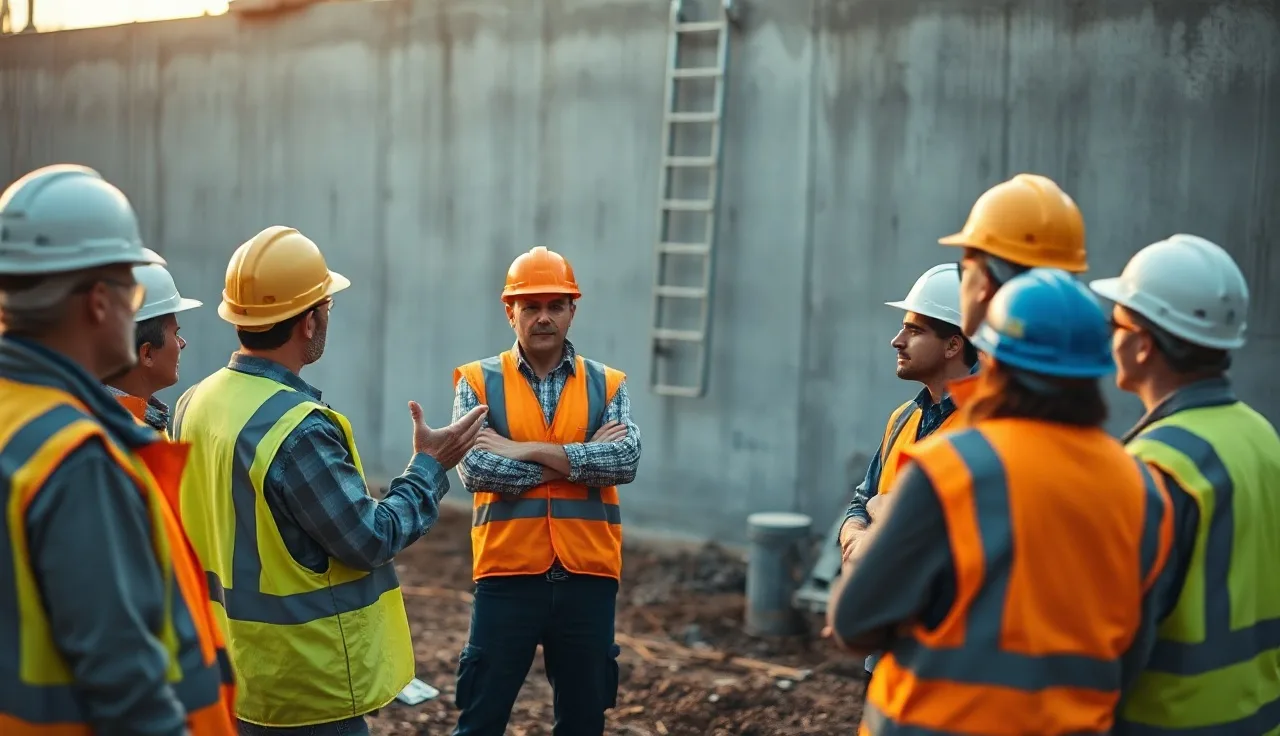
A toolbox talk is a short, informal safety meeting held at the job site, usually at the start of a shift or before a specific high-risk task. The name comes from construction crews who would literally gather around a toolbox. Most run 5 to 15 minutes. Nobody sits in a classroom. Nobody reads from a slide deck. The supervisor or lead worker covers one hazard, asks a few questions, lets the crew respond, and everyone signs in.
The signed attendance sheet matters. OSHA inspectors look for evidence of ongoing safety training during inspections, and a toolbox talk log is one of the fastest ways to show that your workers get regular safety communication beyond annual certification courses. It does not replace formal training required by specific standards, like the hands-on demonstration required under 29 CFR 1910.147 for lockout/tagout or the full course required under 29 CFR 1926.502 for fall protection. But it reinforces those topics week after week in a way classroom training alone never does.
The format is deliberately low-stakes so people will actually talk. A worker who stays quiet in a formal safety class will often speak up in a toolbox talk because it feels like a conversation, not a test.
Does OSHA require toolbox talks?
OSHA has no single standard that uses the phrase "toolbox talk" or mandates a meeting cadence for general industry or construction. What OSHA does require, under 29 CFR 1926.21(b)(2) for construction, is that employers instruct each employee in the recognition and avoidance of unsafe conditions. Regular toolbox talks are widely accepted as evidence of meeting that ongoing communication obligation [1].
Several OSHA standards do require task-specific briefings that look exactly like toolbox talks. The permit-required confined space standard at 29 CFR 1910.146 requires a pre-entry briefing for each entry. The excavation standard at 29 CFR 1926.651 requires a competent person to classify soil and inspect the site daily. Lockout/tagout under 29 CFR 1910.147 requires retraining whenever an employer has reason to believe a worker does not understand the procedures. In practice, a documented toolbox talk on each of these topics, tied to the specific job in progress, is exactly how small employers satisfy those review obligations.
Some state OSHA plans go further. California's Cal/OSHA, for instance, requires employers with Injury and Illness Prevention Programs to set up a system for communicating with employees about safety, and Cal/OSHA guidance names regular safety meetings as one accepted method [2]. If you're in a state plan state, check your state agency's IIPP or safety and health program requirements.
Bottom line: toolbox talks are not legally required by name, but the underlying communication obligations are, and a consistent toolbox talk program is one of the cleanest ways to document that you're meeting them.
What are the most common toolbox talk topics for construction?
The answer comes straight from Bureau of Labor Statistics injury data. The four OSHA "Focus Four" hazards (falls, struck-by, caught-in/between, and electrocution) account for roughly 60% of construction worker fatalities each year [3]. Any toolbox talk calendar should hit all four repeatedly.
Here is a categorized list of 50+ topics organized by hazard type:
| Category | Topics |
|---|---|
| Fall hazards | Ladder safety, scaffold inspection, fall arrest harness fit-check, leading edge protection, floor opening covers, roof work PPE, stepladder vs. extension ladder selection |
| Struck-by hazards | Hard hat inspection, overhead work zones, spotters and equipment, tool tethering at height, high-visibility vests, driving near active work areas |
| Caught-in/between | Trench and excavation safety, rotating equipment guards, sleeve and glove hazards near machinery, lockout/tagout basics, pinch point awareness |
| Electrical hazards | Ground fault circuit interrupters (GFCIs), extension cord inspection, overhead power line clearance, temporary wiring, using PPE around live circuits |
| Heat and cold | Heat index and hydration, heat stroke recognition and first aid, cold stress, dressing in layers, wind chill |
| Hand and power tools | Guard replacement, blade and bit inspection, trigger locks, right tool for the job, cutting disc condition |
| Chemical hazards | Reading Safety Data Sheets, proper storage and labeling, PPE for chemical exposure, silica dust and wet methods, paint fume ventilation |
| Heavy equipment | Forklift pre-shift inspection, pedestrian-equipment separation, load limits, blind spots on equipment, spotter communication signals |
| Emergency preparedness | First aid kit location, muster point, calling 911 on site, fire extinguisher class and use, incident reporting procedure |
| Personal protective equipment | Glove selection for tasks, eye protection for specific tasks, hearing protection in high-dB zones, respirator fit and seal check |
| Site hygiene and health | Hand washing before meals, portable toilet location and sanitation, preventing lead and silica ingestion, sun protection |
| Behavioral and situational | Fatigue and alertness, cell phones and distraction, new worker orientation, working alone procedures, near-miss reporting culture |
For construction specifically, ladder safety, trench safety, and fall harness use come up most in OSHA citations and fatality investigations, so rotate them into your schedule at least monthly.
Where can I find free toolbox talks for construction?
Several reliable free sources exist. Quality varies, so here is what's actually worth your time.
OSHA's own website has free construction toolbox talks in English and Spanish covering Focus Four topics. The bilingual versions are genuinely useful for mixed crews [4]. The National Institute for Occupational Safety and Health (NIOSH) publishes free hazard alerts and safety cards that adapt into talks [5]. The AGC (Associated General Contractors) and NECA (National Electrical Contractors Association) both offer member toolbox talk libraries, though full access may require membership.
The United Brotherhood of Carpenters publishes free safety talks, and several state plan agencies, including Washington's Labor and Industries and Oregon OSHA, offer downloadable toolbox talk packets in PDF form at no cost [6]. Oregon OSHA's "Safety Meeting Outlines" library has over 100 topics and is one of the more practical free resources out there.
Trade associations for specific sectors (roofing, masonry, concrete) often have topic-specific content that beats generic OSHA handouts. NRCA (National Roofing Contractors Association) and MCAA (Mason Contractors Association of America) are worth checking if those trades apply to you.
One honest note: free talks from industry bodies are often written at a reading level that works fine for English-speaking crews but can be dense for workers who read below a 6th-grade level or for whom English is a second language. Simplifying the language, or using the Spanish versions when available, changes whether the information actually lands.
For general industry topics beyond construction, OSHA's QuickCards and eTool library are the most accessible free starting points [4].
How do you run a toolbox talk that workers actually pay attention to?
Most toolbox talks fail for one reason: the supervisor reads from a paper and never looks up. Workers can feel when they're being talked at versus talked to, and they check out immediately.
Here is a format that consistently works, based on the structure recommended by Oregon OSHA and most safety training practitioners:
1. Open with a real example (2 minutes). Start with something that happened, a near-miss on this site, an incident at a similar company, a news item from a trade publication. Real events create immediate attention. Invented scenarios feel like filler.
2. State the one hazard clearly (1 minute). One topic per talk. Not three. Not "general safety." One specific hazard, such as extension cord inspection before use.
3. Show or demonstrate (2 to 3 minutes). If you're talking about hard hat inspection, bring a damaged hard hat and a good one and point out the difference. If you're covering harness inspection, put one on and walk through the check points. A physical demonstration is remembered; a verbal description usually is not.
4. Ask the crew questions (2 to 3 minutes). "What's the procedure if you find a cord with damaged insulation?" "Who do you tell if you spot a problem with the scaffold this morning?" Silence is fine; wait for answers. This is where near-miss information often surfaces.
5. Sign the attendance sheet and file it (1 minute). Date, topic, presenter's name, and each worker's signature. Keep records for at least a year. Some contractors keep them for the life of the project.
The whole thing should take 7 to 12 minutes. If you're regularly running 20 or 30 minutes, you're covering too many topics at once or not having these often enough, so each session turns into a catch-up.
How often should toolbox talks happen?
There is no single OSHA-mandated frequency for general toolbox talks. In practice, the most common cadence in construction is once per week, usually Monday morning before the shift. Many high-hazard contractors, particularly those working in excavation, demolition, or industrial maintenance, run daily pre-task talks tied to the day's specific work.
The weekly minimum is what most state OSHA consultation programs recommend for construction sites. Cal/OSHA's IIPP guidance says safety meetings should be held "as often as necessary" and at minimum whenever there are changes in operations or new hazards introduced [2].
If your crew turnover is high, daily talks make more sense because you cannot assume everyone heard last week's content. If you're a small crew of five people who have worked together for years and you change tasks infrequently, weekly is probably enough, but you should also hold a pre-task talk any time the work type changes a lot.
One practical point: frequency matters less than consistency. A crew that has had a weekly toolbox talk every Monday for three years, with records to show it, is in a dramatically better position during an OSHA inspection than one that ran 40 talks in a single month and nothing since.
What toolbox talk topics matter most for general industry (non-construction)?
General industry workers face a different mix of hazards than construction crews. BLS data show the leading causes of workplace injuries in general industry include overexertion and musculoskeletal injuries (the single largest category), contact with objects and equipment, slips and falls, and exposure to harmful substances [7].
High-value toolbox talk topics for general industry settings:
| Category | Specific Topics |
|---|---|
| Ergonomics and lifting | Proper lift technique, team lifting, workstation height, anti-fatigue matting |
| Machine guarding | Never removing guards, reporting missing guards, proper startup procedures |
| Chemical safety | Hazard communication (HazCom / GHS), SDS locations, PPE for chemical tasks, secondary container labeling |
| Lockout/tagout | Energy isolation steps, group lockout procedures, annual retraining refresh |
| Electrical safety | Qualified vs. unqualified person rules, GFCIs in wet areas, extension cord limits |
| Forklift safety | Pedestrian zones, speed limits, load stability, pre-shift inspection |
| Fire safety | Extinguisher location and class, evacuation routes, hot work permits |
| Slips, trips, falls | Housekeeping, wet floor marking, proper footwear, cord management |
| Emergency response | First aid kit location, AED location and use, calling 911, incident reporting |
| Warehouse-specific | Stacking limits, rack inspection, receiving dock safety, pallet condition |
For hazard communication specifically, 29 CFR 1910.1200 requires that employees get training on the HazCom standard whenever a new chemical hazard is introduced to their work area. A toolbox talk on how to read an SDS for a new product qualifies as that refresher communication, as long as you document the date, chemical, and attendees [8].
How do you build a 12-month toolbox talk calendar?
A full-year calendar keeps you from recycling the same three topics and gets seasonal hazards covered before, not after, they become a problem. Here is a practical approach.
Start with your injury and near-miss log. If you had three back strain incidents in the past year, ergonomics goes on the calendar in month one, not month eight. If you had a forklift near-miss, forklift certification refreshers and pedestrian separation go on immediately.
Then layer in seasonal hazards. Heat stress topics belong in April and May, before summer, not in August after someone has already had a heat-related illness. Cold stress belongs in September or October. Flu season and hand hygiene belong in October. Holiday fatigue and distraction is a real pattern; December is a good time for an alertness and rushing talk.
Here is a sample 12-month calendar framework:
| Month | Primary Topic | Secondary Topic |
|---|---|---|
| January | Housekeeping and slip prevention (ice, mud) | Emergency action plan review |
| February | Ladder safety | Eye protection |
| March | Trench and excavation basics | Hand tool inspection |
| April | Fall arrest harness fit and inspection | Heat stress awareness (early) |
| May | Struck-by hazards | Electrical safety / GFCIs |
| June | Heat illness prevention | Hydration and rest breaks |
| July | Heat illness recognition and first aid | Chemical SDS review |
| August | Machine guarding | Forklift pedestrian safety |
| September | Lockout/tagout refresher | Cold stress early awareness |
| October | Fire safety and extinguisher use | Hand and power tool care |
| November | Personal protective equipment audit | Fatigue and distraction |
| December | Incident reporting and near-miss culture | Annual safety goals review |
Two talks per month gives you 24 covered per year. Rotate which ones you do weekly so the full crew catches both. If you run weekly talks, that leaves two weeks in each month for site-specific or task-specific content driven by what's actually happening on the job.
If building out a full written safety program to sit behind your toolbox talk program feels like a bigger lift, SafetyFolio's safety program generator can produce an OSHA-structured written program in about 15 minutes, which gives you the documented foundation your talks are supposed to reinforce.
What should a toolbox talk record include to satisfy OSHA?
OSHA does not specify an exact format for toolbox talk records, but inspection history shows what investigators look for when they pull your files. A solid record has six elements: the date, the location or project name, the topic covered, the name of the person who led the talk, the names and signatures of all attendees, and any action items or follow-up noted during the discussion.
Keep it simple. A single page with those six fields, filled out by hand, is fully acceptable. Many contractors use a pre-printed half-sheet form so the supervisor fills it out in 60 seconds. Digital logs work too, and several safety apps let workers sign on a tablet or phone.
How long to keep them? OSHA's records standard at 29 CFR 1910.1020 requires employee exposure and medical records to be kept for 30 years, but that applies specifically to exposure records, not general toolbox talks. For general safety training records, the consensus recommendation from OSHA compliance consultants is a minimum of three years, which matches the general statute of limitations for OSHA citations [9]. Keeping them for the life of a project plus one year is a reasonable rule of thumb for construction.
If an incident or near-miss comes up during the talk, note it on the record. That creates a direct link between your safety communication and your hazard identification process, which looks very good during an inspection or in the event of a workers' comp claim.
How are toolbox talks different from full OSHA training?
Toolbox talks are communication and reinforcement tools. They do not replace the specific training requirements written into OSHA standards.
The distinction matters because employers sometimes assume that running weekly toolbox talks means they've met all their training obligations. They have not. Consider a few examples.
29 CFR 1926.502(k) for fall protection requires a training program conducted by a qualified person, covering recognition of fall hazards and the procedures for using fall protection systems. That cannot be satisfied by a 10-minute toolbox talk; it requires documented, structured training. The same is true for respiratory protection training under 29 CFR 1910.134, confined space entry under 29 CFR 1910.146, and lockout/tagout under 29 CFR 1910.147 [10].
A toolbox talk on fall harnesses the morning after a worker finishes formal fall protection training is useful reinforcement. That same toolbox talk used as a substitute for the formal training is a citation waiting to happen.
Think of it this way: formal training builds the knowledge and skill foundation. Toolbox talks maintain it. You need both, and you need records for both. If you want to understand what the full OSHA training universe looks like for your industry, map that out before you assume your talk calendar has everything covered.
What are the best toolbox talk topics for new or seasonal workers?
New workers get injured at dramatically higher rates than experienced ones. BLS data consistently show that workers in their first year on a job have injury rates well above the workforce average, and the risk is highest in the first 30 days [7].
For new workers, the first toolbox talk should happen before they touch any equipment or enter any hazardous area. Cover: site layout and emergency exits, the nearest first aid kit and AED, who to report hazards to, the stop-work authority policy (every worker can stop work for a safety concern without penalty), and the PPE required for their specific tasks.
For seasonal workers returning at the start of a busy season after months away, a reorientation talk covering what has changed since they were last on site is worth the 10 minutes. Equipment may have moved. Procedures may have updated. New hazards may exist.
Topic priorities for new and returning workers:
- Site-specific emergency action plan and muster point
- Hazard communication: where the SDS binder is, how to read a label
- PPE: what is required here, where to get it, how to report a defect
- Incident and near-miss reporting: who, how, no retaliation
- The specific hazards of their first task assignment
Pairing the toolbox talk with a brief site walkthrough beats either one alone for new workers who are still forming their mental map of where hazards live.
How do you handle toolbox talks for multilingual crews?
This is one of the most under-addressed problems in construction safety, and the data reflect it. Hispanic workers in construction face fatality rates above the industry average, a gap that multiple studies link partly to language barriers in safety communication [3].
29 CFR 1926.21(b)(2) requires that training be conducted in a language the employee understands. A toolbox talk delivered in English to a crew that primarily speaks Spanish does not meet that standard. OSHA has reinforced this in letters of interpretation: training and safety communication must be in a language and vocabulary the employee can understand [1].
Practical approaches that work:
If you have a bilingual foreman or crew lead, have them deliver the talk or translate in real time. This is the most effective method because the translator can field questions and adapt vocabulary to the specific crew.
Use the bilingual (English/Spanish) toolbox talk handouts from OSHA's Focus Four campaign. These are free, professionally translated, and cover the highest-risk topics [4].
For languages beyond Spanish, OSHA publishes resources in multiple languages, and NIOSH has safety cards and alerts in several languages for specific industries [5]. Washington State L&I and Oregon OSHA also publish materials in Vietnamese, Russian, and other languages common in their regional construction workforce.
A talk delivered through a phone translation app beats no translation, but it's a fallback, not a plan. If a big share of your workforce communicates primarily in a language other than English, building bilingual delivery into your standard format is both a legal obligation and the only thing that actually keeps those workers safe.
What makes a toolbox talk topic genuinely useful versus just checking a box?
A toolbox talk earns its time when three things are true: the topic matches a real hazard in the current work, the content is specific enough to be actionable, and the crew has a chance to respond.
The most common failure is topic selection that has nothing to do with what the crew is doing that week. A talk about confined space entry to a roofing crew that has never worked in a confined space is wasted breath. A talk about extension cord inspection to the same crew on the morning they're running temporary power to a third-floor deck, that lands.
Specificity also matters. "Be careful around electricity" is not a toolbox talk topic. "How to inspect a GFCI-protected cord before you plug it in, and what to do if it trips or fails the button test" is a toolbox talk topic. One is a reminder that workers already know. The other is a procedure they might actually use before something bad happens.
The crew response piece is where most safety culture actually gets built. When a worker mentions that the GFCI on the panel has been tripping and getting reset without anyone checking why, that's a near-miss surfacing during a toolbox talk. Document it, investigate it, and follow up. Workers who see near-miss reports taken seriously are the ones who report more of them, which is the closest thing to a leading indicator of injury prevention that we have.
A signed attendance sheet with no notes, no questions, and no follow-up items is a form. A conversation that produces one concrete action item, however small, is a safety culture in progress. Those are different things, and experienced OSHA inspectors can usually tell the difference when they read your records.
Frequently asked questions
How long should a toolbox talk be?
Five to fifteen minutes is the standard range, with most experienced safety managers targeting 7 to 10 minutes. Shorter than five minutes usually means you did not leave room for crew questions, which is where the real value is. Longer than 15 minutes typically means you picked more than one topic. One hazard, one talk, one signature sheet. That format scales better than long, multi-topic sessions.
Are toolbox talks required by OSHA?
OSHA does not require toolbox talks by name in most standards. But 29 CFR 1926.21(b)(2) requires employers to instruct workers in recognizing and avoiding unsafe conditions, and several task-specific standards require pre-task briefings that function identically. State plans like Cal/OSHA also require regular safety meetings under IIPP requirements. Running weekly documented toolbox talks is the most practical way to show compliance with these ongoing communication obligations.
What are the OSHA Focus Four construction hazards I should always cover?
Falls, struck-by incidents, caught-in/between hazards, and electrocution. OSHA calls these the Focus Four because they account for roughly 60% of construction worker fatalities annually, according to BLS data. Every toolbox talk calendar for a construction site should rotate through all four regularly, with falls getting the most attention since it consistently leads the fatality count year after year.
Can I use a toolbox talk to satisfy OSHA's formal training requirements?
No. Toolbox talks reinforce training but do not replace it. Standards like 29 CFR 1910.147 (lockout/tagout), 29 CFR 1910.134 (respiratory protection), and 29 CFR 1926.502 (fall protection) require structured training by a qualified person with specific content requirements. A toolbox talk on the same subject is a useful supplement but not a legal substitute. If you use talks as your only training, you will have citation exposure on those standards.
How do I document a toolbox talk so it holds up during an OSHA inspection?
Capture six things on every record: date, location or project name, topic, presenter's name, all attendee names and signatures, and any action items or follow-up noted. Keep records for at least three years, or for the life of the project plus one year for construction. OSHA inspectors reviewing training documentation look for consistency and specificity; a log with complete records for 52 consecutive weeks is more credible than a partial record.
What free toolbox talk resources are actually worth using?
OSHA's Focus Four bilingual toolbox talks are free and well-made, covering the highest-risk construction hazards in English and Spanish. Oregon OSHA's Safety Meeting Outlines library has 100+ topics at no cost. NIOSH publishes free hazard alerts and safety cards that adapt easily into talks. Washington State L&I also offers multilingual materials. Most are available as downloadable PDFs directly from the agency websites.
How often should construction crews hold toolbox talks?
Weekly is the minimum most state OSHA consultation programs recommend for construction. High-hazard work like excavation, demolition, and industrial maintenance typically warrants a daily pre-task talk tied to that day's specific activities. Crew turnover is the other driver: if you have new workers joining regularly, daily talks ensure nobody misses critical information. Consistency over time matters more than peak frequency during a single period.
What toolbox talk topics are best for a warehouse or manufacturing facility?
Prioritize forklift and pedestrian separation, machine guarding, lockout/tagout refreshers, ergonomics and proper lifting, slip and trip prevention, chemical hazard communication (SDS locations and labeling), fire extinguisher use and evacuation routes, and incident reporting procedures. BLS data show overexertion and musculoskeletal injuries are the leading injury category in general industry, so ergonomics topics deserve a prominent spot in any warehouse or manufacturing talk calendar.
Do toolbox talks need to be in Spanish for Spanish-speaking workers?
Yes, legally. 29 CFR 1926.21(b)(2) and OSHA letters of interpretation require that safety training be conducted in a language the employee understands. A talk given in English to a primarily Spanish-speaking crew does not satisfy that requirement. OSHA provides free bilingual Focus Four toolbox talks. For crews with other primary languages, Oregon OSHA and Washington L&I publish materials in several languages, and bilingual crew leads are the most effective delivery method.
What is a pre-task toolbox talk and when should I use one?
A pre-task talk is a toolbox talk tied to a specific job starting that day rather than a general weekly topic. Use one whenever the work changes significantly: starting excavation, beginning work at height on a new structure, introducing a new chemical, or any task with higher-than-normal hazard exposure. Several OSHA standards, including the confined space standard at 29 CFR 1910.146, essentially mandate pre-task briefings before specific high-risk operations begin.
How do I get workers to actually participate in toolbox talks instead of just standing there?
Start with a real incident or near-miss rather than a generic topic. Ask a direct question in the first 60 seconds that requires an answer, not a yes/no. Use a physical prop or demonstration when possible. Keep the talk short enough that attention does not drift. Most importantly, follow up on anything workers raise: if someone mentions a hazard during the talk and nothing happens, participation drops permanently. Action on worker input is the only thing that builds the habit of speaking up.
Is there a difference between a toolbox talk and a safety meeting?
Informally, the terms overlap. In practice, a toolbox talk is shorter (under 15 minutes), held at the work location, and focused on one specific hazard or task. A safety meeting often implies a longer, more formal session, sometimes monthly, that might cover incident reviews, program updates, and multiple topics. Both require documentation. OSHA and most state agencies treat both as acceptable forms of safety communication under ongoing training obligations.
Can a small company with just a few employees benefit from toolbox talks?
Yes, and arguably more than large companies. In a crew of four, a 10-minute weekly talk covers everyone, takes almost no administrative overhead, and creates a direct line of communication between the owner and the workers closest to the hazards. Small employers also face the same OSHA citation risk as large ones and have less financial cushion to absorb a penalty. A consistent toolbox talk log is some of the cheapest documentation you can produce and one of the first things an inspector will ask for.
Sources
- OSHA, 29 CFR 1926.21 Safety training and education: Construction employers must instruct each employee in recognition and avoidance of unsafe conditions; OSHA letters of interpretation confirm training must be in a language the employee understands
- NIOSH, Construction Safety and Health: NIOSH publishes free hazard alerts and safety cards adaptable as toolbox talk content for construction and general industry
- Bureau of Labor Statistics, Survey of Occupational Injuries and Illnesses 2023: Overexertion and musculoskeletal injuries are the leading injury category in general industry; workers in their first year face significantly above-average injury rates
- OSHA, 29 CFR 1910.1200 Hazard Communication Standard: Employees must receive HazCom training whenever a new chemical hazard is introduced to the work area; documented communication of SDS information satisfies the refresher requirement
- OSHA, 29 CFR 1910.1020 Access to employee exposure and medical records: OSHA requires employee exposure records to be kept for 30 years; the general citation statute of limitations of three years informs the minimum retention recommendation for general training records
- OSHA, 29 CFR 1910.147 Control of Hazardous Energy (Lockout/Tagout): Lockout/tagout requires formal training by a qualified person and retraining whenever an employer has reason to believe an employee does not understand the procedures; a toolbox talk alone does not satisfy initial training requirements
- OSHA, 29 CFR 1926.502 Fall Protection Systems Criteria and Practices: Fall protection training in construction must be conducted by a qualified person and cover recognition of fall hazards and use of fall protection systems; this cannot be satisfied by a toolbox talk alone
- OSHA, 29 CFR 1910.146 Permit-Required Confined Spaces: The permit-required confined space standard requires a pre-entry briefing for each entry, which functions identically to a pre-task toolbox talk