Last updated 2026-07-09
TL;DR
A toolbox talk is a short safety conversation held before a shift, usually five to fifteen minutes on one hazard. OSHA doesn't mandate a specific schedule, but regular talks cut recordable injuries. This article gives you 100 real toolbox talk topics by category, shows how to run one that lands, and helps you build a year-round schedule for any industry.
What is a toolbox talk and does OSHA require one?
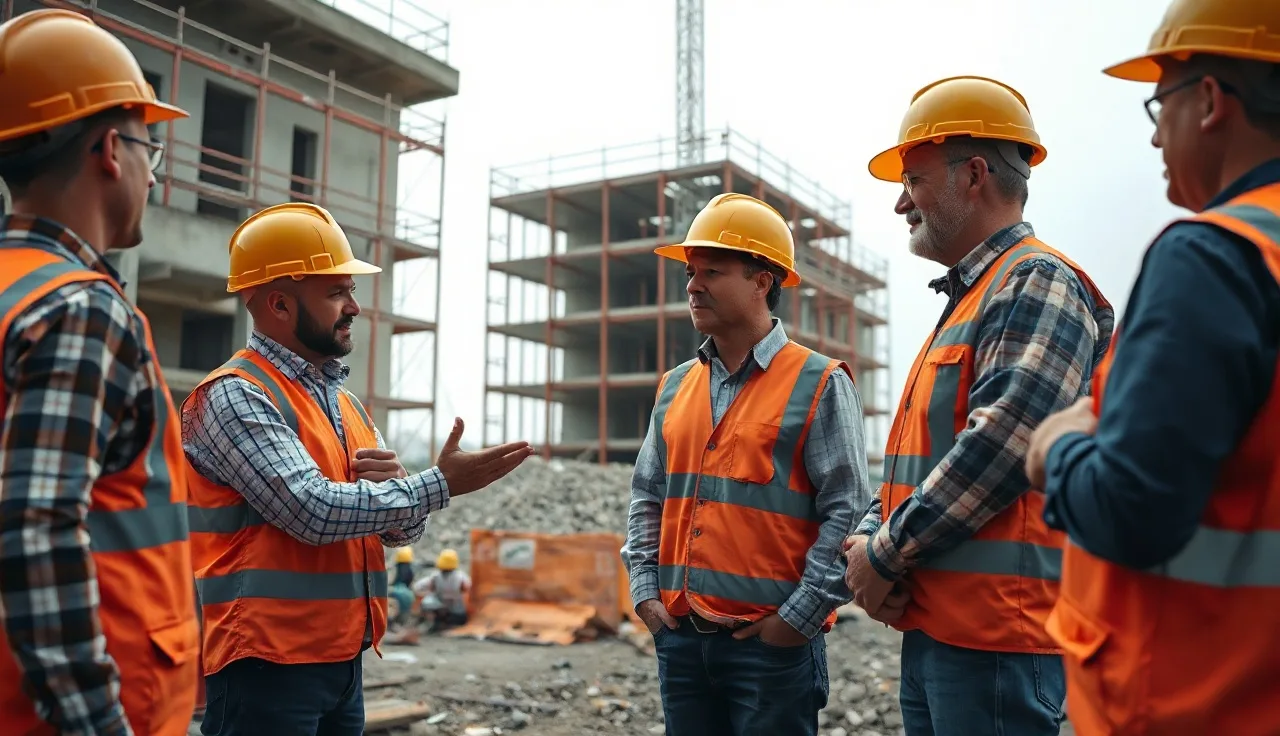
A toolbox talk (also called a tailgate talk or safety briefing) is a short, informal safety meeting held before work starts. It runs five to fifteen minutes and covers one hazard or one safe work practice. The crew gathers, a supervisor or lead worker raises the topic, workers ask questions or share what they've seen, and everyone signs an attendance sheet.
No single OSHA standard says "hold daily toolbox talks." Several standards require regular safety training, though, and inspectors routinely ask for proof of it. Under 29 CFR 1926.21(b)(2), construction employers must instruct each employee in the recognition and avoidance of unsafe conditions [1]. Under 29 CFR 1910.132(f), employers must train workers on PPE before they use it [2]. Daily talks are one of the most practical ways to meet those ongoing training duties without dragging everyone into a classroom.
The Bureau of Labor Statistics counted 2.8 million nonfatal workplace injuries and illnesses in private industry in 2022, a rate of 2.7 cases per 100 full-time workers [3]. A consistent toolbox talk program is one of the few zero-cost interventions that hits the leading causes of those injuries head-on.
For the full picture of what OSHA actually requires from employers, see our guide to osha training.
How do you run a toolbox talk that workers actually pay attention to?
Short beats long every time. A crew standing in a parking lot at 6 a.m. will not absorb a twenty-minute lecture. Pick one topic. Say why it matters today, on this job, with this crew. Tell a quick story if you have one. Ask at least one question so it isn't a monologue. Wrap up in ten minutes.
Here's the structure that works:
1. State the hazard in one sentence. 2. Explain why it matters right now (a recent incident, a task on today's schedule, a seasonal risk). 3. Walk through the specific control or safe practice. 4. Ask the crew if they've hit this hazard before or have questions. 5. Document attendance on a sign-in sheet with the date, topic, and signatures.
The sign-in sheet is the part people skip and regret. If OSHA inspects you after an incident, documented talks are your proof that you were actively training your workforce. A sheet with the topic, date, and names takes ninety seconds to fill out and can be the difference between a willful citation and a lesser one.
If you need a written safety program to back up your talks, the SafetyFolio program generator builds a compliant written program in about fifteen minutes, and you can pull your talk topics straight from it.
What are the 100 safety topics for a daily toolbox talk?
Below are 100 real toolbox talk topics, grouped by category. Each maps to a hazard type or an OSHA standard so you can tie your talks to actual compliance obligations.
Fall Protection (29 CFR 1926 Subpart M / 29 CFR 1910.28) 1. Ladder safety: inspection and proper use 2. Scaffold inspection before each shift 3. Personal fall arrest system (PFAS) inspection and donning 4. Leading edge work and guardrail requirements 5. Roof work: fall protection plans 6. Floor hole covers and hole guarding 7. Working near skylights and fragile roofs 8. Aerial lift and scissor lift safety 9. Steep-slope roof work 10. Fall protection in steel erection
Struck-by and Caught-in/Between 11. High-visibility PPE for traffic work zones 12. Tool and material securing at height (dropped objects) 13. Spotters for heavy equipment 14. Blind spots on forklifts and other mobile equipment (see forklift certification) 15. Caught-in hazards with rotating equipment 16. Overhead crane hand signals 17. Safe distances from excavation edges 18. Trenching and cave-in prevention 19. Pinch point awareness 20. Nail gun safety and bump-fire mode
Electrical Safety (29 CFR 1910.303, 1926.416) 21. Lockout/tagout procedures (see lockout tagout) 22. Electrical cord inspection and replacement 23. GFCI use in wet or outdoor conditions 24. Working near overhead power lines 25. Panel and breaker box safety 26. Extension cord overloading 27. Arc flash awareness 28. Temporary power on construction sites 29. Grounding and bonding basics 30. Safe use of power tools near water
Hazard Communication and Chemicals (29 CFR 1910.1200) 31. Reading a Safety Data Sheet (SDS) (related: hazard communication) 32. Proper chemical labeling and secondary containers 33. Flammable liquid storage and handling 34. Silica dust exposure and controls (29 CFR 1926.1153) 35. Lead exposure in renovation work 36. Asbestos awareness 37. Carbon monoxide from gas-powered equipment indoors 38. Welding fumes and ventilation 39. Isocyanate exposure in spray coatings 40. Safe mixing: chemicals you must never combine
Personal Protective Equipment (29 CFR 1910.132-138) 41. Hard hat classes and inspection 42. Eye and face protection selection 43. Hearing protection: when it's required and how to wear it 44. Glove selection by hazard type 45. Foot protection: steel-toe vs. composite 46. High-visibility vest requirements by risk level 47. Respirator fit test basics 48. Cut-resistant sleeve and glove selection 49. Cooling vests and heat stress PPE 50. PPE inspection before every shift
Hand and Power Tools 51. Grinder safety: wheel inspection and guard use 52. Circular saw kickback prevention 53. Hand tool condition and storage 54. Powder-actuated tool safety 55. Pneumatic tool safety and hose fittings 56. Table saw and blade guard requirements 57. Chainsaw personal protective equipment 58. Torque wrenches and over-torquing 59. Drill bit selection and chuck inspection 60. Tool cords, cables, and trip hazards
Ergonomics and Musculoskeletal 61. Safe lifting technique 62. Team lifting and mechanical aids 63. Push vs. pull: reducing back strain 64. Vibration exposure from hand tools 65. Awkward postures and sustained reach 66. Knee pad use in kneeling work 67. Fatigue and its effect on injury risk 68. Stretching and warm-up before physical work 69. Workstation height and tool placement 70. Cumulative trauma: recognizing early signs
Heat, Cold, and Weather 71. Heat stroke vs. heat exhaustion: signs and response 72. Heat illness prevention plan (water, rest, shade) 73. Cold stress and frostbite prevention 74. Lightning safety and work stoppage 75. Sun exposure and skin protection 76. Working in wind and its effect on fall risk 77. Rain and wet-surface slip prevention 78. Wildfire smoke and air quality index 79. Ice and snow removal ergonomics 80. Acclimatization for new or returning workers
Confined Spaces and Excavation 81. Permit-required confined space entry (29 CFR 1910.146) 82. Atmospheric testing before entry 83. Confined space rescue planning 84. Excavation: protective systems selection 85. Soil classification in trenching 86. Utilities location before digging (811) 87. Daily excavation inspection 88. Water accumulation in trenches 89. Access and egress in excavations 90. Manholes and underground vault entry
Emergency Preparedness and Incident Response 91. Emergency action plan walkthrough (29 CFR 1910.38) 92. Fire extinguisher types and the PASS technique 93. First aid kit location and contents check 94. Incident reporting procedures (see incident report) 95. Eye wash station location and flush procedure 96. Spill response and containment 97. Active threat awareness and response 98. Evacuation routes and muster points 99. AED location and basic use 100. Drug and alcohol: impairment recognition and reporting
That's a full year of weekday talks with a dozen to spare. Rotate through them and repeat the high-frequency hazards (fall protection, electrical, struck-by) at least twice a year.
Which toolbox talk topics matter most for construction?
Construction is the deadliest industry in the country, and the reasons are predictable. OSHA's "Fatal Four" account for more than 60 percent of construction worker deaths: falls, struck-by, caught-in/between, and electrocution [4]. Your construction talk topics should circle back to those four categories without apology.
The National Institute for Occupational Safety and Health (NIOSH) also flags trenching and excavation collapses as a high-fatality category. A trench can kill in seconds. Yet most employers treat excavation safety as a one-time class rather than a daily conversation.
For construction, here's the prioritized rotation I'd run:
| Week | Priority Topic | OSHA Standard |
|---|---|---|
| 1 | Ladder inspection and use | 29 CFR 1926.1053 |
| 2 | PFAS inspection and donning | 29 CFR 1926.502 |
| 3 | Electrical cord inspection, GFCI | 29 CFR 1926.416 |
| 4 | Struck-by: high-vis and spotter use | 29 CFR 1926.601 |
| 5 | Trench inspection before entry | 29 CFR 1926.651 |
| 6 | Silica dust: wet methods and respirators | 29 CFR 1926.1153 |
| 7 | Scaffold inspection checklist | 29 CFR 1926.451 |
| 8 | Lockout/tagout for construction | 29 CFR 1910.147 |
Then repeat. A worker on the same jobsite for six months should hear the fall protection talk at least twice.
How do you build a year-long toolbox talk schedule from 100 topics?
There are roughly 260 working weekdays in a year, so 100 topics won't fill every day on their own. Build a tiered schedule instead.
Tier 1: high-frequency hazards, repeated quarterly. Pick the ten to twelve topics that match your worst injury exposures and run them every twelve to thirteen weeks. For a roofing contractor, those are probably fall protection, ladder safety, heat illness, scaffold inspection, and electrical hazards.
Tier 2: seasonal topics, run when relevant. Heat illness talks belong in May through September. Cold stress talks belong in November through February. Wildfire smoke belongs whenever your regional air quality index climbs above 100.
Tier 3: one-time or annual topics. Drug and alcohol awareness, emergency action plan review, incident reporting procedures. These don't need to run every quarter. Once a year is enough, and several of them double as the annual training some OSHA standards require.
A simple spreadsheet does the job: 52 weeks down one column, a primary and a backup topic across each row. Print it, post it in the trailer or break room, and assign a lead worker to each week so the talk doesn't always land on the same person.
One honest caveat. I've watched schedules like this die because nobody owned them. Name a specific person each week, not "the supervisor." A named person prepares. A nameless requirement gets skipped.
Where can you download a toolbox talk topics PDF for free?
Several credible sources publish free toolbox talk materials you can download and use without copyright worries.
OSHA's website has a "Safety and Health Topics" section with industry-specific guidance you can shape into talks. The site is at osha.gov [1].
CPWR, the Center for Construction Research and Training, publishes a library of downloadable toolbox talk PDFs built for construction crews, at cpwr.com [5]. Their materials come in English and Spanish, which matters a lot if your crew isn't all English-speaking. The National Safety Council and the Associated General Contractors publish free libraries too.
California's Division of Occupational Safety and Health (Cal/OSHA) publishes a large library of free tailgate talk PDFs organized by trade, through the Cal/OSHA Consultation website [6].
For a blank sign-in sheet, OSHA doesn't publish an official one, but state plan offices often do. The Washington State Department of Labor and Industries has free templates that work in any state [7].
Here's the honest part: free PDFs are a starting point, not a finish line. A generic talk about "ladder safety" lands softer than one that names the exact ladder your crew used yesterday, the roof height you're on today, and the incident three miles away last month. Personalize every talk, even when you borrow the structure from a template.
What should a toolbox talk sign-in sheet include?
This one's short and practical. A usable sign-in sheet has:
- Date of the talk
- Topic covered
- Name of the person who ran it
- Location (jobsite address or facility name)
- Each attendee's printed name and signature
- Space for notes on questions raised or site-specific issues
That's the whole list. You don't need a fancy form. An index card with those fields works in a pinch.
Where you store the sheets matters as much as filling them out. OSHA's recordkeeping standard (29 CFR 1904) doesn't specifically require you to keep toolbox talk records, but inspectors can and do request training documentation under specific standards and the general duty clause. Keep signed sheets for at least three years. If a workers' comp claim or an OSHA inspection lands, those sheets are your evidence that you ran a safety program in good faith.
Digitize them. A photo uploaded to a shared drive takes fifteen seconds and means a water-damaged folder in a truck can't sink you.
How long should a toolbox talk be?
Five to fifteen minutes. That's the honest answer, and research on adult attention backs it: focus drops sharply after about ten minutes without interaction.
Safety training researchers, including those studying construction workforce training at CPWR, find the same thing across studies: short, frequent sessions beat infrequent long ones for holding onto safety-critical information. "Daily brief interactions consistently outperform monthly hour-long sessions for hazard-specific retention," per a summary from CPWR's research on construction training [5].
Got a genuinely complex topic, like permit-required confined space entry? Break it into three or four talks across a week instead of one thirty-minute grind. Workers take one idea at a time, not a chapter.
One trick that works: end every talk with a single question the crew answers out loud. "What do you do if you spot a cracked scaffold plank?" That thirty-second check tells you whether the message landed or bounced.
Which OSHA standards specifically require safety training that toolbox talks can satisfy?
A toolbox talk doesn't automatically satisfy a formal training requirement. For several standards, though, documented talks do count as the required training, or as the refresher that keeps an initial certification current.
Here are the key standards where talks contribute directly:
| OSHA Standard | Training Requirement | Toolbox Talk Role |
|---|---|---|
| 29 CFR 1910.132(f) | PPE training before use | Initial and refresh |
| 29 CFR 1926.21(b)(2) | Hazard recognition training | Core requirement |
| 29 CFR 1910.1200(h) | Hazcom/GHS training | Initial and refresh |
| 29 CFR 1926.503 | Fall protection training | Refresh after initial |
| 29 CFR 1910.38 | Emergency action plan | Annual review |
| 29 CFR 1910.147(c)(7) | LOTO training | Refresh |
| 29 CFR 1926.1153(g) | Silica: construction | Refresh component |
Some standards require training by a "competent person" or "qualified person." A talk run by a foreman can satisfy the letter of those rules if the foreman fits the competency definition in the standard. When in doubt, read the definition section. It's usually the first paragraph.
For a broader look at OSHA training programs, our osha training guide covers it in detail. If you want to understand how OSHA's authority works before you build your program, what does OSHA stand for is a good place to begin.
What are the most common mistakes employers make with toolbox talks?
Five mistakes come up over and over.
First: no documentation. A talk nobody wrote down didn't happen, as far as OSHA is concerned. Collect signatures every time.
Second: same person, same format, every day. Workers tune out repetition. Rotate the speaker. Hand the talk to a crew member once a week. Bring a real object (a worn electrical cord, a damaged harness, a bent ladder rung) instead of just talking about it.
Third: topics that have nothing to do with today's work. If the crew is framing walls, a talk on confined space entry is close to useless. Match the topic to the hazard your workers will actually face in the next eight hours.
Fourth: treating the talk as a checkbox. The whole reason to do a toolbox talk instead of a classroom session is the back-and-forth. If a supervisor reads a paragraph off a PDF and nobody speaks, that's a checkbox, not training. Ask a real question. Let workers push back. That's where learning happens.
Fifth: never updating the rotation. Added a new machine, a new chemical, or a new type of work in the last year? Your talk rotation should show it. A static list from five years ago doesn't cover the hazards your workers face this morning.
Are there toolbox talk topics specific to non-construction industries?
Yes, and plenty of them. Most published lists lean construction-heavy, but the format works just as well in warehouses, plants, restaurants, retail stores, and hospitals.
For general industry under 29 CFR 1910, the relevant topics shift. Machine guarding (29 CFR 1910.212), powered industrial trucks (29 CFR 1910.178), walking-working surfaces (29 CFR 1910.22), and bloodborne pathogens (29 CFR 1910.1030) all deserve regular attention.
Healthcare and social assistance had the highest count of nonfatal injuries of any sector in 2022, per BLS data [3]. The talks that matter most there: patient handling and safe lift procedures, needlestick prevention, workplace violence prevention, and slip and fall prevention in patient care areas.
For warehousing and logistics, forklift safety dominates. OSHA estimates powered industrial truck incidents cause roughly 85 fatalities and 34,900 serious injuries a year [8]. Our guide to forklift certification covers the training rules in detail.
The 100-topic list here works across industries. A few topics (scaffolding, steel erection) are construction-only, but most of them (PPE, hazard communication, electrical safety, emergency preparedness) apply to any employer.
How do toolbox talks fit into a written safety program?
The written safety program is the policy. Toolbox talks are the daily practice that makes the policy real. One without the other is either paper nobody reads or habits nobody documented.
OSHA's Injury and Illness Prevention Program guidance, which the agency has promoted since at least 2012 [9], names worker training as one of the core elements of any effective safety program. Toolbox talks are the most practical way to deliver that training to workers who are already on the clock and short on time for formal instruction.
Your written program should include a section on how safety training gets delivered and documented, and it should name toolbox talks directly: how often they're held, who runs them, what records you keep, and how you pick topics. Skip that language and you've got a program that lives on paper but connects to nothing workers actually do.
No written program yet, or one that's a generic file from fifteen years ago? SafetyFolio's program generator builds a customized, OSHA-aligned written safety program in about fifteen minutes. The output includes a training section you can anchor your talk schedule to.
For the hazard communication rules your talks need to support, read our guide to hazard communication. And if you're weighing formal OSHA training for your supervisors, osha 30 training explains what the 30-hour course covers and who should take it.
What do OSHA inspectors actually look for when reviewing toolbox talk records?
An inspector arriving after an incident asks for training records, and they're checking three things: proof the training happened, proof it was relevant to the hazard that caused the incident, and proof the injured worker actually attended.
That last point trips up employers most. A stack of sign-in sheets is worthless if the injured worker's name isn't on any of them. If someone got hired last week and got hurt on day three, the inspector wants to know what training they got in their first two days. "We do toolbox talks every morning" won't cut it. "Here's Monday's sign-in sheet showing John at the fall protection talk, and here's his new hire safety orientation checklist" is what you need.
OSHA can cite you under the general duty clause (Section 5(a)(1) of the OSH Act) even when no specific standard applies, if you knew or should have known about a hazard and didn't address it [10]. Documented toolbox talks are one of the main ways to show you were addressing known hazards.
A serious citation can carry a penalty up to $16,550 per violation as of 2024 [11]. A willful or repeat citation can reach $165,514. A sign-in sheet binder costs about three dollars. The math isn't subtle.
Frequently asked questions
Does OSHA require daily toolbox talks?
No single OSHA standard specifically mandates daily toolbox talks. But multiple standards require regular, documented safety training, and toolbox talks are the most practical way to meet them. Under 29 CFR 1926.21(b)(2), construction employers must instruct workers in hazard recognition on an ongoing basis, not only at hire.
How many toolbox talk topics should I cover per year?
Aim for at least 50 topics a year on a five-day workweek, with high-priority hazards (falls, electrical, struck-by) repeated quarterly. If you hold talks every working day, you need roughly 260 slots, which means repeating the important topics two to three times. Repetition on critical hazards is the point, not filler.
Can I use the same toolbox talk topics for general industry and construction?
About 70 percent of the 100 topics here apply to both. PPE selection, hazard communication, emergency preparedness, electrical safety, and ergonomics fit any employer. Construction-only topics (scaffolding, trench safety, steel erection) won't apply to a warehouse, but heat illness, forklift safety, and lockout/tagout will.
What is a good toolbox talk format or template?
Five parts: state the hazard in one sentence, explain why it matters today, describe the control or safe practice, ask the crew a question to spark discussion, and document attendance with date, topic, and signatures. Keep it to one page. CPWR and Cal/OSHA both publish free bilingual templates you can adapt.
How do I run a toolbox talk if English is not my crew's primary language?
OSHA requires training in a language workers understand. Free bilingual PDFs are available from CPWR (cpwr.com) in English and Spanish. For other languages, your state plan office may have resources. A bilingual crew lead can translate in real time. Note the language used on your sign-in sheet.
How long should I keep toolbox talk sign-in sheets?
OSHA's recordkeeping rule (29 CFR 1904) requires injury and illness records for five years, but toolbox talk sheets aren't covered by that specific rule. Best practice is to keep them at least three years, or five if you have any open workers' comp claims. Store them where you can pull them within a day if an inspector asks.
What are the Fatal Four in construction and which toolbox talk topics address them?
OSHA's Fatal Four are falls, struck-by objects, caught-in/between, and electrocution. They account for more than 60 percent of construction deaths. Topics 1-10 here address falls, topics 11-20 address struck-by and caught-in, and topics 21-30 address electrical hazards. Rotating through these four categories monthly is the minimum reasonable frequency for a construction crew.
Can a toolbox talk satisfy OSHA's formal PPE training requirement under 29 CFR 1910.132?
Yes, if you document it properly. 29 CFR 1910.132(f) requires training before workers use PPE, covering when it's necessary, which PPE to pick, how to put it on, and its limits. A talk that covers those specific points, with a dated sign-in sheet showing the worker attended, can serve as the documented training. Keep the sheet.
Are there free toolbox talk PDFs available from OSHA or other government sources?
OSHA's website (osha.gov) has safety and health topic pages you can shape into talks. CPWR publishes a free bilingual construction toolbox talk library at cpwr.com. Cal/OSHA Consultation offers free trade-specific tailgate talk PDFs. The Washington State Department of Labor and Industries has free templates and sign-in sheets usable in any state.
What topics should I prioritize for a new hire's first week?
Cover what a new worker needs to survive the first five days: emergency action plan and muster point, PPE requirements and how to don it correctly, site-specific fall hazards, where to report an injury, and hazard communication basics including where SDSs live. Hazard communication training is required before initial job assignment under 29 CFR 1910.1200(h).
How is a toolbox talk different from a safety meeting?
A toolbox talk is short (under 15 minutes), informal, held at the worksite before a shift, and focused on one hazard. A safety meeting is longer (30 to 60 minutes), often monthly, and covers several topics including company updates, incident reviews, and policy changes. Toolbox talks handle daily reinforcement; safety meetings handle bigger topics that need more time.
What toolbox talk topics are most important for warehouses and logistics?
Forklift safety and pedestrian separation come first: OSHA estimates forklifts cause about 85 deaths and 34,900 serious injuries a year. After that, ergonomics and safe lifting, loading dock safety, fire exits and aisle clearance, and chemical handling if you store hazardous materials. Walking-working surface maintenance (29 CFR 1910.22) is a frequent citation target in warehouse inspections.
Can workers lead toolbox talks, or does a supervisor have to run them?
Workers can and should lead them. Rotating the speaker keeps talks fresh, builds ownership of safety across the crew, and often surfaces practical insights a supervisor wouldn't think to mention. The only requirement is that the person leading knows the material. You don't need a certification to run a talk on ladder inspection if you've used ladders for ten years.
How do I pick the right toolbox talk topic for today's work?
Match the topic to the primary hazard your crew will face in the next shift. Ask yourself the highest-consequence thing that could go wrong today. Pouring concrete in 95-degree heat? Heat illness talk. Opening a panel? Electrical safety talk. A mismatch between the topic and the day's real work is the most common reason workers stop taking talks seriously.
Sources
- OSHA, 29 CFR 1926.21 - Safety training and education: Under 29 CFR 1926.21(b)(2), employers must instruct each employee in the recognition and avoidance of unsafe conditions in construction work.
- OSHA, 29 CFR 1910.132 - Personal protective equipment, general requirements: Under 29 CFR 1910.132(f), employers must train workers on PPE before they use it.
- Bureau of Labor Statistics, Employer-Reported Workplace Injuries and Illnesses, 2022: BLS reported 2.8 million nonfatal workplace injuries and illnesses in private industry in 2022, a rate of 2.7 cases per 100 full-time workers.
- OSHA, Construction Fatal Four: OSHA's Fatal Four (falls, struck-by, caught-in/between, electrocution) account for more than 60 percent of construction worker deaths.
- CPWR - The Center for Construction Research and Training, Toolbox Talks: CPWR publishes a free bilingual toolbox talk library for construction workers and notes that daily brief interactions consistently outperform monthly hour-long sessions for hazard-specific retention.
- California Department of Industrial Relations, Cal/OSHA Consultation Services: Cal/OSHA Consultation publishes free trade-specific tailgate talk PDFs organized by trade.
- Washington State Department of Labor and Industries, Safety and Health: Washington State L&I provides free safety meeting templates and sign-in sheets usable in any state.
- OSHA, Powered Industrial Trucks eTool: OSHA estimates that powered industrial truck incidents cause approximately 85 fatalities and 34,900 serious injuries annually.
- OSHA, Recommended Practices for Safety and Health Programs: OSHA's safety and health program guidance names worker training as one of the core elements of an effective program.
- OSHA, General Duty Clause, Section 5(a)(1) of the OSH Act: OSHA can issue citations under the general duty clause when the employer knew or should have known about a hazard and failed to address it.
- OSHA, Penalties: As of 2024, OSHA serious citations can carry penalties up to $16,550 per violation; willful or repeat citations can reach $165,514.
- OSHA, 29 CFR 1910.1200 - Hazard Communication: 29 CFR 1910.1200(h) requires hazard communication training before initial job assignment.
- OSHA, 29 CFR 1926.1153 - Respirable Crystalline Silica in Construction: 29 CFR 1926.1153 requires employer training on silica dust exposure and controls for construction workers.