Last updated 2026-07-10
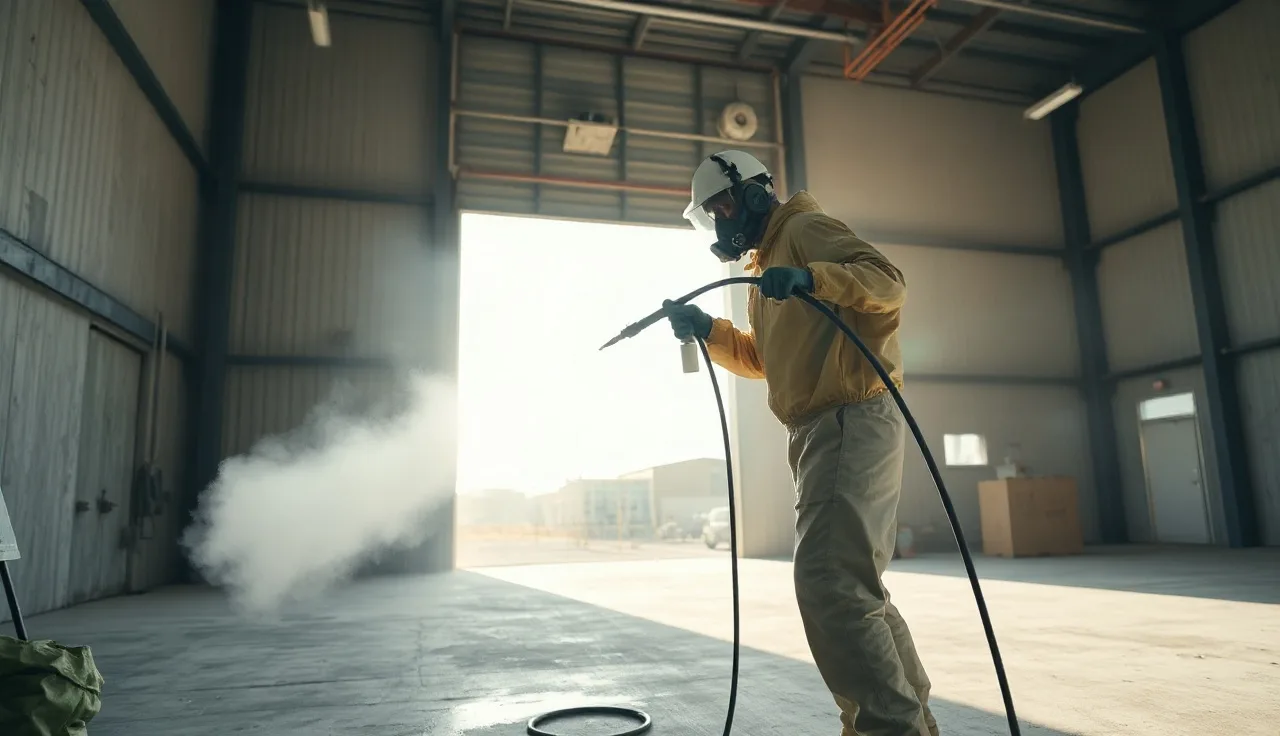
TL;DR
Painting contractors must comply with at least four OSHA standards covering chemical hazards: HazCom (29 CFR 1910.1200), Respiratory Protection (29 CFR 1910.134), lead in construction (29 CFR 1926.62), and the benzene standard where it applies. Each requires a written program. Serious violations run up to $16,550 each as of January 2024.
What OSHA standards actually apply to painting contractors?
Most painters work under Part 1926, OSHA's construction rules, because they're on job sites next to other trades. Run a shop, do production spray work, or refinish furniture in a fixed building, and Part 1910 (general industry) can apply too. OSHA uses a "primary activity" test to decide which part governs, and courts have mostly backed that reading.
Here are the standards you can't ignore:
| Standard | CFR Citation | What It Covers |
|---|---|---|
| Hazard Communication | 29 CFR 1910.1200 (gen. industry) / 29 CFR 1926.59 (construction) | SDSs, labels, written HazCom program, training |
| Respiratory Protection | 29 CFR 1910.134 | Written program, fit testing, medical evals |
| Lead in Construction | 29 CFR 1926.62 | Action level 30 µg/m³, PEL 50 µg/m³ |
| Lead in General Industry | 29 CFR 1910.1025 | Same PEL, different compliance triggers |
| Benzene | 29 CFR 1910.1028 | Action level 0.5 ppm, PEL 1 ppm |
| Personal Protective Equipment | 29 CFR 1910.132 / 1926.95 | Written PPE hazard assessment |
| Permit-Required Confined Spaces | 29 CFR 1910.146 | Painting tanks, vats, large vessels |
| Flammable Liquids | 29 CFR 1910.106 / 1926.152 | Storage, handling of paint thinners |
One thing to know: 29 CFR 1926.59 adopts the HazCom standard by reference to 29 CFR 1910.1200, so the written program requirements are identical whether you cite the construction or general industry number. [1]
For most small painting contractors, three standards carry the weight: HazCom, Respiratory Protection, and Lead in Construction. Get those three written programs right and you've covered the bulk of your chemical exposure risk.
What does a written HazCom program require for painters?
OSHA's Hazard Communication standard at 29 CFR 1910.1200(e) requires every employer who has hazardous chemicals on hand to keep a written program. For a painter, "hazardous chemicals" is nearly everything in the truck: latex and oil-based paints, primers, thinners, strippers, isocyanate caulks, and most cleaning solvents. [1]
Your written HazCom program has to address five things:
1. How you keep your Safety Data Sheets and where workers reach them right away (not locked in the office, not buried in a password-protected laptop the crew can't open). 2. How containers get labeled, including any secondary containers you fill from bulk. 3. How new chemicals get evaluated and added to your inventory list. 4. How you train workers on SDSs and the physical and health hazards of what they use. 5. Any multi-employer worksite arrangements, meaning how you share hazard info with the GC and other subs.
OSHA doesn't dictate a format. But the program must be written, available to employees on request, and specific to your actual workplace. Generic boilerplate that never names a chemical you use won't pass. An inspector will ask for your chemical inventory list and check whether your SDSs match it. Forty products in the shop and 12 SDSs on file is a citation. [1]
For how SDSs work section by section, the hazard communication article walks through all 16 SDS sections. The hcl safety data sheet breakdown shows how to read the exposure limits section that feeds straight into your program.
One practical move: keep a laminated one-page inventory list on each job truck. Product name, SDS location, primary hazard (flammable, respiratory, skin). Workers know where to look, and it answers the inspector's first question before it's asked.
What are the respiratory protection program requirements for painters?
This is where small painting contractors get hurt on inspections. The respiratory protection standard at 29 CFR 1910.134 requires a written program any time workers wear respirators, whether that's a half-face APF-10 unit for solvent vapors or a powered air-purifying respirator (PAPR) for spray. [2]
OSHA is specific. The written program has to cover:
- Respirator selection based on the actual hazard (more than "we hand out N95s")
- Medical evaluations before fit testing (the step most contractors skip)
- Fit testing, done annually for tight-fitting respirators
- Proper use, including when to leave a contaminated area
- Maintenance, cleaning, and storage procedures
- Program evaluation, meaning someone reviews whether it's working
The medical evaluation is not optional. Before a worker wears a tight-fitting respirator, a licensed healthcare professional must clear them using at minimum the OSHA medical questionnaire in Appendix C to 29 CFR 1910.134. You don't necessarily need a clinic visit; a physician can review the questionnaire remotely. But a written clearance has to be on file. [2]
Spray painting raises the stakes. OSHA treats airless and air-assisted spray as high-concentration sources of aerosols and solvent vapor, so a plain organic vapor cartridge may not be enough. Isocyanate-containing paints (many two-part coatings) require a supplied-air respirator under OSHA guidance, because no air-purifying cartridge protects against isocyanates at typical spray concentrations. [3]
Fit testing runs roughly $25 to $75 per worker at occupational health clinics. You can buy a PortaCount or an isoamyl acetate kit and do it in-house once your volume justifies it. For a crew of five, outsourcing once a year is almost always cheaper.
Voluntary use has its own rule. If workers choose to wear respirators you don't require, you still owe them a reduced obligation under 29 CFR 1910.134(c)(2): you must give them Appendix D, the voluntary-use information document, and you still must do the medical evaluation. What you skip is fit testing and the full written program, so long as the respirator isn't protecting against a real hazard. If OSHA finds the hazard was real and the respirator was needed, "voluntary" won't save you. [2]
When does the lead standard apply, and what triggers a written compliance program?
If you paint, strip, or disturb any surface that might hold lead-based paint, the lead in construction standard at 29 CFR 1926.62 is in play. [4] That covers a lot of work: old bridges, water towers, industrial structures built before 1978, and any repaint where the existing layers were never tested.
Two numbers drive the standard:
- Action Level (AL): 30 micrograms per cubic meter of air (30 µg/m³) as an 8-hour TWA
- Permissible Exposure Limit (PEL): 50 µg/m³ as an 8-hour TWA
Once employee exposure hits or passes the Action Level, you must set up a written lead compliance program. It has to include:
1. A description of each activity where lead exposure occurs 2. Engineering and work practice controls you'll use 3. Air monitoring results or your initial determination rationale 4. Housekeeping procedures 5. Hygiene facilities and practices 6. Protective work clothing and equipment 7. Employee training and information 8. Biological monitoring schedule (blood lead testing)
29 CFR 1926.62(e)(2)(i) states: "Prior to commencement of the job, the employer shall establish and implement a written compliance program to achieve compliance with paragraphs (c) and (d) of this section." [4] That's the standard's text, not a paraphrase.
Blood lead testing starts when a worker is exposed at or above the Action Level for more than 30 days a year. The initial result goes to the worker in writing within five business days of your receiving it. If blood lead hits 60 µg/dL, or averages 50 µg/dL over the past 12 months, you must provide medical removal protection: temporary reassignment at full pay and benefits. [4]
Honest note: small contractors assume lead only matters on old bridge jobs. It matters any time you sand, burn, or blast a surface with unknown paint history. An XRF inspector who tests surfaces before you start costs a few hundred dollars and tells you for certain whether you're in lead territory. That's usually money well spent.
Do painters need air monitoring, and how does industrial hygiene fit in?
It depends on the chemicals and the tasks, and that's the honest answer.
For lead under 29 CFR 1926.62, the standard requires initial air monitoring on each job unless you have objective data showing exposure below the Action Level. "Objective data" means prior measurements on the same task with the same materials and controls, or published industry data. OSHA accepts well-documented historical monitoring. For routine interior latex on drywall, most contractors can document that lead exposure is negligible without sampling. For power-tool disturbance of old paint, you can't skip it. [4]
For solvents and other chemicals under HazCom, OSHA doesn't require air monitoring unless a substance-specific standard applies, like benzene or toluene diisocyanate. Even so, if you spray in poorly ventilated spaces and workers report headaches or dizziness, OSHA can cite you under the General Duty Clause (Section 5(a)(1) of the OSH Act) for failing to protect workers from recognized hazards, with no specific CFR trigger needed. [5]
Hiring an industrial hygienist for a walk-through and baseline monitoring runs roughly $500 to $2,500 depending on location and scope, based on typical market rates for occupational IH work. For a small shop, one good baseline that documents your usual exposures often satisfies the "initial determination" requirement for several standards at once. The American Industrial Hygiene Association keeps a consultant finder at aiha.org.
For spray work with isocyanates, OSHA's isocyanate enforcement guidance points to monitoring as a way to verify your engineering controls actually work. Not strictly mandatory under HazCom alone, but strongly implied when you run two-component coatings. [3]
What PPE is required, and do painters need a written PPE hazard assessment?
Yes. 29 CFR 1910.132(d) requires a written hazard assessment for each task where PPE is used, signed and dated by the employer. [6] This sits separate from your HazCom and respiratory protection programs. Inspectors look for it, and it's one of the easier things to get right.
The assessment doesn't have to be long. It identifies the hazards present (chemical splash, inhalation, skin absorption), the PPE picked for each hazard, and a certification that the assessment happened. A painter would typically write one for spray painting, one for surface prep (grinding, sanding), and one for general brush and roller work.
Common PPE for painters:
| Task | Typical PPE Required |
|---|---|
| Spray painting (solvent-borne) | Full-face or half-face respirator with OV cartridge, chemical-resistant gloves, goggles or face shield |
| Spray painting (isocyanate coatings) | Supplied-air respirator, chemical-resistant coveralls, gloves |
| Lead paint disturbance | N100 or P100 respirator (or supplied-air for high-exposure tasks), Tyvek suit, gloves |
| Brush/roller (water-borne) | Nitrile gloves, eye protection if overhead |
| Pressure washing / chemical stripping | Face shield, chemical-resistant apron, rubber gloves |
Glove choice matters more than most contractors think. Latex gloves offer almost no protection against solvents like MEK, toluene, or xylene. Nitrile buys you reasonable short-term protection, under an hour for many solvents. Butyl rubber is the best bet for sustained solvent contact. Section 8 of each product's SDS lists the recommended glove materials. [1]
For how to document task-based assessments, the osha training article covers what OSHA expects.
What chemical exposure training do painters legally have to receive?
Training stacks across several standards, and you track them separately.
HazCom training under 29 CFR 1910.1200(h) happens at initial assignment and again whenever a new chemical hazard shows up. [1] It covers how to read an SDS, what the labeling system means, the physical and health hazards of the chemicals on hand, and how workers protect themselves through PPE, controls, and emergency procedures. Training must be in a language and vocabulary the employee understands. That part has teeth: OSHA has cited employers for training only in English when workers spoke primarily Spanish.
Respiratory protection training under 29 CFR 1910.134(k) happens before the employee uses a respirator and every year after. [2] It covers why the respirator is needed, its limits, how to don and doff it, how to run a user seal check, maintenance, storage, and what to do if it doesn't fit or feel right mid-task.
Lead training under 29 CFR 1926.62(l) happens before lead work starts and annually. [4] It covers the health effects of lead, what generates exposure on your specific jobs, engineering controls, PPE, hygiene practices, and the medical surveillance program.
For supervisors who oversee chemical work, the osha 30 course covers chemical hazards in a construction context and makes a solid base, though it doesn't replace the task-specific training the standards require. The osha 30 training page has more on what's covered and how to document completion.
Keep the records. 29 CFR 1910.134 requires you to retain respirator training records. The lead standard requires medical surveillance records for the duration of employment plus 20 years, or 40 years, whichever is longer. [4] HazCom sets no retention period, but keeping training records at least three years covers a normal inspection cycle.
What are the biggest OSHA citations painting contractors actually receive?
OSHA and BLS don't publish citations by contractor type in one clean table, but OSHA's top-10 most-cited lists keep surfacing the standards painters live under. In fiscal year 2023, the most-cited standards across construction included HazCom, fall protection, and respiratory protection (1910.134). [7]
From OSHA's public inspection data, painting contractors most often get cited for:
- No written HazCom program, or an outdated generic one (Serious)
- Missing or incomplete SDSs (Serious or Other-Than-Serious, depending on the hazard)
- No written respiratory protection program while workers wear respirators (Serious)
- No fit testing records (Serious)
- No medical evaluations for respirator wearers (Serious)
- No written PPE hazard assessment (Other-Than-Serious, usually)
- Lead exposure with no initial air monitoring or written compliance program (Serious to Willful)
As of January 2024, OSHA's penalty caps are $16,550 per serious violation and $165,514 per willful or repeated violation. [8] One inspection that finds a missing HazCom program, a missing respiratory protection program, and no fit testing records can run $40,000 to $50,000 before any negotiation.
There's a small-business break. Employers with 25 or fewer employees can get a 60% penalty reduction off the proposed amount, and first-time violations often drop further through informal settlement. [8] That doesn't make compliance optional. It does mean the worst-case number rarely ends up being the final number.
How do you actually write a chemical exposure program for a painting company?
Here's the reality: you need separate written programs for HazCom, Respiratory Protection, and Lead (where it applies), because each OSHA standard requires its own document meeting its own specific requirements. A single one-page "chemical safety program" that tries to cover all three will fail an inspection.
For each program, the skeleton is roughly the same:
1. Policy statement (one paragraph: who's covered, what it applies to) 2. Responsibilities (who keeps SDSs, who runs fit testing, who tracks blood lead results) 3. Procedures (the step-by-step requirements from the standard) 4. Training plan (when, by whom, what topics, how documented) 5. Recordkeeping (what records, where stored, retention period) 6. Program review (annual review date, who signs off)
OSHA runs a free On-Site Consultation Program that's fully separate from enforcement. Consultants come to your workplace, find hazards, and help you build programs without citing you. [9] For a small painting contractor who has never had a formal program, this is the best free resource going. The catch: you agree to correct identified hazards on an agreed timeline.
Want to build the programs faster without a consultant? SafetyFolio's safety program generator produces a complete, OSHA-aligned written program in about 15 minutes, tailored to your chemical inventory and crew size.
Once the programs exist, the work moves to execution: keeping records, running annual reviews, updating when you add a chemical or change a process. A binder on the shelf that nobody touches is nearly as bad as no program at all when an inspector walks in.
What are the ventilation requirements for spray painting operations?
OSHA covers spray painting ventilation in more than one place. 29 CFR 1910.94(c) governs ventilation for spray finishing in general industry, with requirements for spray booths, exhaust rates, and fire suppression. [10] For construction spray work (bridges, structures, interiors on job sites), 29 CFR 1926.57 sets the general ventilation rules.
Under 1910.94(c), a spray booth's exhaust ventilation must maintain airflow across the open face at a minimum average of 100 linear feet per minute. For open areas with no booth, the standard requires mechanical ventilation enough to keep vapor below 25% of the Lower Explosive Limit of the solvent you're spraying. [10]
In the field, "sufficient ventilation" comes from a mix:
- Natural ventilation (open windows, doors)
- Forced-air ventilation (box fans, explosion-proof blowers)
- Respiratory protection when ventilation alone falls short
With no spray booth, OSHA's enforcement looks at two things: whether vapor concentrations create an explosion risk, and whether workers are protected from inhalation. Document your ventilation setup and show air monitoring data below action levels, and you're in far stronger shape than a contractor who just says "we opened the windows."
Paint the inside of a tank or pipe and you're into 29 CFR 1910.146 permit-required confined space territory, where the ventilation rules tighten. Continuous forced-air ventilation and continuous atmospheric monitoring are typically required for painting inside a permit space. [11] That's a separate written program too.
How do state OSHA plans affect painting contractor requirements?
Twenty-nine states and territories run their own OSHA plans approved by federal OSHA. [12] A state plan has to meet or beat federal requirements, and it can go further. California (Cal/OSHA) is the sharpest example, with stricter rules on lead, isocyanates, and heat illness than the federal baseline.
Cal/OSHA's lead standard is tighter than federal: a much lower Action Level for certain operations and a PEL of 25 µg/m³ rather than the federal 50 µg/m³. [12] Paint bridges or structures in California while assuming federal 1926.62 is enough, and you'll get cited.
Washington State (L&I) has an isocyanate-specific rule (WAC 296-62-07521) requiring specific hazard assessments and supplied-air respirators for spray application of isocyanate coatings. Federal OSHA handles isocyanates mostly through HazCom and the General Duty Clause, with no substance-specific standard.
The practical step: check your state's OSHA plan site before you finalize your written programs. OSHA keeps a list of all state plan states at osha.gov. [12] Work across multiple states and you need to know which set of rules is more protective, then build to that standard.
For background on how the federal agency works and what "OSHA" actually means, the osha overview and what does osha stand for articles cover the basics.
What records does a painting contractor have to keep for chemical exposure compliance?
The recordkeeping requirements sit scattered across the individual standards. Here's a consolidated view:
| Record | Standard | Retention Period |
|---|---|---|
| Written HazCom program | 29 CFR 1910.1200 | Current version always available |
| SDS for each chemical | 29 CFR 1910.1200 | While chemical is in use; 30 years after last use per 1910.1020 |
| HazCom training records | 29 CFR 1910.1200 | Not specified; OSHA recommends 3 years minimum |
| Respirator medical evaluations | 29 CFR 1910.134 | Duration of employment |
| Fit test records | 29 CFR 1910.134 | Until next fit test |
| Respiratory protection program | 29 CFR 1910.134 | Current version, updated annually |
| Lead air monitoring records | 29 CFR 1926.62 | 40 years |
| Lead blood test results | 29 CFR 1926.62 | 40 years |
| Lead written compliance program | 29 CFR 1926.62 | Duration of job |
| PPE hazard assessment certification | 29 CFR 1910.132 | Not specified; best practice 3 years |
| OSHA 300 injury/illness log | 29 CFR 1904 | 5 years |
The 40-year retention for lead records is not a typo. Lead causes long-latency disease, so OSHA requires these records to stay available to former employees decades after they leave. [4] When you retire or sell the business, you have to transfer medical and exposure records to the new owner or notify NIOSH. [13]
For injury recordkeeping basics, the incident report article covers the OSHA 300 log that runs parallel to your chemical exposure documentation.
Frequently asked questions
Does a painting contractor with only two employees need written OSHA programs?
Yes. Most written program requirements, including HazCom (29 CFR 1910.1200) and Respiratory Protection (29 CFR 1910.134), apply to all employers regardless of size. The only partial break for small employers is the OSHA 300 log: employers with 10 or fewer employees are exempt from routine injury recordkeeping under 29 CFR 1904.1. Chemical exposure programs have no size exemption.
What is the permissible exposure limit for paint solvent vapors?
There's no single PEL for "paint solvents" because each solvent has its own limit. Toluene PEL is 200 ppm (29 CFR 1910.1000 Table Z-2), xylene PEL is 100 ppm (Table Z-1), MEK PEL is 200 ppm. OSHA's PEL tables are widely viewed as outdated; NIOSH and ACGIH recommend lower limits for many solvents. Check Section 8 of each product's SDS for the applicable exposure limits.
Do I need a written program if my painters only use latex water-based paints?
You still need a written HazCom program, because even water-based paints and their additives are classified as hazardous chemicals under 29 CFR 1910.1200. Many latex products contain preservatives, fungicides, or ammonia with defined exposure limits. You likely won't need a lead compliance program or heavy respiratory protection, but HazCom is universal. A respirator program is required if workers wear respirators for any reason, even voluntary use.
What respirator do painters need for spray painting solvent-based coatings?
At minimum, a NIOSH-approved half-face respirator with organic vapor cartridges (an OV/P100 combination for spray) is typical. The right choice depends on the specific solvent concentration, which means air monitoring or conservative assumptions from the SDS. Isocyanate-containing two-part coatings require a supplied-air respirator; no air-purifying cartridge is rated for isocyanate spray concentrations. Your written program must document the selection rationale.
How often does OSHA require fit testing for painters?
29 CFR 1910.134 requires annual fit testing for every worker who wears a tight-fitting respirator, including half-face and full-face models. Fit testing repeats if the worker's physical condition changes in a way that affects fit, such as significant weight change, dental work, or facial scarring. Fit test records must be kept until the next fit test is done.
Does my painting company need a confined space program if we paint tanks?
Yes. Painting the inside of a tank, vessel, or large pipe almost always meets the definition of a permit-required confined space under 29 CFR 1910.146: limited entry, atmospheric hazard from paint vapors, and oxygen depletion from ventilation equipment. You need a written permit space program, trained attendants, an entry supervisor, and atmospheric monitoring before and during entry. It's a separate program from HazCom and respiratory protection.
What is the OSHA fine for not having a written HazCom program?
A missing or inadequate written HazCom program is usually cited as a Serious violation. As of January 2024, the maximum penalty for a Serious violation is $16,550 per violation. Employers with 25 or fewer employees generally qualify for a 60% size-based reduction, bringing a typical penalty near $6,600 before informal settlement. Repeated or willful violations carry penalties up to $165,514 each.
Are painting contractors required to use OSHA's specific SDS format?
The chemical manufacturer or importer creates the SDS. You, as the employer, obtain and maintain them, you don't write them. SDSs must follow the 16-section GHS format OSHA adopted in 2012. Your job is to make sure an SDS exists for every hazardous chemical in the workplace and that employees can reach them during their shift. You collect and manage them.
When does a painting contractor need to do blood lead testing on workers?
Under 29 CFR 1926.62, blood lead testing is required when a worker is exposed at or above the Action Level of 30 µg/m³ for more than 30 days a year. Testing repeats every two months if blood lead runs between 40 and 59 µg/dL, and monthly above 60 µg/dL. If blood lead reaches 60 µg/dL, or averages 50 µg/dL over the past 12 months, the worker must be medically removed with pay and benefit protection.
Does OSHA require painters to shower or use hygiene facilities on the job site?
For lead work, yes. 29 CFR 1926.62(i) requires change areas, hand washing, and shower facilities for workers exposed above the PEL. They must not eat, drink, smoke, or apply cosmetics in lead work areas. For general solvent painting without lead exposure, OSHA requires hand washing facilities (29 CFR 1926.51) and bars eating or drinking in contaminated areas, but shower facilities aren't mandated.
How do I handle chemicals added to my inventory mid-year, after initial HazCom training?
29 CFR 1910.1200(h)(1) requires training before initial exposure to any hazardous chemical and whenever a new physical or health hazard enters the workplace. In practice, when you add a product you obtain the SDS, add it to your inventory, judge whether it brings a new hazard class, and train affected workers before they use it. A short toolbox talk documented with signatures covers most new products that don't introduce a fundamentally new hazard.
Can painting contractors use OSHA's free consultation service without risking a fine?
Yes. OSHA's On-Site Consultation Program is completely separate from enforcement, and consultants are barred from sharing information with enforcement staff. You commit to correcting identified hazards within agreed timelines, but the visit itself can't produce citations or penalties. Completing the required corrections can also qualify your company for the SHARP recognition program, which carries temporary exemption from programmed inspections.
What is a written PPE hazard assessment and how do painters complete one?
29 CFR 1910.132(d) requires a written assessment that surveys each task for hazards, picks appropriate PPE for each one, and certifies the assessment in writing with the date and the name of the person who did it. A painter would typically write one for spray painting, one for surface prep, and one for general painting. It takes no special expertise; a supervisor walking each task and documenting the hazards and PPE selected is enough for most small operations.
Sources
- OSHA, Hazard Communication Standard (29 CFR 1910.1200), full standard text: Written HazCom program requirements, SDS maintenance, training requirements, and multi-employer provisions for painting contractors
- OSHA, Respiratory Protection Standard (29 CFR 1910.134), full standard text: Written respiratory protection program requirements, medical evaluation, annual fit testing, and voluntary-use provisions
- OSHA, Isocyanates: Health Effects, Exposure Limits, and Safe Handling guidance: Supplied-air respirator requirements for spray application of isocyanate-containing coatings and OSHA enforcement guidance on two-component coatings
- OSHA, Lead in Construction Standard (29 CFR 1926.62) and Lead safety topics page: Lead action level 30 ug/m3, PEL 50 ug/m3, written compliance program trigger, blood lead testing, medical removal at 60 ug/dL, and 40-year record retention
- OSHA, General Duty Clause (Section 5(a)(1) of the OSH Act of 1970), OSH Act text: OSHA authority to cite employers for recognized chemical hazards even without a specific CFR standard trigger
- OSHA, Personal Protective Equipment Standard (29 CFR 1910.132), full standard text: Written PPE hazard assessment requirement under 29 CFR 1910.132(d), including certification and dating requirements
- OSHA, Top 10 Most Cited Standards FY2023: HazCom and respiratory protection among the most-cited standards in construction sector inspections in fiscal year 2023
- OSHA, Penalties, January 2024 penalty adjustment page: Maximum Serious violation penalty $16,550 per violation, willful or repeated maximum $165,514 per violation, and small business penalty reductions as of January 2024
- OSHA, On-Site Consultation Program overview: Free OSHA consultation is separate from enforcement, cannot result in citations, and offers SHARP recognition for compliant participants
- OSHA, Ventilation for Spray Finishing Operations (29 CFR 1910.94(c)), standard text: Spray booth minimum airflow 100 linear feet per minute across open face; open-area spray must keep vapor below 25% of LEL
- OSHA, Permit-Required Confined Spaces (29 CFR 1910.146), standard text: Permit space requirements for painting inside tanks and vessels, including atmospheric monitoring and continuous ventilation requirements
- OSHA, State Plans overview and list of approved state plan states: 29 states and territories operate OSHA-approved state plans; California lead PEL 25 ug/m3 is stricter than the federal 50 ug/m3
- OSHA, Access to Employee Exposure and Medical Records (29 CFR 1910.1020), standard text: SDS retention required for 30 years after last use of a chemical; medical and exposure records transfer obligations when business closes or is sold