Last updated 2026-07-10
TL;DR
A PPE toolbox talk is a short safety meeting (usually 5 to 15 minutes) that reinforces why workers wear personal protective equipment, how to inspect it, and what OSHA requires under 29 CFR 1910.132. Run well, it lowers injury rates. Run as a signature-gathering ritual, it does nothing. This guide gives you the structure, content, and documentation to do it right.
What is a toolbox talk, and why does PPE deserve its own?
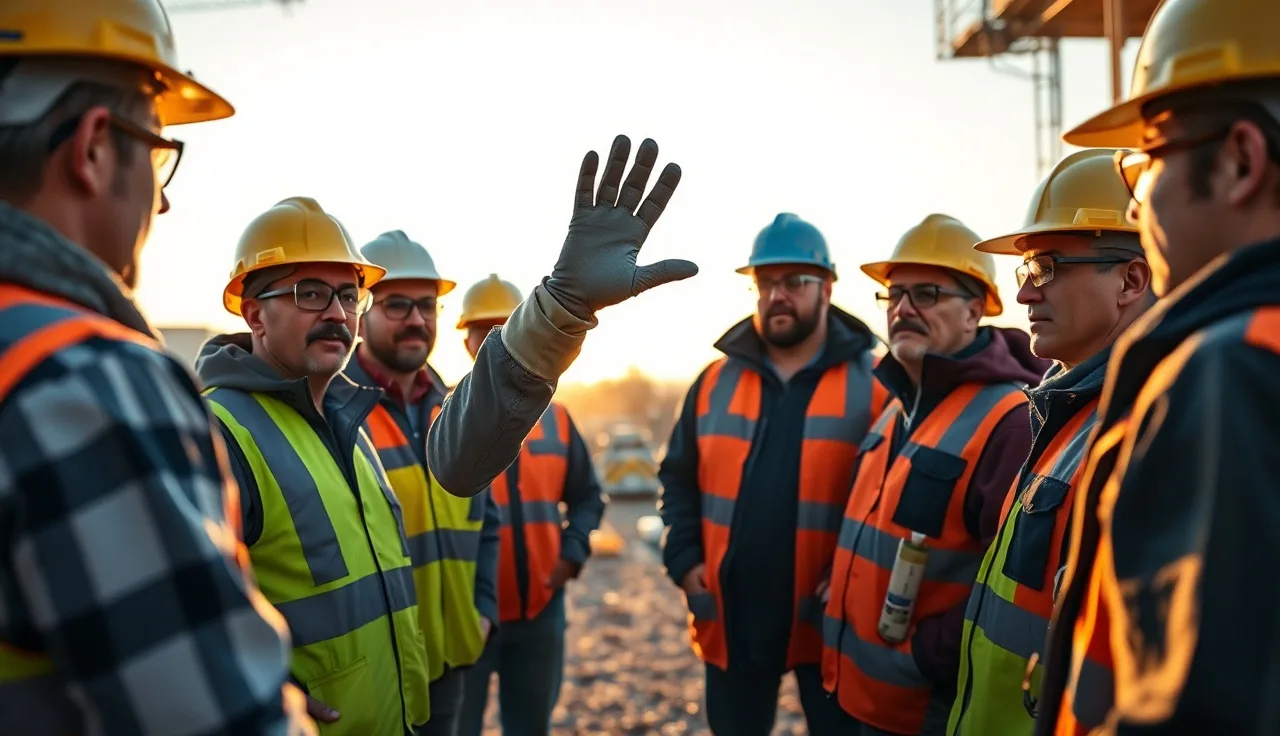
A toolbox talk is a short, informal safety meeting held at the worksite before a shift or task begins. No classroom. No PowerPoint. You gather the crew, pick one hazard, talk it through for 5 to 15 minutes, and get back to work. The name comes from construction crews who used to huddle around a literal toolbox.
PPE earns its own talks because it sits at the very bottom of the hierarchy of controls. It's the last thing standing between a worker and an injury, and it only works if people wear it correctly and wear it every time. OSHA cites PPE violations in the thousands every year. In fiscal year 2023, eye and face protection (29 CFR 1926.102) landed among the most-cited construction standards, and head protection violations showed up repeatedly on the general industry lists too. [1]
The injury data is blunt. The Bureau of Labor Statistics has long found that most workers who suffer eye injuries were not wearing eye protection at the time, and a large share of head injuries happen to workers with no hard hat on. [2] Those aren't freak accidents. They're predictable failures, and a well-run toolbox talk hits them head-on.
A PPE toolbox talk isn't filler. It's one of the cheapest safety interventions you have, and one of the most direct.
What does OSHA actually require for PPE training?
OSHA's general industry PPE standard lives at 29 CFR 1910.132, and the training piece is subpart (f). It's specific. Employers must train each employee who uses PPE so the worker knows, at minimum: when PPE is necessary, what PPE is necessary, how to put it on and take it off, the limitations of the equipment, and its proper care, maintenance, useful life, and disposal. [3]
The construction version sits at 29 CFR 1926.95, with type-specific rules for hard hats (1926.100), eye and face protection (1926.102), hand protection (1926.138), and foot protection (1926.96), among others.
Here's the part most small business owners miss. OSHA requires training before the employee uses the equipment, and the employer must verify it with a written certification that includes the employee's name, the date, and the subject of the training. [3] A toolbox talk sign-in sheet does the job, but only if you date it, name the specific topic, and keep it on file.
Toolbox talks are not a stand-in for the initial hands-on training OSHA requires when someone first gets issued PPE. They're the regular reinforcement that keeps skills from decaying afterward. The two work together. If you want the full assessment-and-certification workflow behind them, our PPE hazard assessment guide walks through it.
How long should a PPE toolbox talk be, and how often should you hold one?
Five to fifteen minutes is the working range. Much shorter and you skip the material. Much longer and the crew checks out.
OSHA doesn't set a fixed toolbox-talk frequency in most standards. What it does require is retraining when you have reason to believe a worker lacks the required knowledge or skills. In plain terms: when you spot a respirator over a beard, a hard hat on backward, or safety glasses parked on someone's forehead, that's your trigger. [3]
In construction, many general contractors run talks daily or weekly as a condition of the contract. OSHA's compliance assistance resources recommend at least weekly safety meetings on active construction sites. [4] For lower-hazard general industry, monthly PPE-focused talks are a reasonable floor.
My honest recommendation: run a PPE toolbox talk at least once a quarter for each major PPE category your workers use, and run an unscheduled one any time you bring in new equipment, see compliance slipping, or have a near-miss. Quarterly plus reactive beats any rigid calendar. For how this fits a full safety calendar, see our safety meeting schedule template.
What are the most common PPE topics to cover in a toolbox talk?
You don't have to cover all of PPE in one sitting. You shouldn't. Focused topics land better than broad surveys. Here are the categories worth rotating through, with the OSHA standard for each:
| PPE Category | General Industry Standard | Construction Standard | Common Talk Topics |
|---|---|---|---|
| Eye and face protection | 29 CFR 1910.133 | 29 CFR 1926.102 | Proper fit, lens inspection, anti-fog care |
| Head protection | 29 CFR 1910.135 | 29 CFR 1926.100 | Class ratings, expiration, suspension inspection |
| Foot protection | 29 CFR 1910.136 | 29 CFR 1926.96 | ASTM ratings, when steel-toe isn't enough |
| Hand protection | 29 CFR 1910.138 | 29 CFR 1926.138 | Selecting glove type by chemical/cut hazard |
| Hearing protection | 29 CFR 1910.95 | 29 CFR 1926.101 | NRR ratings, proper insertion, noise level context |
| Respiratory protection | 29 CFR 1910.134 | 29 CFR 1926.103 | Fit testing, cartridge change schedules, seal checks |
| High-visibility / fall PPE | 29 CFR 1910.140 | 29 CFR 1926.502 | Harness inspection, D-ring placement, vest class |
Respiratory protection and fall protection PPE carry the most detailed OSHA requirements, and both deserve their own multi-part talk series. Don't try to squeeze a full respirator program into ten minutes.
For a typical construction crew, the highest-return topics to hit often are eye protection (compliance visibly slips fastest), hand protection (highest non-fatal injury volume), and head protection (worst consequences when it fails).
What's the right structure for a PPE toolbox talk?
A talk that just reads off a fact sheet does almost nothing. Structure carries the weight. Here's what works with adult workers in the field:
Open with a real hook (1-2 minutes). Start with a recent incident, a near-miss on your own site, or a short OSHA case summary. OSHA publishes fatality and injury summaries by industry and hazard. [5] Use one. It makes the topic real.
State the one rule clearly (30 seconds). Not five rules. One. "Every person grinding today wears a face shield over their safety glasses, no exceptions." That's it.
Show the equipment and explain the why (3-5 minutes). Pass around the actual PPE. Show what proper fit looks like. Put a damaged piece next to a good one. Explain the specific hazard it controls and what happens without it. People comply more when they understand the mechanism of the injury, more than the rule.
Handle the real objections (2-3 minutes). Every crew has them. "It's hot." "It fogs up." "It slows me down." "I've worked 20 years without it." Take these seriously and solve them. If safety glasses fog and nobody wears them, the fix is anti-fog lenses, not a longer lecture. This is where good supervisors earn trust.
Quick hands-on check (1-2 minutes). Have workers don their PPE and run a 30-second inspection. Give feedback right there.
Sign the sheet and get to work. Keep the sign-in simple: date, topic, employee name, signature. That's your training certification record. [3]
Total: under 12 minutes if you stay on track.
How do you make a PPE toolbox talk PDF or printable outline?
A PDF outline does two jobs. It keeps whoever's running the talk on track, and it leaves a paper trail you can hand OSHA if they ask for training records.
For each topic, your one-page outline (the "PPE toolbox talk PDF" people search for) should include:
- Date and location
- Topic and the specific OSHA standard that applies
- The one key safety rule for the day
- 3-4 talking points (bullets, not a script)
- A section for "questions raised" and any corrective actions
- Employee sign-in section at the bottom
OSHA's website has free safety topics pages and training materials for every PPE category through its compliance assistance resources. [4] The OSHA Susan Harwood Training Grant program has also funded free, downloadable training materials aimed at small businesses. [6] Construction-specific toolbox talks in PDF form come from OSHA's construction outreach pages and from state-plan agencies in many states.
If you want a full PPE written program instead of a one-off outline, SafetyFolio's safety program generator builds a complete, OSHA-aligned program in about 15 minutes, and you can pull individual toolbox talk topics straight out of it. That beats building from a blank page.
One practical tip: laminate the reusable parts of your template (the structure, the inspection checklist) and use a fresh sign-in sheet each time. Saves paper, keeps records clean.
What should a PPE inspection checklist in a toolbox talk actually cover?
Inspection is where talks fall apart most often. Leaders talk about PPE and skip actually looking at what's on the crew. Here's a usable checklist by category:
Hard hats: Check for cracks, dents, and UV damage (a chalky or faded shell). Inspect the suspension inside for fraying or broken attachments. Most manufacturers say replace hard hats every five years regardless of looks, and sooner after any impact. [7]
Safety glasses and goggles: Look for scratched lenses (they cut visibility and can signal structural weakness), bent frames, and missing or stretched nose pieces. Confirm side shields are present when the task calls for them.
Gloves: Check for cuts, punctures, chemical staining, or worn fingertips. Turn chemical-resistant gloves inside out and test for pinholes by trapping air and squeezing. If the material has softened or turned tacky, it's chemically degraded and needs replacing.
Hearing protection: Foam earplugs should be checked for hardening or cracking (they compress worse over time). Earmuffs need cushion checks for cracks or flattening and headband checks for lost tension.
Respirators: The most involved one. Check the facepiece for cracks, tears, and warping. Inspect the exhalation valve. Verify cartridge installation and expiration. Run a positive-pressure and negative-pressure seal check before each use. [3]
Fall protection harnesses: Look for cuts, abrasion, heat or chemical damage, broken stitching, and deformed or cracked hardware. Confirm the D-ring moves freely. Any harness that has arrested a fall comes out of service immediately, no matter how it looks. [8]
Building these checks into the physical routine of a talk, more than describing them, is what separates real safety culture from compliance theater.
How do you handle PPE noncompliance you find during or after a toolbox talk?
You ran the talk. Someone shows up next day with no glasses. Now what?
Treat the first offense as coaching, not discipline, unless your written program says otherwise. Pull the worker aside, ask what happened, solve the problem. Maybe the glasses hurt. Maybe they were rushing. Maybe they genuinely don't get the risk. Each of those gets a different response.
Then document it. A short note in the worker's file: date, what you saw, what you said, the expectation going forward. This matters twice over. If OSHA inspects and finds a violation, documented coaching shows good faith. If the behavior continues and you have to discipline, you've got a record.
Third, check whether the PPE itself is the problem. OSHA's standard at 1910.132(d) requires the employer to provide equipment that fits the employee. [3] "It doesn't fit" is a legitimate complaint you're obligated to fix, not brush off. One of the most common reasons workers ditch PPE is that it's genuinely uncomfortable or ill-fitting, not that they're reckless.
For repeated noncompliance after documented coaching, progressive discipline is appropriate and legally defensible. Most written safety programs include a PPE noncompliance section for exactly this. If yours doesn't, our PPE written program guide shows how to add one.
What's the difference between a toolbox talk and a formal OSHA-required training session?
This distinction trips up a lot of small business owners, and getting it wrong costs you in an audit.
A formal OSHA-required training session must: (1) happen before the employee first uses the equipment, (2) cover every element in the applicable standard, (3) be conducted in a language the worker understands, and (4) be documented with a written certification. [3] For respirators, OSHA goes further and requires training annually, covering the medical, fit-test, and use-limitation topics spelled out in 1910.134(k).
A toolbox talk is a supplement. It reinforces, refreshes, reminds. It does not satisfy the initial training requirement on its own.
The practical version: if you hire a worker Monday and run a PPE toolbox talk Tuesday, you have not met the 1910.132(f) training requirement for that worker. They needed the initial training before they touched the PPE. Tuesday's talk is useful reinforcement, but it doesn't backfill the gap.
Where a talk can satisfy retraining is when OSHA's standard calls for periodic refreshers or when a specific event triggers a retraining need. Document it the same way you'd document any training, with a sign-in sheet naming the topic, the date, and the standard.
What are the most common mistakes employers make with PPE toolbox talks?
The same patterns come up over and over, and most are easy to fix.
Running the same talk on repeat. If workers can finish your sentences, the talk is dead. Rotate topics and scenarios. Use different real incidents as hooks. Occasionally flip the format and have workers demonstrate instead of listen.
Choosing the wrong person to lead it. A supervisor who doesn't model the behavior he's talking about loses the room in about 30 seconds. If your foreman has his hard hat on backward during the hard hat talk, the crew learns that PPE is performance, not policy.
Skipping the documentation. No sign-in sheet means no training record. No training record means no defense if OSHA cites you. A five-minute task that people skip constantly.
Covering too much. One topic. One rule. One takeaway. That's what adults hold onto in a short field meeting. If you feel the need to cover six things, you need six talks.
Ignoring language barriers. OSHA's training rules require training in a language workers can understand. [3] If your crew speaks Spanish and the talk is English-only, you've got a compliance gap and a safety gap at once. Translated toolbox talk materials are available free from OSHA and several state-plan agencies. [4]
Treating it as paperwork. Workers know the difference between a real conversation and a supervisor reading off a card to collect signatures. The quality of the talk matters more than the form it's recorded on.
How do you measure whether your PPE toolbox talks are working?
This is the genuine blind spot. You run the talks, collect the signatures, assume it's working. But behavior change is the point, not signatures.
Four things you can track without a consultant:
PPE compliance observations. Walk the floor or site once a week and record the percentage of workers in PPE-required areas wearing it correctly. Don't make it a gotcha. Count it and trend it. If observed compliance climbs after a run of talks, the talks are working. If it's flat or dropping, change something.
Near-miss reports involving PPE. When a near-miss gets reported and PPE was absent or failed, that's direct feedback. Track these apart from general near-misses.
First-aid and recordable injuries by body part. BLS injury data lets you benchmark your eye, hand, and foot injury rates against your industry. [2] If your hand injury rate beats the industry average and you've been running hand protection talks, the talks aren't carrying the load alone.
PPE replacement frequency. If workers burn through gloves or safety glasses faster than you'd expect, they're probably actually wearing them. Suspiciously low replacement requests can mean the PPE is sitting in a locker unused.
None of this needs software. A spreadsheet and a consistent weekly walk-through tell you what you need to know.
Where can you find free PPE toolbox talk materials and PDF templates?
You don't need to buy toolbox talk kits. Plenty of solid material is free.
OSHA.gov. OSHA's compliance assistance resources include free safety and health topics pages for nearly every PPE category, with links to standards, fact sheets, and training materials. The Susan Harwood Training Grant program specifically funds free training materials for small and medium-sized employers and high-hazard industries. [6]
OSHA's construction outreach pages. These carry toolbox talk outlines organized by hazard. Search "OSHA toolbox talks" and they come up. The construction-specific ones are the most developed.
State-plan agency resources. States with OSHA-approved state plans (California's Cal/OSHA, Washington's L&I, Michigan OSHA, and others) often publish toolbox talk libraries in PDF, sometimes with Spanish versions built in. [9] California's DOSH and Washington's L&I libraries are especially deep.
CPWR (The Center for Construction Research and Training). This nonprofit has published dozens of construction toolbox talk PDFs by hazard, all free to download. [10]
Your workers' compensation carrier. Many carriers hand out free safety training resources, including toolbox talk templates, as part of your policy. Call your loss control contact and ask.
If you need a full written PPE program (more than a talk outline) that ties into OSHA's 1910.132 hazard assessment and certification requirements, SafetyFolio's safety program generator builds one for your specific business type in about 15 minutes. That gives you a foundation your toolbox talks can reinforce.
Frequently asked questions
Can a toolbox talk substitute for formal OSHA PPE training?
No. OSHA's 29 CFR 1910.132(f) requires initial PPE training before an employee uses the equipment, covering specific topics like limitations and maintenance, with a written certification. A toolbox talk reinforces that initial training but does not replace it. If a new hire hasn't had formal PPE training, a toolbox talk doesn't close that compliance gap.
What records do I need to keep from a PPE toolbox talk?
Keep a dated sign-in sheet with the topic covered, each employee's name and signature, and the name of the person who led the talk. OSHA's 1910.132(f)(4) requires written certification of PPE training including the employee's name, date, and subject. File these with your safety training records and keep them accessible for at least the duration of employment plus a reasonable retention period.
How often should I run a PPE toolbox talk for a construction crew?
Many general contractors run toolbox talks daily or weekly. OSHA's compliance assistance guidance recommends at least weekly safety meetings on active construction sites. At minimum, run a PPE-focused talk whenever you introduce new equipment, see compliance dropping, or have a near-miss. Quarterly rotation through major PPE categories is a reasonable baseline for lower-hazard environments.
What topics should I cover in a PPE toolbox talk for a small construction crew?
Rotate through eye protection, head protection, hand protection, foot protection, and fall protection harnesses across separate talks. For each, cover when to wear it, how to inspect it, proper fit, and what to do when it's damaged. The highest-priority categories for construction are eye protection (high noncompliance rate), hand protection (highest injury volume), and fall protection PPE (most severe injury potential).
Do toolbox talks have to be in Spanish if I have Spanish-speaking workers?
Yes, effectively. OSHA's training requirements specify that training must be conducted in a language the worker understands. Running an English-only talk for Spanish-speaking workers doesn't satisfy the requirement and creates a real safety gap. OSHA and several state-plan agencies publish PPE toolbox talk materials in Spanish for free. Cal/OSHA and Washington L&I are good sources.
How long should a PPE toolbox talk last?
Five to fifteen minutes is the practical range for most PPE topics. Longer than 15 minutes and you start losing attention, especially in field settings. The ideal format is a 1-2 minute hook with a real incident, 3-5 minutes of focused content with hands-on PPE demonstration, a quick question period, and then sign-in. One clear topic, one clear rule, one takeaway.
What is the OSHA standard number for PPE training requirements?
For general industry, the primary PPE standard is 29 CFR 1910.132, with training requirements in subpart (f). Construction PPE falls under 29 CFR 1926.95 as the general standard, with category-specific standards for head (1926.100), eye (1926.102), foot (1926.96), and hand protection (1926.138). Respiratory protection has its own detailed standard at 29 CFR 1910.134 for general industry.
Where can I find free PPE toolbox talk PDFs?
OSHA's website (osha.gov) has free toolbox talk outlines through their compliance assistance resources. CPWR (The Center for Construction Research and Training) publishes construction-specific toolbox talk PDFs organized by hazard. State-plan agencies like Cal/OSHA and Washington L&I also offer free downloadable PDF toolbox talks, including Spanish-language versions. Your workers' comp carrier may have materials too.
What happens if OSHA inspects and I don't have records of PPE training?
OSHA can cite you under 29 CFR 1910.132(f) for failure to maintain written training certifications. Serious violations can carry penalties up to $16,550 per violation as of 2024. Willful or repeated violations can reach $165,514. Documentation gaps also weaken your position if a worker is injured and a claim or lawsuit follows. Toolbox talk sign-in sheets are your evidence that training happened.
What's the best way to handle a worker who refuses to wear PPE even after a toolbox talk?
Start with a private coaching conversation to understand the real reason: comfort, fit, not believing in the risk, or something else. Document the conversation. If the PPE doesn't fit properly, OSHA's 1910.132(d) requires you to address that with properly fitting equipment. For continued noncompliance after documented coaching, progressive discipline is appropriate and supported by most written safety programs.
Do I need a written PPE program before I can run a toolbox talk?
You don't need a written program to run a talk, but OSHA's 29 CFR 1910.132 requires a written hazard assessment and certification identifying PPE requirements for your workplace. That written assessment is the foundation that should inform your toolbox talks. Running talks without a hazard assessment means you might be covering the wrong PPE for your actual hazards.
How do I run a PPE toolbox talk about respirators without getting it wrong?
Respirator training is the most regulated PPE category. OSHA's 1910.134(k) specifies what annual training must cover, including why the respirator is necessary, its capabilities and limitations, and how to inspect and maintain it. A toolbox talk can reinforce these points but should not substitute for the annual formal training and fit testing 1910.134 requires. Stick to one specific skill per talk, like performing a user seal check.
What's the most common PPE violation OSHA cites on construction sites?
Eye and face protection (29 CFR 1926.102) and head protection (29 CFR 1926.100) appear consistently in OSHA's top-cited construction standards year after year. Fall protection, while not exclusively PPE, also involves PPE components like harnesses. Eye protection violations are particularly common because compliance tends to degrade throughout the day when supervisors aren't watching.
Can I use the same toolbox talk outline for every PPE type?
Use the same structure (hook, key rule, demonstration, inspection, questions, sign-in) for every talk, but the specific content must match the equipment. A glove inspection checklist looks nothing like a hard hat inspection. Generic talks that apply the same content to every PPE type tend to feel disconnected from real work, which is exactly when workers stop paying attention.
Sources
- OSHA, Top 10 Most Cited Standards FY2023: Eye and face protection (29 CFR 1926.102) and related PPE standards ranked among OSHA's most-cited construction standards in FY2023
- Bureau of Labor Statistics, Injuries, Illnesses, and Fatalities program: BLS injury data on eye, hand, and head injuries and relationship to PPE absence in workplace injury cases
- OSHA, 29 CFR 1910.132 - General Requirements for Personal Protective Equipment: OSHA's PPE training requirements including pre-use training, written certification with employee name, date, and subject, and employer obligation to provide properly fitting equipment
- OSHA, Safety and Health Topics - Personal Protective Equipment: OSHA compliance assistance resources recommending at least weekly safety meetings on active construction sites and availability of free toolbox talk materials
- OSHA, Fatality and Catastrophe Investigation Summaries: OSHA publishes fatality and injury summaries by industry and hazard that can be used as real-case hooks in toolbox talks
- OSHA, Susan Harwood Training Grant Program: OSHA's Susan Harwood Training Grant program funds development of free training materials for small and medium-sized employers and high-hazard industries
- OSHA, 29 CFR 1926.100 - Head Protection: OSHA's construction hard hat standard requirements, which inform inspection criteria including suspension system checks and replacement conditions
- OSHA, 29 CFR 1910.140 - Personal Fall Protection Systems: Any harness that has arrested a fall must be immediately removed from service; fall protection PPE inspection requirements
- OSHA, State Plans: States with OSHA-approved state plans, including California, Washington, and Michigan, often publish toolbox talk libraries including Spanish translations
- CPWR - The Center for Construction Research and Training: CPWR publishes free construction toolbox talk PDFs organized by hazard for free download
- OSHA, 29 CFR 1910.134 - Respiratory Protection: OSHA respirator standard specifying annual training requirements under 1910.134(k) including fit testing and user seal check procedures
- OSHA, Penalties: Serious violations carry penalties up to $16,550 per violation and willful or repeated violations up to $165,514 as of 2024