Last updated 2026-07-09
TL;DR
OSHA never uses the phrase 'toolbox talk' in any regulation, but dozens of specific standards require recurring, topic-specific safety training that toolbox talks satisfy. Run them weekly or per-task, document every session with date, topic, attendees, and signatures, and keep records for at least 3 years. A 10-minute talk with a sign-in sheet is legally defensible. Skipping them is not.
What is a toolbox talk, exactly?
A toolbox talk is a short, informal safety meeting held at the job site or on the shop floor, usually before a shift starts or before a crew begins a specific task. The name comes from construction, where foremen literally gathered workers around a toolbox. The format spread to manufacturing, warehousing, landscaping, and almost every other trade.
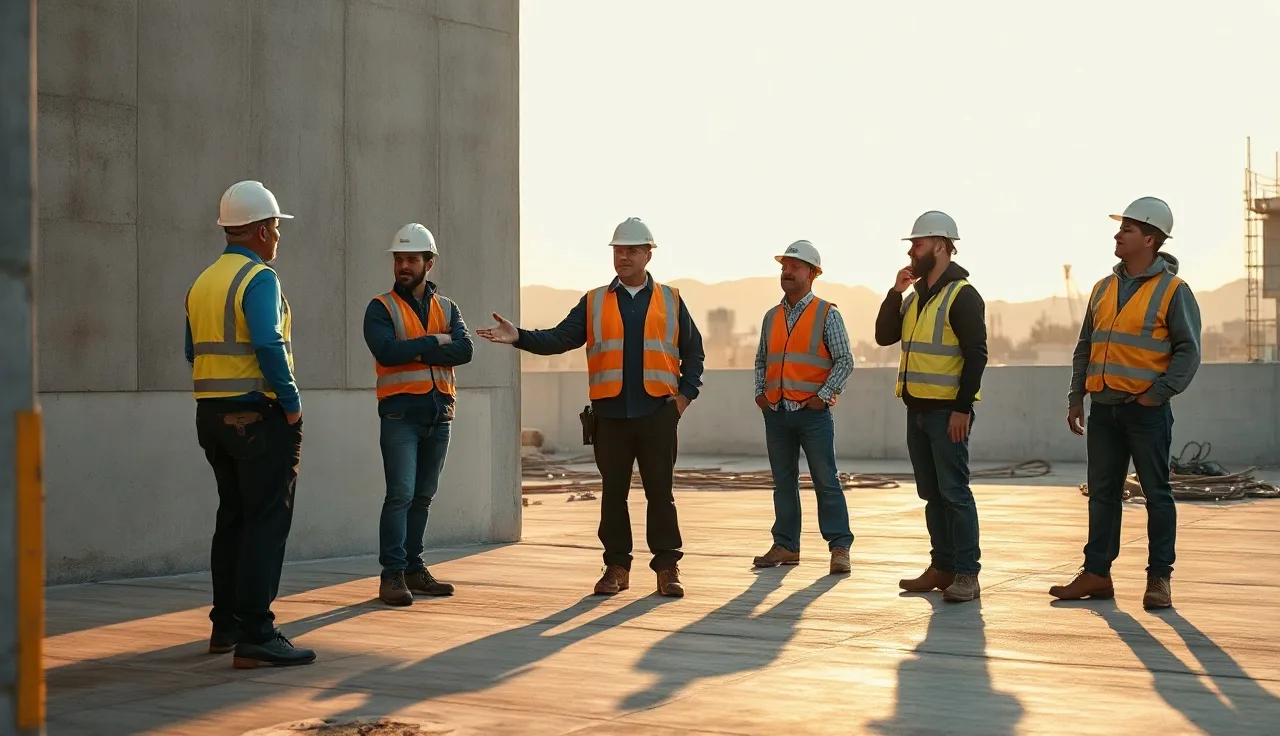
Typically 5 to 15 minutes. One topic per session. A supervisor or lead worker runs it, not a trainer with a PowerPoint. Workers stand in a circle, or sit on materials, and talk through a hazard that is real and present that day: a wet floor from overnight rain, a new chemical in the shop, a trench that will open this afternoon.
OSHA's regulations never use the words 'toolbox talk,' 'tailgate meeting,' or 'safety huddle,' but the agency's enforcement history treats documented, task-specific, recurring safety training as evidence that an employer met its general duty under Section 5(a)(1) of the OSH Act [1]. Miss them consistently, get a serious injury, and OSHA will note the absence in the citation. That connection is not theoretical. It shows up in real inspection records.
For small business owners who don't have a full-time safety manager, toolbox talks are the most cost-effective safety habit you can build. They require no budget, no software, and about 10 minutes of someone's time. The return, measured in avoided injuries and avoided citations, is hard to match with anything else.
Does OSHA actually require toolbox talks?
Not by that name. But here is where it gets specific: OSHA requires training that is 'reasonably necessary to protect employees from hazards,' and for many standards that training must be repeated, documented, and topic-specific [1].
Some standards call for training before a task is performed. Some call for annual refreshers. A few, like the respiratory protection standard at 29 CFR 1910.134, require retraining 'whenever the employer has reason to believe that a previously trained employee does not have the understanding and skill required' [2]. Toolbox talks are the practical mechanism most small employers use to satisfy those recurring requirements.
The General Duty Clause, Section 5(a)(1) of the OSH Act, requires employers to provide a workplace free from recognized hazards likely to cause death or serious injury [1]. OSHA has used the absence of regular safety communication as partial support for General Duty Clause citations. This is documented in letters of interpretation available on OSHA.gov [1].
Here is the honest bottom line: you probably won't get cited specifically for 'failing to hold toolbox talks.' You will get cited for failing to train employees on lockout/tagout under 29 CFR 1910.147, for failing to provide forklift operator training under 29 CFR 1910.178, or for failing to communicate hazardous chemical information under 29 CFR 1910.1200 (HazCom). Toolbox talks, when documented, are evidence that you did those things.
Think of them less as a regulatory requirement and more as a compliance receipt.
Which OSHA standards most often get satisfied by toolbox talks?
Several of OSHA's most-cited standards have training components that a well-run toolbox talk program directly addresses. The table below maps the standard to its training frequency requirement and the kind of toolbox talk topic that fits.
| OSHA Standard | CFR Citation | Training Frequency Required | Matching Talk Topics |
|---|---|---|---|
| Hazard Communication | 29 CFR 1910.1200 | Initial + when new hazards introduced | SDS review, new chemicals, PPE for chemicals |
| Lockout/Tagout | 29 CFR 1910.147 | Initial + annual review for authorized/affected employees | Energy control procedures, lock application |
| Respiratory Protection | 29 CFR 1910.134 | Annual + when effectiveness is in doubt | Fit, donning, cartridge change schedule |
| Powered Industrial Trucks | 29 CFR 1910.178 | Initial + re-eval every 3 years or after incident | Forklift pre-checks, pedestrian zones |
| Fall Protection (Construction) | 29 CFR 1926.503 | Before initial assignment | Guardrails, harness inspection, anchor points |
| Scaffolding (Construction) | 29 CFR 1926.454 | Before each work shift when hazards change | Scaffold inspection, load limits |
| Personal Protective Equipment | 29 CFR 1910.132 | Initial + when new PPE introduced | Glove selection, eye protection, when to wear |
| Bloodborne Pathogens | 29 CFR 1910.1030 | Annual | Exposure routes, post-exposure steps |
Fall protection violations (29 CFR 1926.501) have been OSHA's single most-cited standard for over a decade [4]. Ladder safety, fall hazard recognition, and harness inspection are the most common toolbox talk topics in construction for exactly this reason. The standard requires training before the employee is exposed to a fall hazard, and documented talks are how small contractors prove that happened.
How often should toolbox talks happen?
Weekly is the most common cadence in construction and manufacturing, and it is defensible for almost every industry. Some high-hazard operations run them daily. A roofing crew starting a new job might do a short talk every morning because conditions change: wind, roof pitch, substrate, crew mix.
The right answer depends on two things: how often hazards change, and what specific OSHA standards apply to your work. A landscaping crew that does the same residential jobs week after week might run weekly talks and cover 50 different topics over a year. A chemical plant with routine shutdowns might run daily talks during a turnaround and weekly talks otherwise.
OSHA's training requirements give you the floor, not the ceiling. If 29 CFR 1910.1200 requires training when new hazards are introduced [5], then every time you bring a new chemical onto the site, a talk is required, regardless of your regular schedule. Build that into your purchasing or receiving process, more than your safety calendar.
For small businesses just starting out: weekly is the right default. Pick a day, make it consistent, put it on the schedule. Consistency matters more than frequency. A team that has a Wednesday morning talk every week builds a safety habit. A team that has talks 'when something comes up' builds nothing.
What makes a toolbox talk legally defensible?
Documentation. That is the whole answer. OSHA inspectors cannot see a conversation that happened six months ago. They can see a sign-in sheet.
A legally defensible toolbox talk record needs four things: the date, the topic, the name of the person who conducted it, and the names and signatures of every employee who attended. Some employers also note what questions came up, or what corrective action was discussed. That extra detail is not required, but it demonstrates that the meeting was interactive, which strengthens your case if you ever face a citation.
OSHA's recordkeeping requirements for training documentation vary by standard. The respiratory protection standard (29 CFR 1910.134) requires written records of training, including who was trained and when [2]. The HazCom standard (29 CFR 1910.1200) does not explicitly require written training records, but employers must be able to verify that training occurred [5]. Written records are the only reliable way to do that.
How long to keep records? OSHA has no single answer for toolbox talk documentation specifically, but 3 years is the most commonly cited retention period for general training records across standards. Some standards go longer: bloodborne pathogens requires training records for 3 years, and medical records under 29 CFR 1910.1020 must be kept for the duration of employment plus 30 years. When in doubt, keep training records for at least 3 years, and for any exposure-related training, longer.
Store records somewhere you can find them in 30 minutes. A paper binder works. A shared drive works. What does not work is a stack of loose sign-in sheets in a job trailer that nobody touches.
What topics should you cover in a toolbox talk?
The best topic is the hazard your crew will actually face today or this week. A talk about frostbite in July is not useless, but a talk about heat exhaustion in July is worth ten times as much because it is real and immediate.
OSHA's top-cited standards give you a priority list. Fall protection, hazard communication, respiratory protection, lockout/tagout, and electrical safety account for a large share of all OSHA citations in general industry and construction [4]. If you are not sure where to start, start there.
Some categories of topics that work well as toolbox talks:
- Task-specific hazards: 'Today we are pouring concrete near an open excavation. Here is what we are watching for.'
- Incident reviews: 'Someone on a similar crew got hurt last week doing exactly what we are about to do. Here is what happened and what we are doing differently.'
- Seasonal hazards: heat illness, cold stress, ice and wet surfaces.
- Equipment spotlights: proper pre-use inspection for a specific tool or machine the crew uses.
- Near-miss follow-up: 'Yesterday a pallet slipped. Here is what we found and what changes.'
- New procedures: any time a process changes, a talk is the fastest way to communicate the change to everyone who needs to know.
OSHA's own website has a library of free toolbox talk topics and outlines at osha.gov, organized by industry [6]. NIOSH also publishes hazard-specific training materials at no cost [7]. You do not need to buy a talk library. The free ones are good.
For employers building a written safety program from scratch, a tool like SafetyFolio's safety program generator can help you identify which topics your specific operation is required to train on under applicable OSHA standards, so you can sequence your toolbox talks to systematically close compliance gaps rather than picking topics at random.
Who should run a toolbox talk?
The immediate supervisor or crew lead. Not the safety manager (if you have one), not the owner (usually), and definitely not a video played on someone's phone while people scroll through their messages.
The research on what makes safety training effective is consistent: workers retain more when the person running the session knows the job and can answer specific questions about the work being done that day [8]. A foreman who has poured concrete on this type of slab before can answer 'what do I do if the form shifts' in a way that a safety consultant reading from a script cannot.
That said, the person running the talk does not need to know everything. A good toolbox talk is a conversation, not a lecture. The facilitator's job is to introduce the hazard, ask workers what they have seen or experienced, confirm the correct procedure, and ask if anyone has questions. That is a skill a supervisor can learn in an afternoon.
For very small businesses where the owner is the supervisor, that is fine. Run the talk yourself. You know your operation. The goal is that employees hear about the hazard, have a chance to ask questions, and sign their names to prove it happened.
One thing to avoid: having the same person read the same script every week in a way that becomes background noise. Rotate facilitators when you can. Ask a different worker to read the topic out loud. Ask questions instead of delivering answers. Engagement is what makes the 10 minutes worth something.
What does OSHA look for during an inspection related to toolbox talks?
OSHA compliance officers don't ask specifically for 'toolbox talk records.' They ask for training documentation related to the standards that apply to your operation. If you have been running documented talks, those records answer the question. If you haven't, the absence is noted.
During a programmed inspection (one triggered by your industry's hazard profile rather than a complaint or incident), the compliance officer will typically review your written safety program, your OSHA 300 log, and your training records. They will interview workers to see if training actually happened and if workers can describe safe procedures. Documented toolbox talks corroborate what workers say in interviews.
After a serious injury or fatality, the inspection is much more thorough. The compliance officer will look at every training record, every inspection log, and every near-miss report to build a picture of what the employer knew and when. A consistent record of documented talks showing that fall protection, for example, was discussed regularly is meaningful evidence that the employer took the hazard seriously. A gap in records during the weeks before an incident is meaningful in the other direction.
OSHA's penalty structure as of 2024 sets serious violations at up to $16,131 per violation and willful or repeated violations at up to $161,323 per violation [9]. A single citation for inadequate hazard communication training can reach those numbers if OSHA classifies it as willful, meaning the employer knew about the requirement and did not meet it. Regular, documented talks are the clearest evidence that you knew and did.
How do toolbox talks fit into a written safety program?
A written safety program describes what your company does to manage safety. Toolbox talks are one of the main mechanisms by which you actually do it. They belong in your program as a defined, scheduled activity with clear ownership.
At minimum, your written safety program should state: how often talks are held, who is responsible for running them, how topics are selected, and how records are retained. That is two or three sentences in the 'Training' section of your program. It is not complicated.
Some employers go further and maintain a rolling 12-month talk schedule, with topics planned out in advance. This makes compliance audits easier because you can show a compliance officer the plan and then the documented records showing you executed it. The gap between plan and execution, if there is one, is where you will get questions.
OSHA training requirements broadly require that training be provided in a language and vocabulary that workers understand, 29 CFR 1910.132(f) is one example. If your crew includes workers whose primary language is Spanish or another language, your toolbox talks need to be conducted in a way they can follow. That might mean a bilingual supervisor, a translated handout, or both. This is not optional.
If you are building a safety program and are not sure which written sections you need, SafetyFolio's program generator walks you through the exact OSHA standards that apply to your industry and generates the written sections in about 15 minutes, including the training and toolbox talk policy language.
For more on how OSHA training requirements work across standards, and how formal training differs from informal talks, that background will help you build a program where both parts do their jobs.
Are there free toolbox talk templates and resources?
Yes, and most of what you need is available at no cost from government and industry sources. Here is where to find reliable material.
OSHA's own website at osha.gov has a 'Worker Safety and Health Topics' section organized by hazard type [6]. Most of those pages include training materials, fact sheets, and in some cases ready-to-use talk outlines. The construction safety outreach page is particularly good.
NIOSH, the research arm of CDC focused on occupational safety, publishes detailed hazard-specific guides and training resources at cdc.gov/niosh [7]. Their materials on heat illness, musculoskeletal hazards, and noise exposure are better than most paid talk libraries.
The National Safety Council (NSC) has a free toolbox talk library at nsc.org. Some content requires a free account.
Industry associations often have the best trade-specific talks. The Associated General Contractors of America, the National Roofing Contractors Association, and similar groups publish talks written for exactly the conditions their members face. If you belong to a trade association, check their safety resources section before paying for anything else.
For agriculture, OSHA and NIOSH jointly publish bilingual (English/Spanish) safety materials that work well as toolbox talk handouts [7].
One caution about generic templates: a talk about 'electrical safety' that was written for a manufacturing plant may not cover the specific hazards on a residential construction site. The best templates are starting points. Customize them to your actual conditions before you use them.
How do toolbox talks connect to broader OSHA compliance for small businesses?
Small businesses, defined by OSHA as fewer than 10 employees, are exempt from programmed inspections in lower-hazard industries, but they are not exempt from OSHA standards [9]. Complaint-driven and incident-driven inspections apply regardless of size. And the most common path to an OSHA inspection for a small business is a worker complaint or a serious injury.
BLS data from 2022 shows that private industry employers reported 2.8 million nonfatal workplace injuries and illnesses [10]. Small employers account for a disproportionate share of those, partly because they are less likely to have formal safety programs and partly because their workers are more likely to be doing many different tasks with less specialized training.
Toolbox talks don't prevent every injury. Nobody has good data showing a specific percentage reduction attributable to talks alone, because they are almost always implemented alongside other controls. What the research does show is that regular, interactive safety communication is consistently associated with lower injury rates compared to no communication at all [8].
For small businesses, the practical value is this: a weekly 10-minute talk costs roughly 10 minutes times the number of crew members. For a crew of five earning $25 per hour, that is about $20 per week, or roughly $1,000 per year. A single recordable injury costs, on average, about $41,000 in direct costs and much more in indirect costs according to NSC estimates [11]. The math is not close.
If you want to understand the full scope of OSHA requirements for small businesses, starting with what the agency actually covers and enforces, that foundational knowledge makes every other safety decision easier to prioritize.
What are common mistakes employers make with toolbox talks?
The biggest one: running talks but not documenting them. You might have the safest crew in the industry, but if an OSHA inspector asks for training records and you hand them a blank look, you have no evidence of anything. The talk that was not written down did not happen, from a compliance standpoint.
Second most common: topics that have no connection to actual work conditions. A talk about tornado preparedness in a warehouse in Arizona in March is not a bad talk, but it is not as valuable as a talk about the specific forklift traffic pattern change that happened on Monday. Generic does not mean useless, but specific is almost always better.
Third: running the same talks on rotation without updating them. If you use a 52-week canned library and repeat it every year without modification, you miss things. New equipment, new chemicals, incident follow-ups, seasonal changes. The library is a starting point, not the whole program.
Fourth: English-only talks for multilingual crews. As noted above, 29 CFR 1910.132 and related standards require training in a language workers understand. If you have Spanish-speaking employees who do not understand English well enough to follow a safety briefing, conducting talks only in English does not satisfy the training requirement, regardless of whether they signed the sheet [5].
Fifth: treating the talk as a box to check rather than a real conversation. Workers know when they are being read at rather than talked to. When the facilitator reads a script word for word and dismisses questions to get back to work, the safety value of the talk approaches zero. The documentation value remains, but you have missed the point.
Frequently asked questions
Is a toolbox talk the same as OSHA-required safety training?
Not always, but it can count. OSHA requires training under many specific standards, like 29 CFR 1910.147 for lockout/tagout and 29 CFR 1910.1200 for hazard communication. A documented toolbox talk on that topic, conducted before the employee is exposed to the hazard and covering the required content, can satisfy those requirements. But some standards, like respiratory protection under 29 CFR 1910.134, require more formal, documented training than a quick morning talk typically provides.
How long should a toolbox talk be?
Five to 15 minutes is the standard range. Most experienced safety professionals aim for 10 minutes. Long enough to cover the hazard clearly and take a few questions, short enough that workers stay engaged. Talks that run past 20 minutes without a specific reason tend to lose the room. The quality of the conversation matters more than the length. A focused 7-minute talk with real back-and-forth beats a 20-minute monologue.
Do I need to keep toolbox talk records, and how long?
Yes. Records should include the date, topic, facilitator name, and attendee signatures. No single OSHA rule covers all toolbox talk records specifically, but training record requirements vary by standard: bloodborne pathogens (29 CFR 1910.1030) requires 3 years, and exposure-related records may require much longer under 29 CFR 1910.1020. A safe default for general training documentation is 3 years minimum. Keep them somewhere you can retrieve them quickly during an inspection.
Can I use a video instead of a live toolbox talk?
A video can support a talk, but it should not replace the interactive component. OSHA's training requirements across standards consistently emphasize that workers must have an opportunity to ask questions and receive answers. A video followed by a facilitated discussion and Q&A can satisfy that requirement. A video played in lieu of any human interaction generally does not, and an OSHA inspector who interviews workers and finds they couldn't ask questions will note that gap.
What if a worker misses a toolbox talk?
Document it and cover the topic with them before they start the work covered in that session. This is especially important for task-specific talks held before hazardous operations. Do not let an employee work around a hazard that was covered in a talk they missed without giving them the same information individually. Note in your records that you provided the make-up briefing, with a date and signature if possible.
Are toolbox talks required in construction specifically?
OSHA's construction standards (29 CFR 1926) require training before exposure to specific hazards: fall protection under 1926.503, scaffolding under 1926.454, and others. Those requirements are real and enforced. Toolbox talks are the most common way construction employers meet them. OSHA does not use the phrase 'toolbox talk' in construction regulations, but documented pre-task safety meetings that cover required content satisfy the underlying training requirements.
What topics are required versus recommended for toolbox talks?
Required topics come from the OSHA standards that apply to your specific operation: if you have employees exposed to hazardous chemicals, HazCom training topics under 29 CFR 1910.1200 are required. If you operate forklifts, pre-operation safety under 29 CFR 1910.178 training is required. Topics like ergonomics, wellness, and housekeeping are recommended but generally not mandated by a specific standard unless OSHA's general duty clause applies to a recognized hazard in your workplace.
Can supervisors without safety certifications run toolbox talks?
Yes. OSHA does not require the person conducting a toolbox talk to hold any specific certification. What matters is that the person is knowledgeable about the topic and can answer worker questions. For topics that require specialized knowledge, like confined space entry procedures, it makes sense to have someone with direct experience lead the talk. For general hazard awareness topics, a trained supervisor or crew lead is fully capable.
How do toolbox talks differ from a safety meeting?
Toolbox talks are short, focused on one hazard, and held at or near the work area before a task. Safety meetings are broader: they might review multiple agenda items, go over incident statistics, address administrative safety policies, or involve supervisors and managers who aren't in the field daily. Both have value. Toolbox talks handle immediate, task-level hazard communication. Safety meetings handle program-level review and planning. Most employers need both.
What's the best way to pick toolbox talk topics for the week?
Start with what's actually happening: new tasks, new equipment, recent near-misses, or seasonal hazards. Layer in your OSHA compliance calendar, which standards require periodic retraining and when. Check your OSHA 300 log for the previous year to see where injuries actually occurred in your workplace. That combination of real-time conditions, regulatory schedule, and injury history will surface better topics than any generic annual calendar.
Do toolbox talks apply to office workers and remote employees?
OSHA standards apply wherever employment conditions create hazards, including offices and remote work locations to some extent. Ergonomics, emergency action plans (29 CFR 1910.38), and bloodborne pathogens can apply in office settings. Toolbox-style talks for office teams might cover ergonomics, slip and trip hazards, or emergency evacuation routes. They don't need to be called 'toolbox talks,' but the same principle of short, documented, recurring safety communication applies.
Can toolbox talks help reduce workers' comp costs?
The connection is indirect but real. Workers' comp premiums are partly driven by your experience modification rate (EMR), which reflects your claim history. Fewer injuries mean a lower EMR and lower premiums. Regular safety communication is consistently associated with lower injury rates. The National Safety Council estimates the average direct cost of a workplace injury at around $41,000 [11]. A weekly 10-minute talk for a crew of five costs roughly $20 per session. The cost-benefit case is straightforward.
What's the difference between a toolbox talk and a job hazard analysis?
A job hazard analysis (JHA), also called a job safety analysis (JSA), is a written document that breaks a specific task into steps and identifies the hazard and control for each step. It is a planning document. A toolbox talk uses the JHA (or other source) as content to communicate hazards to workers before they do the work. Many experienced supervisors pull the JHA for a task and walk workers through it as the toolbox talk. That's an efficient approach that connects planning directly to communication.
Sources
- OSHA, OSH Act of 1970, Section 5(a)(1) General Duty Clause: Employers must provide a workplace free from recognized hazards; OSHA uses absence of safety training as partial support for General Duty Clause citations.
- OSHA, 29 CFR 1910.134 Respiratory Protection standard: Respiratory protection standard requires retraining whenever an employer has reason to believe a trained employee lacks required understanding and skill; requires written training records.
- OSHA, Top 10 Most Frequently Cited Standards FY2023: Fall protection (29 CFR 1926.501) has been OSHA's single most cited standard for over a decade; hazard communication is consistently in the top five.
- OSHA, 29 CFR 1910.1200 Hazard Communication Standard: HazCom standard requires employee training on hazardous chemicals; employers must be able to verify training occurred; training must be conducted in a language workers understand.
- OSHA, Worker Safety and Health Topics: OSHA publishes free safety and health topic pages organized by hazard type, including training materials and fact sheets.
- NIOSH (CDC), Workplace Safety and Health Topics: NIOSH publishes free hazard-specific training materials including bilingual English/Spanish resources for agriculture and construction.
- Journal of Safety Research, 'The effectiveness of safety training: a systematic review' (Robson et al.): Research consistently shows regular, interactive safety communication is associated with lower injury rates compared to no communication; workers retain more when trainers know the job.
- OSHA, Employer Rights and Responsibilities Following an OSHA Inspection (Publication 3000): OSHA penalty amounts as of 2024: serious violations up to $16,131 per violation; willful or repeated violations up to $161,323 per violation.
- Bureau of Labor Statistics, Survey of Occupational Injuries and Illnesses 2022: BLS 2022 data: private industry employers reported 2.8 million nonfatal workplace injuries and illnesses.
- National Safety Council, Work Injury Costs: NSC estimates average direct cost of a workplace injury at approximately $41,000; indirect costs are significantly higher.
- OSHA, 29 CFR 1910.147 Lockout/Tagout standard: Lockout/tagout standard requires initial training plus annual periodic retraining for authorized and affected employees.
- OSHA, 29 CFR 1926.503 Fall Protection Training Requirements: Construction fall protection standard requires training before employees are exposed to fall hazards; training must be conducted by a qualified person.