Last updated 2026-07-09
TL;DR
Free toolbox talk PDFs come from OSHA.gov, NIOSH, the National Safety Council, and construction trade groups like CPWR. A good source gives you a one-page topic sheet, a sign-in log, and a discussion question. OSHA sets no fixed frequency for most industries, but 29 CFR 1910 and 1926 both require documented safety training. Toolbox talks are the cheapest way to keep that documentation current.
What is a toolbox talk, exactly?
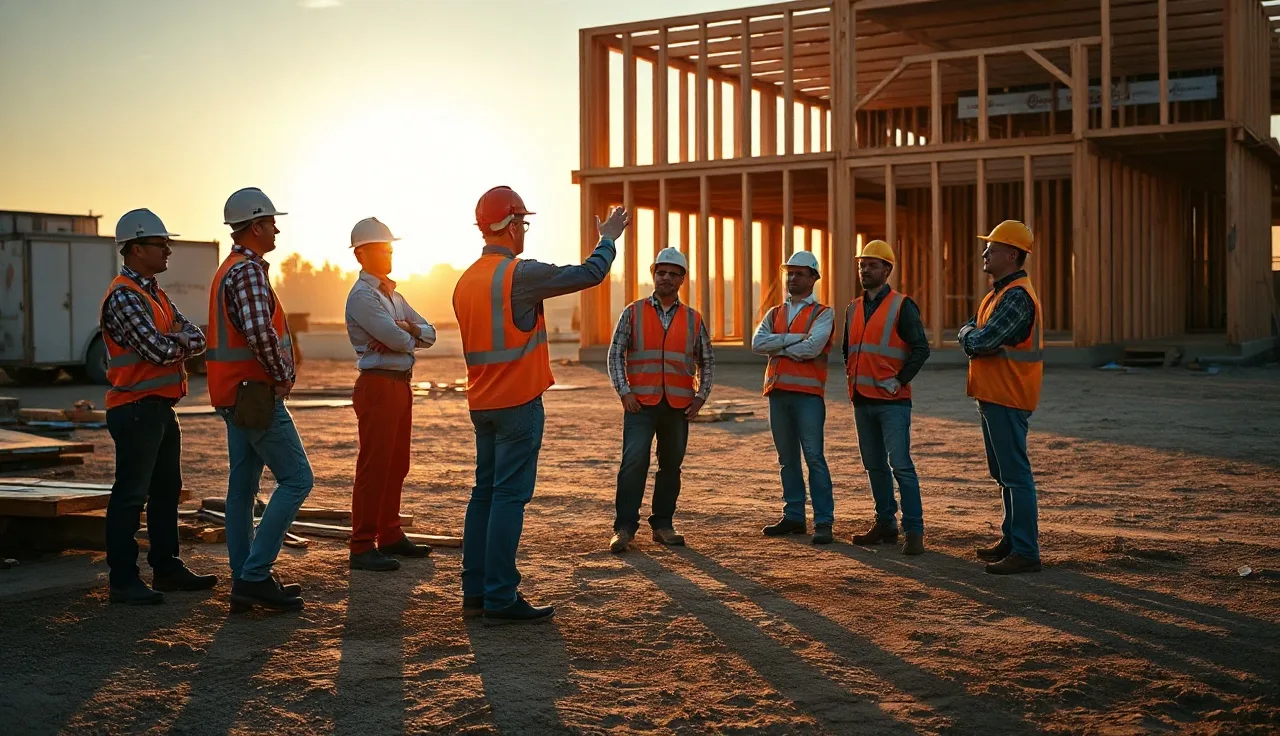
A toolbox talk is a short safety meeting held at the job site before a shift or task. Usually 5 to 15 minutes. One topic, one supervisor, no slide deck.
The name comes from construction, where crews gathered around a toolbox to talk before work started. The format spread to manufacturing, warehousing, healthcare, and anywhere a crew begins a shift together. The idea stays the same. Pick a hazard that is real and present today, talk about it, let workers ask questions, and write down who showed up.
Toolbox talks do not replace formal OSHA training. They supplement it. A new hire cannot skip lockout tagout classroom instruction and swap in a five-minute talk on energy control. What talks do is keep hazard awareness fresh between formal training cycles. OSHA's Training Institute refers to them as "safety toolbox talks" or "tailgate meetings" and treats them as one of the common methods employers use to meet ongoing training duties [1].
Here is the part that matters legally. A completed toolbox talk sign-in sheet is evidence. It shows OSHA your crew received job-specific safety communication on a given date. That record does real work during an inspection or after an incident.
Does OSHA require toolbox talks by law?
No CFR standard uses the phrase "toolbox talk," and no regulation says "hold one weekly." But that framing misses how the requirement actually operates. The training obligations that toolbox talks fulfill are mandatory even though the talks themselves are not named.
Several standards require employers to train workers on specific hazards before exposure. 29 CFR 1910.132(f) requires training on personal protective equipment. 29 CFR 1910.1200(h) requires hazard communication training when new chemicals arrive. 29 CFR 1926.21(b)(2) tells construction employers to instruct each worker in the recognition and avoidance of unsafe conditions. These are ongoing affirmative duties, not one-time boxes to check [2].
Toolbox talks are the practical mechanism most employers use to satisfy those duties. Compliance officers understand this. When they review your records and find dated logs with attendee signatures, that documentation directly backs your claim that workers were trained on a specific hazard at a specific time.
Some states go further. California's Cal/OSHA requires most employers to maintain an Injury and Illness Prevention Program that includes periodic inspections and training [3]. Documented toolbox talks slot cleanly into that program.
So: toolbox talks are not mandated by name. The training obligations they carry out absolutely are.
Where can I download free toolbox talk PDFs?
Several federal agencies and trade groups publish large libraries of free toolbox talk PDFs. Here are the sources I trust, with an honest note on quality for each.
OSHA.gov publishes talks under its outreach materials section. Quality is high because the content is written straight against CFR standards. Topics cover fall protection, electrical safety, heat illness, and struck-by hazards. The layout is plain and federal, which some supervisors find dry, but the legal accuracy is solid [1].
NIOSH (National Institute for Occupational Safety and Health) publishes talks for high-hazard industries including mining, construction, and agriculture. NIOSH materials often include Spanish translations, which helps on multi-language crews [4].
The National Safety Council (NSC) offers a free library at nsc.org. Topics run from ergonomics to driving safety to pandemic preparedness. NSC talks read more conversationally than federal materials, which makes them easier to deliver out loud.
CPWR (The Center for Construction Research and Training) publishes construction-specific talks at cpwr.com, many in both English and Spanish. Their fall prevention series is unusually detailed [5].
Associated General Contractors (AGC) and Associated Builders and Contractors (ABC) both run member libraries. Free versions of common topics show up on their public sites.
State OSHA consultation programs are the underused option. Every state-plan state runs a free consultation service for small employers, and most publish their own talk libraries. Washington State's Department of Labor and Industries posts over 100 free topics online [6].
A few cautions. Some talk PDFs floating around general safety blogs have not been updated in years and may cite superseded standards or old permissible exposure limits. Check the publication date. If a talk references a specific CFR section, confirm that section is still current at eCFR.gov.
What should a good free toolbox talk PDF include?
Not all free toolbox talk PDFs are built the same. A good one has five parts.
Topic statement. One clear sentence naming the hazard or behavior covered. "Today we are talking about ladder safety on single-story roofs" beats "Ladders."
Discussion points. Three to six bullets the supervisor reads or paraphrases. They cover the hazard, how injuries happen, and the correct procedure. Short enough to get through in under ten minutes.
Worker discussion question. One open question for the crew, like "Has anyone here had a near-miss with this?" That single line separates a talk from a lecture. Workers who speak during a safety meeting hold onto the information better than those who sit silent [7].
Regulatory reference. The CFR section the talk connects to. Not every source includes this, but it helps supervisors see why the topic matters legally and ties the talk to your formal training program.
Sign-in section. Date, topic, supervisor name, and a signature line for each attendee. Some PDFs put this on a separate page. Either way, the log has to be kept. OSHA recommends holding training records at least three years, and certain standards demand longer, like the 30-year retention for some medical records under 29 CFR 1910.1020 [2].
If your free PDF has the topic, discussion points, and a sign-in block, use it. If the sign-in block is missing, add one. A blank line at the bottom of the page is enough.
How often should you run toolbox talks?
Weekly is the most common practice in construction. Daily is normal on large commercial sites and in high-hazard work. General industry shops often run them monthly or when a new hazard appears. There is no single OSHA rule setting one frequency across all industries.
Match the frequency to your hazard profile. A roofing crew working at height every day gets more from weekly fall protection reminders than an office-based maintenance crew ever would.
BLS data for 2023 shows falls, slips, and trips caused 865 fatal occupational injuries, the second-leading cause of workplace death behind transportation incidents [8]. Crews with that exposure should run fall-related talks often, not quarterly.
Some contractors tie their schedule to the job hazard analysis process. New phase of work, new hazard set, new talk. That approach is more task-relevant than grinding through the same calendar rotation regardless of what the crew is actually doing that week.
For a small business with no dedicated safety manager, here is the honest answer. Commit to a frequency you will actually keep. A steady monthly talk with a real sign-in log beats an ambitious weekly plan that collapses by month two.
What are the most common toolbox talk topics?
The most-downloaded toolbox talk topics track the leading causes of injury. Below are the high-demand categories from NSC and CPWR libraries, matched to the OSHA standards they relate to.
| Topic | Related OSHA Standard | Leading Hazard |
|---|---|---|
| Fall protection | 29 CFR 1926.502 / 1910.28 | Height, scaffolding, ladders |
| Electrical safety | 29 CFR 1910.303 | Shock, arc flash |
| Lockout/tagout | 29 CFR 1910.147 | Unexpected energization |
| Hazard communication / GHS | 29 CFR 1910.1200 | Chemical exposure |
| PPE selection and use | 29 CFR 1910.132 | Multiple |
| Heat illness prevention | 29 CFR 1910.269 / OSHA guidance | Outdoor and hot indoor work |
| Struck-by hazards | 29 CFR 1926.602 | Construction, forklifts |
| Forklift safety | 29 CFR 1910.178 | Warehousing, manufacturing |
| Slips, trips, falls | 29 CFR 1910.22 | All industries |
| Fire extinguisher use | 29 CFR 1910.157 | All industries |
Run a construction crew? Start your calendar with fall protection and work through the OSHA Focus Four: falls, struck-by, caught-in/between, and electrical. OSHA's own data shows those four categories account for more than half of all construction fatalities in a typical year [1].
For warehousing and manufacturing, forklift certification refreshers and lockout/tagout are the topics most likely to surface during an inspection.
How do you actually run a toolbox talk without it being awkward?
Supervisors who have never run a talk worry they will sound stiff or lose the crew's attention. Both risks are real. Both are fixable.
Start with what happened nearby. A near-miss on your site last week, or a fatality in your trade that just hit the news, lands harder than any national statistic. "Someone on a site two miles from here got hurt doing exactly what we are doing today" gets heads up faster than a figure from a federal report.
Read the talk, but do not only read it. The PDF is a guide, not a script. Look up. Ask the discussion question like you mean it. When someone gives a good answer, say so. A five-minute talk where two workers speak beats a seven-minute recitation nobody heard.
Keep it short. Research on informal stand-up meetings shows attention drops sharply after about 10 minutes [7]. If your PDF holds more than you can cover in that window, split it into two talks.
Do the sign-in at the start, not the end. People leave. Capturing attendance while everyone is still standing together kills the awkward chase-down at shift's end.
Got workers whose first language is not English? Use the bilingual PDFs from NIOSH or CPWR. A talk delivered in a language workers do not understand does not meet OSHA's training requirement. 29 CFR 1910.1200(h)(1) states training must be given "in a manner and language that the employee can understand" [2].
How do you keep toolbox talk records that will hold up during an OSHA inspection?
Documentation is where most small businesses fall down. The talk happens. The sign-in sheet vanishes into a folder or a truck cab and never surfaces again.
A simple system fixes this. Keep one three-ring binder on site labeled "Safety Training Records." Every completed log goes in chronologically: the filled-in PDF or a photocopy, the date, the topic, and the signed attendee list. If you gave the talk verbally without a printed sheet, write the topic on a blank sign-in and keep that.
Digital works too. A photo of the sign-in sheet in a shared folder, or a spreadsheet logging date, topic, and names with a scanned signature page attached, both hold up. The format does not matter to OSHA. What matters is that the record exists, can be pulled up fast, and matches what you say happened.
During an inspection, compliance officers can request training records going back years. For general industry employers running respiratory protection programs under 29 CFR 1910.134, training records must be kept for the duration of employment [2]. For most other topics, three years is the practical floor.
If you are building a full written safety program alongside your talk library, SafetyFolio's safety program generator produces a custom written program in about 15 minutes, giving you the documented foundation that toolbox talks then reinforce.
One tip most guides skip: write down the questions workers ask. A log noting "Worker asked about proper ladder angle for metal ladders; answered per OSHA 1926.1053(b)(5)(i)" is a far stronger record than a bare signature list. It shows engagement, more than attendance.
Can you customize free toolbox talk PDFs for your specific worksite?
Yes, and you should. A generic fall protection talk built around scaffolding does nothing for a roofing crew that never touches scaffolding. Customization makes the content land.
Most free PDFs from government and trade sources ship as fillable PDFs or Word documents on purpose, so employers can adapt them. OSHA's outreach materials are in the public domain and may be reproduced [1].
Good customizations: add your company name and logo, drop in a real near-miss from your own history, swap generic examples for the equipment and tasks your crew actually uses, and add your site-specific emergency procedures like who to call and where the first aid kit sits.
Do not touch the regulatory content. If a talk says eye protection is required under 29 CFR 1910.133, leave that citation in. That CFR reference is what ties your training record to the legal obligation. Cutting it to save space defeats the purpose.
If you customize talks often, build a simple template: company header, topic block, four to six bullets, one discussion question, and a sign-in table. Fifteen minutes in a word processor gives you a reusable shell you fill in for any topic.
Are there free toolbox talks in Spanish and other languages?
Yes. Spanish-language toolbox talk PDFs are easy to find because the U.S. construction and agriculture workforces include a large number of Spanish-speaking workers.
NIOSH publishes bilingual English/Spanish talks for construction, farming, and mining at cdc.gov/niosh [4]. CPWR's library at cpwr.com carries Spanish versions for most of its construction topics [5]. The National Safety Council and several state-plan programs also publish Spanish materials.
For other languages, the options thin out fast. Some large state programs, particularly in California and Washington, publish talks in additional languages including Vietnamese, Somali, and Cantonese for specific industries. Washington State's L&I consultation service is one of the better places to look [6].
Cannot find a translated version of a topic you need? OSHA's Letter of Interpretation dated March 8, 2002 says training must be presented "in a manner and language that the employee can understand," and that an interpreter may be used when a translated document is not available [9]. If you go that route, document that an interpreter was present and note who it was.
Do not assume a worker who chats in English can follow technical safety content in English. Chemical safety terms, emergency procedures, and regulatory language sit at a higher reading level than everyday conversation.
What is the difference between a toolbox talk and a Job Hazard Analysis?
A Job Hazard Analysis (JHA), also called a Job Safety Analysis (JSA), is a written document that breaks a task into steps, names the hazard at each step, and prescribes the control. A toolbox talk is a verbal meeting that often pulls from the JHA as source material.
Think of it this way. The JHA is the safety plan for the task. The toolbox talk is the morning briefing that makes sure workers understand that plan before they start.
OSHA recommends JHA development as a best practice in its Job Hazard Analysis booklet (OSHA 3071), though JHAs are not universally mandated by standard for every industry [10]. In construction, 29 CFR 1926.21(b)(2) requires site-specific hazard instruction, which a task JHA followed by a toolbox talk directly satisfies.
Here is a workflow that fits small businesses. Write a one-page JHA for each high-hazard task you do regularly. When that task is scheduled, run a five-minute talk that walks the crew through the JHA. Log both documents together. Now you have two layers of documentation for the same training event, which is stronger than either one alone.
How do toolbox talks fit into a broader OSHA training program?
Toolbox talks sit at the base of a training pyramid. At the top are formal certifications: OSHA 30 for supervisors and OSHA training courses for hazards like confined space or respiratory protection. In the middle are task-specific instruction and hands-on demonstrations. Talks are the recurring, low-cost reinforcement that keeps awareness current between the big formal events.
Nobody has clean data on how much toolbox talks cut injury rates on their own, separated from everything else a company does. The closest evidence comes from construction, where a 2018 study in the Journal of Safety Research found companies with consistent documented safety communication had lower incident rates than those without, though the study could not isolate toolbox talks as a single variable [7].
What is clear from OSHA enforcement is that documentation gaps show up in a large share of citations. When a worker is hurt and OSHA investigates, one of the first records they request is the training log. A gap in that log, even if the training really happened, creates exposure you did not need.
For small employers building a first formal program, the sequence usually looks like this. Write your Injury and Illness Prevention Program or equivalent written program. Run a hazard assessment under 29 CFR 1910.132(d). Deliver formal initial training on the top hazards you find. Then use weekly or monthly toolbox talks to reinforce those topics all year. An incident report process runs alongside all of it, catching near-misses and injuries that feed back into your talk topics.
If the written program is the piece you are still stuck on, SafetyFolio's generator walks you through building one for your industry and hazard profile.
Frequently asked questions
Are free toolbox talk PDFs legally sufficient for OSHA compliance?
A free PDF from a reputable source like OSHA.gov or NIOSH can satisfy OSHA training requirements if it covers the correct hazard, is delivered in a language workers understand, and is documented with a signed attendance log. OSHA does not look at the PDF itself. They look at whether training happened, what was covered, and whether you have a record. The document is just the delivery mechanism.
How long should a toolbox talk be?
Five to fifteen minutes is the standard range. The goal is focused attention on one hazard, not a full review. Talks longer than 15 minutes tend to lose the crew. If a topic really needs more time, split it across two sessions. Most one-page toolbox talk PDFs are built to fill roughly 10 minutes including a crew discussion question.
Do I need to keep toolbox talk records, and for how long?
Yes. Keep signed attendance logs for every talk. OSHA recommends holding training records at least three years for most general industry standards. Some run longer: respiratory protection records under 29 CFR 1910.134 must be kept for the duration of employment. When in doubt, keep them longer. Storage costs almost nothing next to the exposure of missing records during an inspection.
Can the same person give every toolbox talk, or does it need to be a safety professional?
The person delivering the talk does not need to be a certified safety professional. OSHA requires that trainers be knowledgeable in the subject matter under most standards. A crew supervisor who understands the hazard and the correct procedure is qualified. What matters is that the content is accurate and that workers can ask questions and get real answers.
What is the best free toolbox talk PDF source for construction?
CPWR (The Center for Construction Research and Training) at cpwr.com publishes the deepest construction-specific free library, with English and Spanish versions. OSHA.gov's outreach materials section is the best source for talks tied directly to CFR standards. For the Focus Four topics (falls, struck-by, electrical, caught-in), OSHA's own Focus Four talks are the most citation-proof option.
Are there free toolbox talks for manufacturing and general industry?
Yes. The National Safety Council (nsc.org) has the broadest general industry library, covering ergonomics, machine guarding, chemical handling, and forklift safety. OSHA's general industry outreach materials at osha.gov also cover 1910-series standards. State consultation programs, particularly in manufacturing-heavy states like Michigan and Ohio, publish free topic sheets tailored to general industry.
How do I run a toolbox talk for a remote or dispersed crew?
Remote talks work best as short video calls or recorded clips. The legal requirement is that training happens in a manner the employee can understand and that it is documented. A video call with a roll-call attendance log meets both. Pre-recorded talks are acceptable if workers can ask questions afterward, by message thread or phone. Keep the attendance record no matter the format.
Do toolbox talks count toward OSHA 10 or OSHA 30 training hour requirements?
No. OSHA 10 and OSHA 30 are formal Outreach Training Program courses with set curricula and authorized trainer requirements. Toolbox talks do not count toward those hour totals. They do a different job: ongoing site-specific reinforcement rather than structured credential-based education. For more on formal OSHA training programs, see the OSHA training page.
What topics are legally required for toolbox talks?
No CFR standard lists mandatory toolbox talk topics by name. The topics you should cover come from your own hazard assessment under 29 CFR 1910.132(d) and from the specific standards governing your work. Construction employers must address the Focus Four at minimum. Chemical users must cover GHS labels and SDS use. Start with the hazards most likely to hurt someone in your operation.
Can I use a toolbox talk to satisfy new-hire safety training?
Partially. A talk on the day of hire can cover immediate site hazards and emergency procedures, which is good practice. But most OSHA standards require initial training before workers are exposed to a hazard, and many require that training to be more thorough than a five-minute talk allows. Use talks as a supplement to new-hire orientation, not a replacement for it.
Are there free toolbox talks for small businesses with fewer than 10 employees?
All the major free sources are open regardless of company size. OSHA's small business resources and free consultation services actually prioritize smaller employers. The OSHA On-Site Consultation Program provides free confidential help to small and medium-sized businesses, and most state consultation offices publish free toolbox talk libraries as part of that outreach.
How do toolbox talks relate to a written safety program?
Your written safety program sets the rules and procedures. Toolbox talks are how you communicate those rules to your crew on a regular basis. Without a written program, your talks have no formal foundation. Without regular talks, your written program sits in a binder nobody has opened since onboarding. The two work together: the program defines expectations, the talks keep them alive.
Sources
- OSHA.gov, Occupational Safety and Health Standards (29 CFR 1910 and 1926): 29 CFR 1910.132(f) requires PPE training; 29 CFR 1910.1200(h) requires hazard communication training; training must be in a language employees understand; 29 CFR 1910.1020 requires 30-year retention for certain medical records
- California DIR, Cal/OSHA Injury and Illness Prevention Program requirements: California requires most employers to maintain an IIPP including scheduled periodic inspections and training
- NIOSH (CDC), Construction Safety and Health Topics: NIOSH publishes bilingual English/Spanish toolbox talks for construction, mining, and agriculture
- CPWR, The Center for Construction Research and Training, Toolbox Talks Library: CPWR publishes free English and Spanish construction toolbox talk PDFs including fall prevention series
- Washington State Department of Labor and Industries, Safety and Health Topics: Washington State L&I publishes over 100 free toolbox talk topics for employers as part of state consultation services
- Journal of Safety Research, Vol. 67, 2018, 'Safety communication and incident rates in construction': Companies with consistent documented safety communication practices had statistically lower incident rates; attention drops sharply after approximately 10 minutes in informal stand-up meetings
- Bureau of Labor Statistics, Census of Fatal Occupational Injuries 2023: Falls, slips, and trips accounted for 865 fatal occupational injuries in 2023, the second-leading cause of workplace death after transportation incidents
- OSHA, Letter of Interpretation, March 8, 2002, Training in a language employees understand: OSHA Letter of Interpretation clarifies that training must be presented in a manner and language employees can understand, and that an interpreter may be used
- OSHA, Job Hazard Analysis booklet OSHA 3071: OSHA recommends JHA development as a best practice; 29 CFR 1926.21(b)(2) requires site-specific hazard instruction in construction