TL;DR
- Silica Medical Surveillance Training outlines what OSHA requires for this training topic.
- Training must be completed before workers are exposed to the hazard.
- Records must include date, topic, trainer name, and attendee signatures.
- Refresher training frequency varies by topic.
- SafetyFolio's Safety Membership sends OSHA subpart review notices so you know when to revisit training topics.
Understanding Silica Medical Surveillance Training
OSHA requires employers to train workers on the hazards they face before they are exposed to those hazards. This is not a suggestion. It is a legal requirement that applies to every construction employer, regardless of company size.
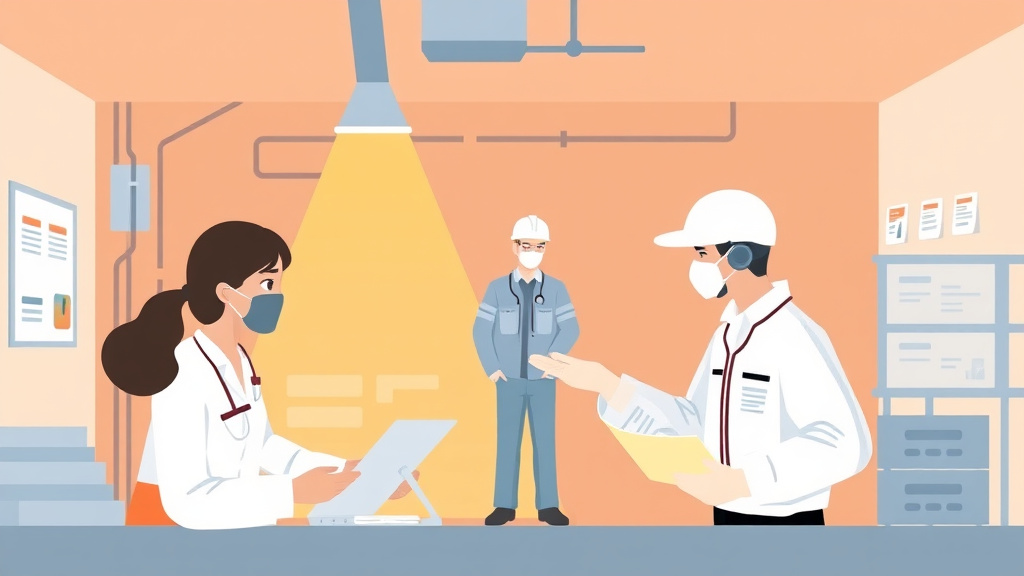
The training requirement has two parts. First, you must actually provide the training, delivered by a qualified person in a language and vocabulary the workers understand. Second, you must document that the training occurred, with records that include the date, topic, trainer's name, and each attendee's signature.
Many small contractors provide informal training on the job but fail to document it. From OSHA's perspective, training that is not documented did not happen. An inspector who asks for training records and receives a blank stare will cite you for failure to train, even if your workers are highly competent.
The specific training topics required depend on your scope of work. A residential framing contractor needs fall protection training, ladder training, power tool training, and hazcom training at minimum. A commercial excavation contractor adds excavation competent person training, confined space training, and possibly crane/rigging training. SafetyFolio identifies the required training based on your trade and project type.
The timing of training matters as much as the content. OSHA requires that workers be trained before they are exposed to the hazard, not after. A common violation is assigning a worker to a new task (like operating a forklift or entering a confined space) before they have completed the required training. Even if you plan to train them next week, using them on the task this week is a violation. Schedule training proactively, especially for new hires and workers assigned to new activities.
What This Training Must Cover
OSHA training standards typically specify the topics that must be covered. For most construction training, the required content includes:
| Training Topic | Initial | Refresher Frequency |
|---|---|---|
| Hazard Communication | Before first assignment | When new hazards introduced |
| Fall Protection | Before exposure | When changes occur |
| Scaffold User | Before use | When changes occur |
| Confined Space | Before entry | Annual recommended |
| Forklift | Before operation | Every 3 years |
| Respiratory Protection | Before use | Annual |
| OSHA 10-Hour | Once | No refresher required |
| First Aid/CPR | Initial | Every 2 years |
Recognition of the hazard. Workers must be able to identify the hazard in the field. This is not just classroom knowledge. They need to be able to look at a work situation and recognize when the hazard is present.
Procedures for protecting themselves. Workers must know the specific protective measures they are expected to use. If you use personal fall arrest systems, every worker must know how to inspect the harness, how to put it on correctly, how to select an anchorage point, and what to do if they fall and are suspended.
Emergency procedures. What to do if something goes wrong. For fall protection, this includes rescue procedures for a suspended worker. For confined spaces, this includes rescue procedures and atmospheric monitoring.
Equipment use and inspection. Workers must know how to use safety equipment correctly and how to inspect it before use. Defective equipment must be removed from service and reported.
Company-specific procedures. Your site-specific safety plan may include procedures that go beyond the minimum OSHA requirements. Workers must be trained on these additional procedures as well.
Language and literacy barriers create real challenges for training in construction. OSHA requires that training be delivered in a language and vocabulary that workers can understand. For multilingual crews, this may mean providing training in Spanish, Portuguese, or other languages. Visual aids, demonstrations, and hands-on practice can supplement verbal instruction. Do not assume that handing a worker a written procedure in English satisfies the training requirement if the worker does not read English fluently.
Online training has become more common, and OSHA generally accepts it for the classroom portion of training requirements. However, many training topics also require hands-on components that cannot be satisfied online. Fall protection training, for example, requires workers to demonstrate the ability to inspect, don, and use personal fall arrest equipment. Forklift training requires a practical evaluation with the specific type of truck the worker will operate. Combine online learning with on-site practical exercises to meet both components.
Who Can Provide This Training
OSHA generally does not require training to be provided by a specific type of trainer (with a few exceptions like OSHA Outreach for OSHA 10/30 and crane operator certification). However, the trainer must be "qualified" to deliver the training, meaning they have the knowledge, training, and experience to teach the subject matter effectively.
For most small contractors, the owner or a senior foreman can serve as the trainer for many topics. They know the work, they know the hazards, and they know the company's procedures. What they may lack is a structured curriculum and a place to document it. SafetyFolio provides both: toolbox talk scripts and printable training rosters.
Some training topics require external trainers or specific certifications. OSHA 10-Hour and 30-Hour courses must be taught by authorized OSHA Outreach Trainers. Crane operator certification must be obtained from an accredited certifying body. Respirator fit testing requires specific equipment and trained personnel.
For hands-on training like harness use, scaffold erection, or forklift operation, the trainer should demonstrate the correct procedures and then observe each worker performing them. A signature on a training sheet without actual hands-on practice does not meet the standard.
Consider bringing in an outside trainer for specialized topics. Many OSHA Training Institute Education Centers offer affordable courses. Your state OSHA consultation program may also provide free training on specific topics. See our OSHA consultation guide for details.
The competent person designation carries specific training implications. OSHA defines a competent person as someone who can identify existing and predictable hazards and who has the authority to take prompt corrective measures. For each hazard area (fall protection, excavation, scaffolding, etc.), you must designate a competent person and ensure they have received training sufficient to fulfill that role. This typically means more in-depth training than what rank-and-file workers receive.
Training records are audited more frequently than any other type of safety documentation during an OSHA inspection. Inspectors will cross-reference your training records against the workers on site. If a worker is performing a task that requires specific training (scaffold erection, crane operation, confined space entry) and you cannot produce a training record, the inspector will cite you for failure to train. Keep your records current, organized, and accessible. SafetyFolio's printable training roster gives you one consistent place to keep this information for every worker.
Documentation Requirements
Training documentation is not just a compliance checkbox. It is your evidence that you met your legal obligation to train your workers. Without it, OSHA presumes the training did not happen.
Every training record should include: the date and time of training, the specific topics covered, the duration of the training session, the trainer's name and qualifications, and the printed name and signature of each attendee.
| Record Element | Why It Matters | Common Mistake |
|---|---|---|
| Date | Proves training occurred before exposure | Not recording the date |
| Topics covered | Shows what was taught | Using vague descriptions |
| Trainer name | Proves a qualified person delivered it | Omitting trainer info |
| Attendee signatures | Proves each worker attended | Using a single sign-in sheet for multiple topics |
| Duration | Shows adequate time was spent | Not tracking session length |
Keep training records for the duration of each worker's employment plus 30 days. For some topics (like asbestos and lead), records must be kept for 30 years. Store records in a secure location with a backup copy off-site or in the cloud.
SafetyFolio's printable training roster gives you a compliant format for these records. Workers sign the roster at each session, and you keep it with your Written Safety Program for easy retrieval during inspections.
Review your training records quarterly. Check for gaps: new hires who have not completed required training, refresher training that is past due, and workers assigned to new tasks without task-specific training. Address gaps immediately.
Online training has become more common, and OSHA generally accepts it for the classroom portion of training requirements. However, many training topics also require hands-on components that cannot be satisfied online. Fall protection training, for example, requires workers to demonstrate the ability to inspect, don, and use personal fall arrest equipment. Forklift training requires a practical evaluation with the specific type of truck the worker will operate. Combine online learning with on-site practical exercises to meet both components.
The timing of training matters as much as the content. OSHA requires that workers be trained before they are exposed to the hazard, not after. A common violation is assigning a worker to a new task (like operating a forklift or entering a confined space) before they have completed the required training. Even if you plan to train them next week, using them on the task this week is a violation. Schedule training proactively, especially for new hires and workers assigned to new activities.
Staying Current with Training Requirements
OSHA training requirements evolve. New standards are adopted, existing standards are revised, and enforcement priorities shift. Staying current requires ongoing attention.
Subscribe to OSHA's QuickTakes newsletter for updates on new standards and enforcement initiatives. Follow your state OSHA plan's communications as well, since state plans can adopt requirements that are more stringent than federal OSHA.
Review your training program annually. Compare your training topics against your current scope of work. If you have added a new type of work (for example, started doing demolition in addition to your regular trade), you may need to add new training topics.
Refresher training frequency varies by topic. Some training, like forklift certification, requires refresher every three years. Other training, like hazcom, requires updates whenever new hazards are introduced. Fall protection training should be refreshed whenever equipment or procedures change. Your SafetyFolio Safety Membership sends OSHA subpart review notices to help you catch when a topic needs revisiting.
Keep a training matrix that maps each worker to the training topics required for their role. This gives you an at-a-glance view of your compliance status and makes it easy to identify gaps. SafetyFolio's training roster forms give you the structure to build this matrix for your crew.
For related information, check our guides on new employee safety orientation and orientation toolbox talks.
Training records are audited more frequently than any other type of safety documentation during an OSHA inspection. Inspectors will cross-reference your training records against the workers on site. If a worker is performing a task that requires specific training (scaffold erection, crane operation, confined space entry) and you cannot produce a training record, the inspector will cite you for failure to train. Keep your records current, organized, and accessible. SafetyFolio's printable training roster gives you one consistent place to keep this information for every worker.
Related Resources
- Forklift Training Documentation
- OSHA 10 Card Replacement
- Crane Operator Certification Requirements
- Safety Leading Indicators Guide
- Excavation Competent Person Duties
Frequently Asked Questions
How can I ensure my workers are properly trained on silica hazards?
OSHA requires employers to train workers on the hazards they face before they are exposed to those hazards. This is a legal requirement that applies to every construction employer, regardless of company size.
What This Training Must Cover?
OSHA training standards typically specify the topics that must be covered. For most construction training, the required content includes:
Who Can Provide This Training?
OSHA generally does not require training to be provided by a specific type of trainer (with a few exceptions like OSHA Outreach for OSHA 10/30 and crane operator certification). However, the trainer must be "qualified" to deliver the training, meaning they have the knowledge, training, and experience to teach the subject matter effectively.
What are the requirements for documentation requirements?
Training documentation is not just a compliance checkbox. It is your evidence that you met your legal obligation to train your workers. Without it, OSHA presumes the training did not happen.
What are the requirements for staying current with training requirements?
OSHA training requirements evolve. New standards are adopted, existing standards are revised, and enforcement priorities shift. Staying current requires ongoing attention.
Can I get compliant with OSHA's silica rule quickly and easily?
SafetyFolio generates site-specific safety plans, toolbox talk scripts, and incident reports in minutes. No safety degree required. Built for small contractors who need to stay compliant without the overhead of a full-time safety director.