Last updated 2026-07-10
TL;DR
OSHA publishes free toolbox talk materials at osha.gov, and several federal agencies plus state OSHA plans offer downloadable safety meeting guides at no cost. A good toolbox talk runs 5 to 15 minutes, covers one hazard, and gets documented with signatures. You do not need a paid subscription to run a compliant weekly safety meeting program.
What is a toolbox talk, exactly?
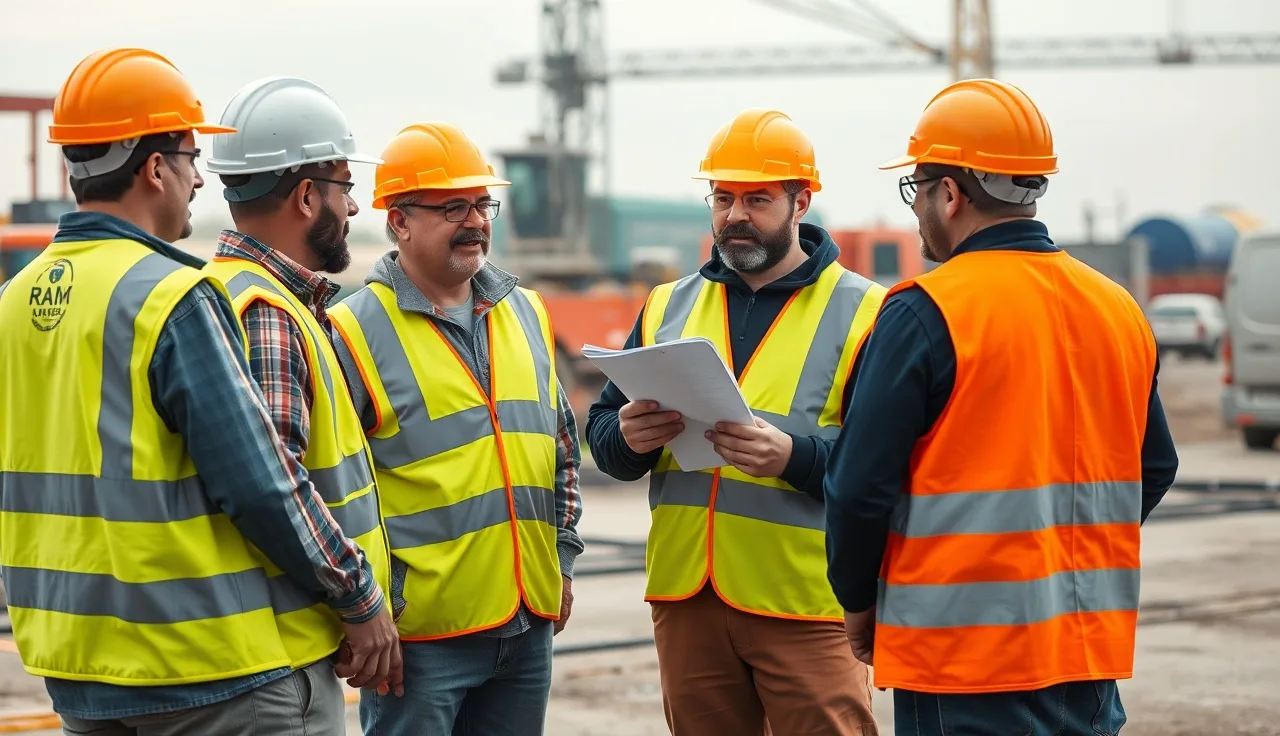
A toolbox talk is a short, informal safety meeting held at the job site, usually at the start of a shift. Five to fifteen minutes is the normal range. One topic, one hazard, a quick discussion, then everyone gets back to work.
The name comes from construction, where crews gathered around a toolbox before the day started. The format spread to manufacturing, warehousing, utilities, and pretty much every industry where supervisors need a practical way to keep safety top of mind without pulling workers off the floor for a two-hour class.
A toolbox talk is not the same as formal OSHA-required training. OSHA standards like 29 CFR 1910.132 (PPE) and 29 CFR 1926.21 (construction safety training) require documented, topic-specific training that meets defined competency standards [1]. Toolbox talks do not replace that. What they do is reinforce it, cover seasonal or site-specific hazards, and build a paper trail showing you communicate about safety on a regular schedule. Inspectors notice that paper trail. So do plaintiff's lawyers.
OSHA never spells out a required frequency for toolbox talks, because they are not a standalone regulatory requirement. The expectation lives in the General Duty Clause, Section 5(a)(1) of the OSH Act, which requires employers to provide a workplace free from recognized hazards [11]. Running regular safety meetings is one of the most defensible ways to show you take that seriously.
Are toolbox talks required by OSHA?
OSHA has no single standard that says you must hold a toolbox talk every Monday. The honest answer is that it depends on the standard governing your industry and the specific hazard. Some standards require employee instruction with enough specificity that a toolbox talk satisfies them. Others do not mention meetings at all.
Here is where the requirements bite. OSHA's construction standard at 29 CFR 1926.21(b)(1) says employers "shall instruct each employee in the recognition and avoidance of unsafe conditions" [3]. The excavation standard at 29 CFR 1926.651(k)(1) requires competent-person inspections and communication to employees about hazards found [3]. Under the Process Safety Management standard, 29 CFR 1910.119, pre-startup safety reviews and operating procedure refreshers are explicitly required [1].
So the better framing is this. Toolbox talks are not universally mandated, but they are one of the most practical ways to meet the communication and instruction requirements scattered throughout the CFR.
One more thing, and people miss it constantly. If you have a written Injury and Illness Prevention Program (IIPP) or any written safety program, and that program says you will hold weekly toolbox talks, you are now bound by your own words. OSHA can cite you for failing to follow your own written procedures. Whatever you commit to on paper, make sure you can actually do it every week.
Where can you find genuinely free OSHA toolbox talks?
There are good free sources and there are mediocre ones. Here is an honest breakdown of where to look.
OSHA.gov is the obvious starting point. OSHA's Safety and Health Topics section has hazard-specific pages with quick-reference cards, fact sheets, and outreach materials you can use as talk frameworks [2]. These are public domain government works, so you can print, copy, and modify them freely.
NIOSH (National Institute for Occupational Safety and Health) at cdc.gov/niosh publishes hazard alerts and industry-specific safety materials. Their mining and agricultural safety guides translate well into toolbox talk formats even outside those industries [4].
State OSHA plans are underused. The 22 states and territories with their own OSHA-approved plans often publish ready-to-use packets. California's Cal/OSHA Consultation Service, Oregon OSHA, and Washington State's L&I all have free downloadable libraries [9][10]. Washington's online safety library at lni.wa.gov has several hundred pre-written talks sorted by topic [5].
OSHA's Susan Harwood Training Grant program has produced hundreds of free training materials from universities and nonprofits, archived at osha.gov. They are often more worker-friendly than agency boilerplate because educators built them [2].
The National Safety Council (NSC) at nsc.org has some free resources, though the deeper library is subscription-based. Be clear-eyed here. NSC is a nonprofit, but the premium content costs money. What they give away free is generally high quality.
CPWR (The Center for Construction Research and Training) at cpwr.com has free construction talks that are among the best-written available. Their series covers fall protection, struck-by, electrocution, and caught-in/between hazards, which together make up the Fatal Four in construction [7].
Here is a quick comparison of the main free sources:
| Source | Format | Industries | Number of Topics | Customizable |
|---|---|---|---|---|
| OSHA.gov | PDF fact sheets, quick cards | All | 100+ topic pages | Yes (public domain) |
| Cal/OSHA Consultation | PDF, some bilingual | All, CA-heavy | 50+ | Yes |
| Washington L&I | PDF, Word | All | 200+ | Yes |
| Oregon OSHA | All | 40+ | Yes | |
| CPWR | Construction | 25+ | Yes | |
| NIOSH | PDF, hazard alerts | All | 100+ | Yes |
| Susan Harwood Archive | PDF, sometimes PPT | Industry-specific | Varies by grant | Yes |
None of these cost a dollar. You do not need a paid subscription service to run a solid toolbox talk program.
What topics should you cover, and how often?
Start with the data. The Bureau of Labor Statistics reported roughly 2.8 million nonfatal workplace injuries and illnesses in the private sector in 2022 [8]. The leading injury events across all industries are consistent year to year: overexertion and bodily reaction, falls on the same level, falls to a lower level, contact with objects and equipment, and transportation incidents [8]. That list is a reasonable skeleton for your topic calendar.
Weekly talks mean 52 topics a year. That sounds like a lot until you realize how much recycles seasonally. Heat illness in summer, ice slips in winter, fall protection always, forklift safety every quarter in a warehouse. Repetition is fine. Forgetting is the enemy.
A sensible annual calendar for a general industry small business might look like this:
- January: Cold stress, slip and fall prevention
- February: Fire safety and extinguisher use
- March: Ergonomics and lifting technique
- April: Spring HVAC work, confined space awareness
- May: PPE inspection and proper use
- June: Heat illness prevention
- July: Electrical safety, outdoor work
- August: Heat illness (again, it earns the repeat)
- September: Forklift and powered industrial truck safety
- October: Housekeeping and tripping hazards
- November: Lockout/tagout for year-end maintenance
- December: Fatigue, holiday stress, incident reporting reminders
For construction, align topics to the Fatal Four: falls (29 CFR 1926.502), struck-by, electrocution, and caught-in/between hazards. OSHA reports those four categories accounted for 46.2 percent of all construction worker deaths in 2021 [7].
Layer in your own hazards on top of any template. A roofing company needs fall arrest talks far more often than a software firm does. If you had a near-miss or a recordable incident last year, that exact topic belongs on this year's calendar.
How do you actually run a good toolbox talk?
The mechanics matter more than most people admit. A talk read off a printed sheet while workers scroll their phones accomplishes close to nothing. Here is what actually works.
Pick one topic. Not two, not a quick review of several things. One. A five-minute talk that covers ladder fall protection thoroughly beats a fifteen-minute talk that skims six subjects.
Start with a real hook. A near-miss from your own site, a local news story, a NIOSH fatality report from your industry. Workers tune out abstractions and lean in for stories. NIOSH publishes Fatality Assessment and Control Evaluation (FACE) reports that describe real worker deaths with investigation findings, and they are genuinely useful here [4].
Ask questions instead of only lecturing. "What would you do if..." and "Has anyone seen..." turn a talk into a conversation. Workers know things supervisors do not, and the conversation is often where the real hazard gets identified.
Demonstrate when you can. Talking about ladder safety? Bring a ladder. Talking about PPE? Hold up the right glove and the wrong glove. Physical objects anchor the point.
Document everything before anyone leaves. Name, date, topic, signature. That sheet goes in a file. If an OSHA inspection or a workers' comp claim lands, those signed attendance sheets are your proof that you communicated about the hazard. Cal/OSHA and several other state plans treat documented safety meetings as a mitigating factor in citation penalties.
Make the talk bilingual if your crew needs it. OSHA's outreach materials are available in Spanish, and some state plans offer Portuguese and other languages. This is not a nicety. BLS reported that Hispanic workers had a fatal occupational injury rate of 4.5 per 100,000 full-time equivalent workers in 2021, above the all-worker rate of 3.6 [8]. A safety talk workers cannot understand does not count as communication.
What should your toolbox talk documentation look like?
Keep it simple enough that you will actually do it. One sheet, five fields: date, location, topic covered, presenter name, and a signature line for every attendee. That is the whole thing.
Store the records somewhere you can produce them within 24 hours if OSHA shows up. A binder on-site works. A shared folder in Google Drive works. A stack of loose papers in a supervisor's truck does not.
How long should you keep them? OSHA's recordkeeping rule at 29 CFR 1904 requires injury and illness records to be retained for five years [1]. Toolbox talk logs are not formally covered by that rule, but matching the same five-year retention is defensible and easy to remember. Workers' comp statutes of limitations in many states run three to five years, so keeping records that long protects you on that front too.
If you already have a written safety program, your documentation rules should live inside it. If you need to build one from scratch, [SafetyFolio's safety program generator](/) produces a complete written program in about 15 minutes, including a toolbox talk policy section you can customize.
One mistake to avoid at all costs: never back-fill records. If you missed three weeks of talks, do not fill in attendance sheets after the fact. That is falsification of records, and in an inspection or a lawsuit it is far worse than the gap itself.
Can toolbox talks count toward OSHA-required training hours?
Sometimes, but never automatically, and the distinction is where employers get in trouble. Standards that require formal training generally demand defined content, a demonstration of employee competency, and documentation showing the worker can actually perform the safe behavior, more than that they sat through a talk.
Take forklifts. 29 CFR 1910.178(l) requires powered industrial truck operators to be trained and evaluated by a qualified trainer [1]. A 10-minute toolbox talk on forklift safety does not satisfy that. You still need the formal forklift certification process, including a hands-on evaluation.
Some standards use softer language like "instruct employees" or "inform employees" without requiring a formal competency evaluation. In those cases, a well-documented toolbox talk can do the job. The hazard communication standard at 29 CFR 1910.1200(h) requires employers to provide information and training on hazardous chemicals. A structured talk covering the chemical, its hazards, the SDS location, and proper protective measures, with an attendance record, can satisfy that standard for a specific chemical [1].
The safe approach is to check the specific CFR standard for each hazard in your workplace. If it says "train," look for extra requirements about content and evaluation. If it says "inform" or "instruct," a documented toolbox talk is likely enough. When in doubt, the standard governs, not your reading of it. For a fuller picture of formal training, see our guide to OSHA training requirements.
What free toolbox talk topics are most searched and why?
The most-searched free toolbox talk topics cluster around the highest-frequency and highest-severity hazards, which tracks the BLS injury data and OSHA enforcement history [8]. These are the ones worth building into any library.
Fall protection. Falls are the leading cause of death in construction and a top injury source in general industry. OSHA's fall protection standard, 29 CFR 1926.502, is the most frequently cited standard in federal OSHA history [3]. You need several talks on this over a year, not one.
Electrical safety. Arc flash, lockout/tagout, extension cord use, ground fault. The electrical standards at 29 CFR 1910.303 through 1910.399 draw thousands of citations a year [1]. Pair this with our guide to lockout/tagout procedures.
Heat illness. OSHA has no final heat illness standard yet (the rulemaking was underway as of 2024), but heat-related illness and death fall squarely under the General Duty Clause [11]. NIOSH publishes solid free materials on this [4].
Hazard communication and SDS. Right-to-know training is required under 29 CFR 1910.1200. A talk on how to read a safety data sheet, where the sheets are kept, and what to do in a chemical emergency is required content for any facility using hazardous chemicals [1].
Slips, trips, and same-level falls. These account for a large share of nonfatal injuries across industries. Housekeeping, footwear, walking surface conditions. Unglamorous topic, huge injury burden.
Struck-by hazards. In construction, struck-by is the second leading cause of fatality. In warehousing, forklift pedestrian strikes keep killing people. Any facility with forklifts needs this as a recurring topic.
How do you customize a free toolbox talk for your specific workplace?
Generic talks beat no talks. Site-specific talks beat generic ones. Pull the workers' comp claims at almost any medium-sized employer and the same few hazards drive most of the cost. Your talks should reflect those hazards, not a national average.
Here is a customization process that takes about ten minutes per talk:
1. Start with a free template from one of the sources above. 2. Cross-reference it against your own incident and near-miss logs. If your facility has had two back injuries loading trucks, add your specific truck model, your dock height, and the actual awkward movement to the talk. 3. Add the correct PPE or procedure from your own written program. Workers follow a policy more readily when they have heard it explained in their own context. 4. Name specific locations. "The spill hazard near the cooler in aisle three" lands harder than "wet floor areas." 5. Attach the regulatory cite so workers know it is not arbitrary. "OSHA requires this under 29 CFR 1910.23" carries more weight than "we have to do this."
If you do not yet have a written safety program to pull procedures from, that is the gap to close first. Talks built on written procedures are defensible. Talks that contradict or ignore your written procedures create liability.
What should you avoid when using free toolbox talk materials?
Free does not always mean good. Watch for these.
Outdated CFR citations. OSHA amends its standards, and a talk citing a standard number that has since been revised or moved can be embarrassing at best and misleading at worst. Cross-check every cited standard at osha.gov before you use a downloaded template.
Materials that misstate legal requirements. Plenty of safety content online overstates what OSHA requires (to sell consulting) or understates it (because the author is not a safety professional). Stick to .gov sources and recognized industry bodies.
Materials that do not match your industry. A construction fall protection talk is not the same as a general industry one. The applicable standards differ (1926 versus 1910), the PPE differs, and the scenarios differ. Confirm the talk fits your NAICS industry classification before you run it.
Talks that run too long. Anything past 15 minutes labeled a "toolbox talk" is really a training session and should be documented as one. Attention has hard limits, and a bloated talk usually means the presenter lost the room while the documentation says otherwise.
Talks with no discussion. The format is meant to be two-way. A pure lecture read verbatim off a printout misses the point. Safety culture research consistently finds that two-way communication about hazards beats one-way information transfer. Nobody has ironclad data on the exact effect size, but the direction of the finding is steady across workplace intervention studies.
How do toolbox talks fit into a broader written safety program?
A written safety program is the policy layer. Toolbox talks are the delivery layer. They have to match, or the mismatch becomes your problem during an inspection.
Your written Hazard Communication Program should say employees will get regular refresher information on chemical hazards. Your talks on SDS and chemical safety are how you deliver that refresher. Your written Fall Protection Program should say employees get briefed on fall hazards before work at heights begins. Your pre-task talk is how you execute it.
When an OSHA compliance officer arrives, they compare what your written program says against what your workers know and what your records show. A well-run, consistently documented toolbox talk program closes that gap.
For a small business building a written program for the first time, the structure stays simple. The core elements most businesses need: a safety policy statement, hazard identification procedures, employee training requirements (including toolbox talks), incident reporting procedures, and PPE requirements. To build that structure fast, [SafetyFolio's program generator](/) produces a complete, customizable written program built around your specific industry and hazards.
For a broader look at required training beyond toolbox talks, our guide to OSHA 30 training covers the supervisor-level training that complements a regular safety meeting program.
What does a good toolbox talk attendance record look like?
Simple beats elaborate. Here is the minimum viable format:
Toolbox Talk Record
- Date:
- Location / Job Site:
- Topic Covered:
- Presenter Name and Title:
- Duration (minutes):
- Employee Name (print) / Signature / Trade or Department
That covers it. Some employers add a field for "questions raised" or "corrective actions identified," which is a good habit but not required. If a worker flags a hazard during the talk that needs follow-up, note it and track the corrective action separately.
For companies running talks across multiple crews or shifts, a digital form with a timestamp and app-based or email signature collection is fine with OSHA. The format does not matter. The content and the retention do.
If a worker refuses to sign, note that on the record. "Attended but declined to sign" is a factual notation that protects you. Do not leave the signature line blank and assume you can add it later.
These records do three jobs at once. They satisfy OSHA's expectation of employee instruction, they support your defense in a workers' comp claim, and they help supervisors spot which crews or locations are missing talks. Build the habit early, keep it consistent, and the records take care of themselves.
Frequently asked questions
Does OSHA require toolbox talks?
OSHA has no regulation mandating toolbox talks by name. But dozens of OSHA standards require employers to instruct or inform employees about specific hazards, and toolbox talks are a practical way to meet those requirements. The General Duty Clause also creates a broad duty to communicate about recognized hazards. Holding no safety meetings at all creates real compliance exposure, especially during an inspection.
How often should toolbox talks be held?
Weekly is the most common frequency in construction and general industry, but there is no universal OSHA-mandated schedule. High-hazard operations often run them daily. The right frequency depends on your hazard exposure and any applicable OSHA standard. If your own written safety program commits to a schedule, you are held to it. Consistency and documentation matter more than the exact interval.
Can I use free toolbox talks in Spanish?
Yes. OSHA publishes materials in Spanish at osha.gov, and state plans including Cal/OSHA and Washington L&I have bilingual toolbox talk libraries. CPWR also offers Spanish-language construction materials. If your workforce includes Spanish-speaking workers, translated materials are not optional from a safety standpoint. OSHA has cited employers for failing to communicate safety information in a language workers understand.
What is the difference between a toolbox talk and a safety meeting?
In practice the terms overlap. A toolbox talk is typically shorter (5 to 15 minutes), held at the work site, focused on a single hazard, and informal. A safety meeting is often longer, may cover multiple agenda items like near-miss reviews or program updates, and sometimes involves management. Both should be documented. OSHA formally defines neither term, so the content and documentation are what count.
Do toolbox talks replace OSHA-required training?
No, not for standards requiring formal, evaluated training. Forklift certification under 29 CFR 1910.178(l), confined space entry, respiratory protection, and similar requirements demand documented competency evaluation a short talk cannot provide. Toolbox talks can supplement formal training and can satisfy the softer 'inform employees' language in some standards, but check the specific CFR standard to know which applies to your hazard.
What are the best free sources for construction toolbox talks?
CPWR (cpwr.com) publishes free construction-specific talks that are among the most practical available and align with the Fatal Four hazard categories. OSHA.gov has construction outreach materials. State plans like Washington L&I and Oregon OSHA maintain large free libraries. The Susan Harwood Training Grant archive on osha.gov holds university-produced construction materials. All of these are public domain or freely usable.
How long should a toolbox talk last?
Five to fifteen minutes is the practical standard. Under five minutes you rarely cover a topic with enough substance to be useful. Over fifteen minutes attention drops sharply and the talk starts working like formal training, which needs different documentation. Ten minutes is a good default: enough to cover one topic, ask a few questions, and handle any hazard concerns raised on the floor.
What topics are required by OSHA that toolbox talks can help cover?
Hazard communication (29 CFR 1910.1200) requires informing employees about chemical hazards. Emergency action plans (29 CFR 1910.38) require employees to know evacuation routes and procedures. PPE use (29 CFR 1910.132) requires training on when and how to use PPE. In construction, fall protection (29 CFR 1926.502) requires instruction on fall hazards. Toolbox talks can satisfy or reinforce the employee communication parts of all of these.
How do I document toolbox talks to satisfy OSHA?
Record the date, location, topic, presenter's name, and a signature from each attendee. Keep records for at least five years to match OSHA's injury recordkeeping retention rule under 29 CFR 1904 and to cover most workers' comp statute of limitations windows. A paper log or digital form both work. Never back-fill records after the fact. Compliance officers will ask for these during an inspection.
Can toolbox talks be done virtually or remotely?
Yes. A video call with a screen-shared presentation and a digital sign-in sheet is an acceptable format. What matters is that the content gets delivered, discussion happens, and attendance is documented. Remote talks became common during the COVID-19 pandemic and OSHA has not issued guidance prohibiting them. For hands-on hazards like fall protection or machinery operation, in-person is still better because you can demonstrate the equipment.
What makes a toolbox talk ineffective?
The common failures: reading verbatim off a printout with no discussion, cramming multiple topics into one session, running too long, not collecting signatures before people leave, and using generic materials that never reference actual site hazards. Workers check out when content feels irrelevant to their day. The best talks are short, specific, and interactive, and they reference something that actually happened at your facility recently.
Where can I find free toolbox talks for warehousing or logistics?
OSHA's general industry outreach materials at osha.gov cover the main warehouse hazards: powered industrial trucks, dock safety, material storage, ergonomics, and fire safety. NIOSH has materials on musculoskeletal injury prevention relevant to warehousing. Washington L&I's library has general industry talks that apply to logistics. For forklift content, review the formal training requirements under 29 CFR 1910.178(l) alongside any outreach talk.
How do I pick topics if I have never run a toolbox talk program before?
Start with your last two years of injury and near-miss records. The hazards that actually hurt your workers are the right first topics. With no records, default to the top BLS injury categories for your industry: overexertion, same-level falls, and struck-by incidents cover most of the burden across industries. Then layer in OSHA-required communication topics specific to your work, such as hazard communication if you use chemicals.
Sources
- OSHA, 29 CFR Parts 1910 and 1926, General Industry and Construction Standards: OSHA standards including 29 CFR 1910.132 (PPE), 1910.178(l) (forklifts), 1910.1200 (hazard communication), 1910.119 (PSM), and 1910.38 (emergency action) require specific training and employee information requirements; 29 CFR 1904 requires five-year retention of injury records.
- OSHA, Safety and Health Topics pages and Outreach Training Materials: OSHA publishes free public domain outreach materials and hazard-specific fact sheets available for use as toolbox talk frameworks, including Susan Harwood grant materials archived on osha.gov.
- OSHA, 29 CFR Part 1926 Construction Standards: 29 CFR 1926.21(b)(1) requires instruction on recognizing and avoiding unsafe conditions; 1926.502 governs fall protection; 1926.651(k)(1) requires communication of excavation hazards; fall protection is the most frequently cited OSHA standard.
- NIOSH, Fatality Assessment and Control Evaluation (FACE) Program and Safety Materials: NIOSH publishes free hazard alerts, industry-specific safety materials, and FACE reports describing real worker fatalities with investigation findings, usable as toolbox talk hooks.
- Washington State Department of Labor and Industries, Safety and Health Topics Library: Washington L&I's online safety library has several hundred pre-written toolbox talks sorted by topic, available as free downloads.
- CPWR, The Center for Construction Research and Training, Toolbox Talk Series: CPWR provides free construction-specific toolbox talks covering the Fatal Four; OSHA reports the Fatal Four accounted for 46.2 percent of all construction worker deaths in 2021.
- Bureau of Labor Statistics, National Census of Fatal Occupational Injuries and Survey of Occupational Injuries and Illnesses, 2022: BLS reported approximately 2.8 million nonfatal workplace injuries and illnesses in private sector in 2022; leading injury events include overexertion, falls, and struck-by; Hispanic workers had a fatal injury rate of 4.5 per 100,000 FTE in 2021 vs. 3.6 all-worker rate.
- Cal/OSHA Consultation Service, Free Publications and Toolbox Talks: Cal/OSHA Consultation Service publishes free bilingual toolbox talk materials and safety publications for California employers.
- Oregon OSHA, Free Publications and Safety Meeting Resources: Oregon OSHA offers free downloadable safety meeting and toolbox talk resources for Oregon employers.