Last updated 2026-07-09
TL;DR
Toolbox talks are short, informal safety meetings (usually 5 to 15 minutes) held at the job site before work starts. No single OSHA standard requires them by name, but several standards mandate regular safety training that a documented toolbox talk satisfies. Hundreds of free, ready-to-use talks are available from OSHA, NIOSH, CPWR, and state plan agencies at no cost.
What exactly is a toolbox talk?
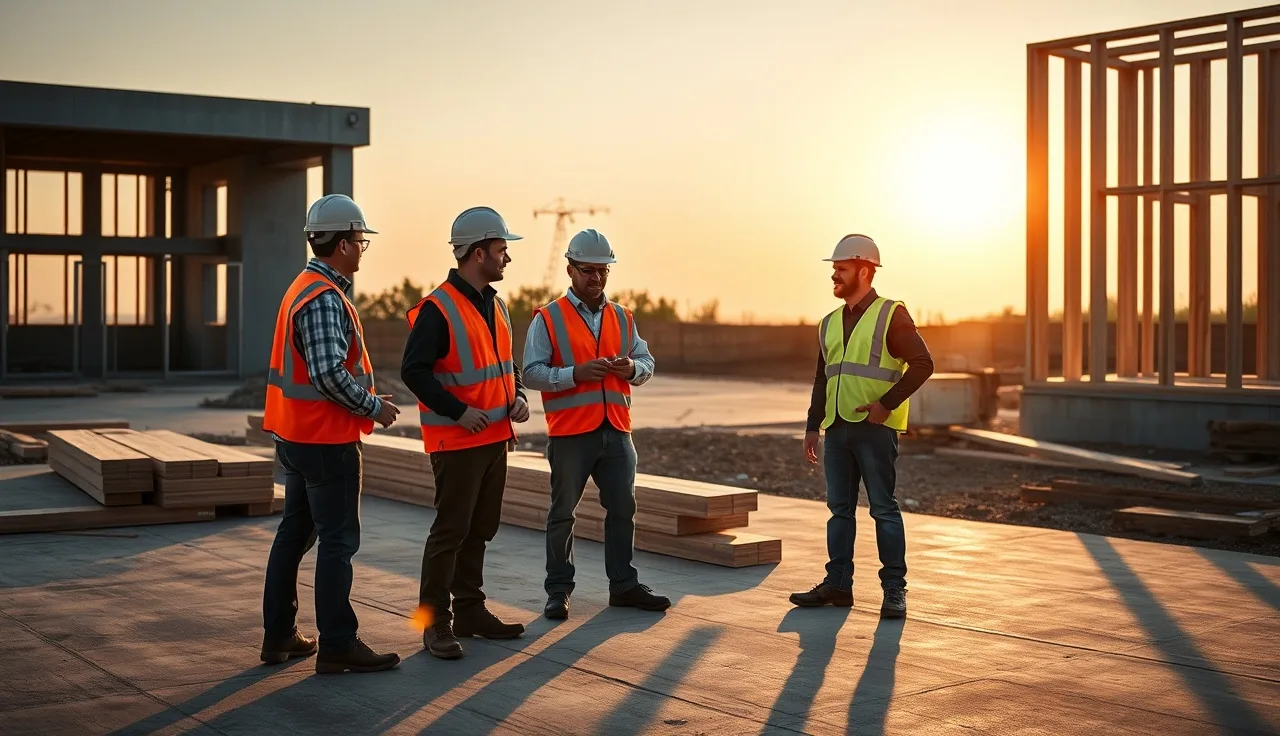
A toolbox talk is a short safety meeting held where the work actually happens, before the shift starts or before a specific task begins. The name comes from construction crews who literally gathered around a toolbox. The format has spread to manufacturing, warehousing, healthcare, agriculture, and almost every other industry.
The meeting usually runs 5 to 15 minutes. A supervisor or crew lead reads or presents a single safety topic, workers ask questions, everyone signs a sheet, and the crew gets to work. No classroom. No slideshow. No outside trainer required.
The value is repetition and relevance. A talk about fall protection on the morning workers are setting up scaffolding sticks far better than a one-hour annual session delivered in a conference room in February. The National Safety Council has noted that regular short safety reminders reinforce safe behavior more effectively than infrequent long sessions, though the honest caveat is that research quality varies and effect sizes depend heavily on supervisor buy-in [1].
Toolbox talks go by several other names: tailgate meetings (common in California and the western states), tailgate safety talks, safety huddles, toolbox meetings, and pre-task planning sessions. Same idea, different label.
Does OSHA actually require toolbox talks?
No single OSHA regulation says "you must hold toolbox talks." What OSHA does require is task-specific training at defined intervals, and toolbox talks are one of the most practical ways to meet that obligation.
29 CFR 1926.21(b)(2) requires that employers instruct each employee in the recognition and avoidance of unsafe conditions in construction. 29 CFR 1910.132(f) requires general industry employers to train workers on personal protective equipment before they use it. Subpart Z of 29 CFR 1910 contains dozens of chemical-specific training requirements under hazard communication. None of these standards prescribe a meeting format, but a documented toolbox talk with a sign-in sheet satisfies the training record requirement as long as the content matches the standard [2].
Where OSHA gets specific is recordkeeping. If an inspector asks whether workers were trained on a particular hazard and you hand over signed toolbox talk logs covering that topic, that documentation is real evidence of compliance. Missing documentation is how a training citation sticks even when the training actually happened.
California's OSHA program (Cal/OSHA) goes further. Under Title 8, Section 3203, California employers with more than 10 employees must have an Injury and Illness Prevention Program that includes regular safety meetings or communication. Toolbox talks count toward that requirement [3].
For industries like railroad maintenance-of-way, the Federal Railroad Administration requires job briefings before each shift or task under 49 CFR 214.339. Railroad safety toolbox talks are the standard way those briefings get delivered, covering topics like roadway worker protection, blue signal rules, and lone worker procedures [4].
Where can you get free toolbox talks?
You have more free options than you have time to use. Here are the sources I trust, organized by who each one fits best.
OSHA's own website. OSHA publishes safety and health topics pages at osha.gov with training materials, fact sheets, and quick cards. Plain English, accurate, free. The catch is that they are not formatted as ready-to-deliver talks. You pull the key points yourself [2].
CPWR (The Center for Construction Research and Training). CPWR maintains a large library of free construction toolbox talks at cpwr.com, many in both English and Spanish. They are written for the trades, cover silica, heat illness, and electrical hazards, and come with sign-in sheet templates. CPWR is funded partly by NIOSH, so the content is technically vetted [5].
NIOSH. The National Institute for Occupational Safety and Health publishes free worker health materials by industry and hazard at cdc.gov/niosh. Some are formatted as talks. Others are fact sheets you can convert in about ten minutes [6].
State plan OSHA agencies. Twenty-two state plans cover private employers, and many publish free toolbox talk libraries. Washington State's DOSH (Department of Labor and Industries) has one of the deepest free collections in the country, with hundreds of talks sorted by industry [7].
OSHA Training Institute (OTI) Education Centers. The regional OTI Education Centers publish free outreach materials including toolbox talk templates. If you are already looking into osha training, bookmark these centers for the free resources even if you never take a formal class.
Manufacturers and trade associations. If your workers run specific equipment, the manufacturer's safety materials often make excellent talk content. The Association of Equipment Manufacturers, the American Chemistry Council, and similar groups publish free talks for their industries.
One thing worth knowing: a lot of commercial safety software companies gate their toolbox talk libraries behind a free trial that quietly becomes a monthly subscription. The government and nonprofit sources above are genuinely free, no account required.
Which safety topics should you cover each year?
Start with the hazards that actually injure your workers, not a generic calendar someone else built. Pull your OSHA 300 log from the past three years (you keep one if you have 10 or more employees and are not in a partially exempt industry under 29 CFR 1904) and look for patterns [8].
No injury history yet? The Bureau of Labor Statistics publishes annual injury and illness data by NAICS industry code, free at bls.gov. For 2022, the private industry total recordable case rate was 2.7 per 100 full-time workers, with the highest rates in nursing care facilities (5.6), animal slaughtering (5.5), and air transportation (5.0) [9]. Your industry rate tells you the baseline risk your workers face.
OSHA's Focus Four hazards are the right starting point for any construction operation. Falls, struck-by, caught-in/between, and electrocution account for roughly 60 percent of construction worker deaths each year [2]. Every construction crew should cycle through a talk on each of these at least once a year, with falls getting extra repetition given the numbers.
For general industry, the most-cited OSHA standards in fiscal year 2023 give a useful signal:
| Rank | Standard | Topic area |
|---|---|---|
| 1 | 29 CFR 1926.501 | Fall protection (construction) |
| 2 | 29 CFR 1910.1200 | Hazard communication |
| 3 | 29 CFR 1926.1053 | Ladders |
| 4 | 29 CFR 1910.134 | Respiratory protection |
| 5 | 29 CFR 1926.503 | Fall protection training |
| 6 | 29 CFR 1910.147 | Lockout/tagout |
| 7 | 29 CFR 1926.451 | Scaffolding |
| 8 | 29 CFR 1910.178 | Powered industrial trucks (forklifts) |
Source: OSHA, Top 10 Most Frequently Cited Standards, FY2023 [2]
Those eight topics alone give you eight months of talks. Topics like hazard communication and lockout tagout show up on this list every single year, which tells you training on these standards is both commonly required and commonly missed.
Seasonal hazards deserve their own rotation. Heat illness talks belong in April or May, before temperatures peak. Cold stress and slip-on-ice talks belong in October. Wildfire smoke exposure is getting more relevant for outdoor workers in the western states.
How do you actually run a toolbox talk well?
The biggest mistake supervisors make is reading the handout word-for-word while workers stare at their phones. That is not a training failure, it is a delivery failure, and it is fixable.
Here is the format that works. Read the topic yourself the night before so you understand it. Open with a real question tied to something that happened recently on your site or in your industry. Cover the key points in two to three minutes. Then ask the group two or three specific questions, wait for answers, and correct misunderstandings out loud. Close with the sign-in sheet.
Specific questions beat generic ones. "Any questions?" gets silence. "If you found a frayed extension cord on the floor, what would you do?" gets an answer, and the answer tells you what workers actually know.
Keep it under 15 minutes. If a topic runs longer, split it across two sessions. Workers tune out past that point, and a tuned-out toolbox talk creates a false sense of training that might be worse than no talk at all.
Language matters a lot. If a good chunk of your crew speaks Spanish as a first language, use Spanish-language materials. CPWR, OSHA, and NIOSH all publish talks in Spanish. A talk delivered in a language workers do not fully understand does not satisfy OSHA's training requirements. An OSHA Letter of Interpretation from 2002 confirmed that training must be in a language and vocabulary workers can understand, rather than in whatever language the employer finds convenient [2].
For remote or multi-site operations, some companies email or text the talk to workers who read and sign off electronically. That works for an informational refresher, but it is not a substitute for interactive discussion when the standard requires it.
How do you document toolbox talks to satisfy OSHA?
Documentation does two jobs: it proves compliance if OSHA shows up, and it tells you what you have actually covered over time.
At minimum, your record should capture the date, the location, the topic covered, the name of the person who delivered the talk, and the printed name and signature of each attendee. A one-page paper form handles this fine. Keep these records for at least three years. That matches the OSHA 300 log retention period under 29 CFR 1904.33 and covers most inspection lookback windows [8].
Some employers add a "key points covered" line with two or three bullets. This helps when the same topic gets covered at different depths. It also shows an inspector that the talk had real content behind it, rather than a sign-in sheet stapled to a blank form.
Digital options range from free Google Forms to purpose-built safety management software. If you already run an incident report process digitally, adding toolbox talk logs to the same system makes audits easier. The format does not matter to OSHA. What matters is that the record exists and you can find it.
One honest note: sign-in sheets do not prove workers learned anything. They prove workers were present. For high-stakes tasks (confined space entry, work near energized equipment, forklift certification requirements), a signed attendance sheet is not enough. Those standards require demonstrated competency, which means a test or an observed task performance, more than attendance.
What makes a good toolbox talk topic list for small businesses?
Small businesses hit a specific wall: the person running the toolbox talk is usually also the person doing the work, ordering materials, handling a customer complaint, and answering emails. A topic list that needs 30 minutes of prep per talk never gets used.
The practical fix is to build a 12-month calendar in January with topics pre-selected and materials already downloaded. Do the planning work once, upfront, and you kill the weekly friction of "what do I talk about today?"
A workable small-business calendar skeleton:
- January: Housekeeping and slip/trip/fall prevention
- February: Fire extinguisher use and exit routes
- March: Ladder safety
- April: Heat illness prevention (start early)
- May: Electrical safety and extension cord use
- June: Hand and power tool safety
- July: Eye and face protection (PPE refresher)
- August: Struck-by hazards
- September: Hazard communication and SDS basics
- October: Cold stress and winter preparation
- November: Back safety and manual lifting
- December: Forklift/powered equipment safety (or your highest-risk seasonal topic)
Add topics from your OSHA 300 log or near-miss reports as they come up. Those real events land harder than any pre-written talk.
If you need a full written safety program to go alongside your talk schedule, SafetyFolio's safety program generator produces a complete, OSHA-referenced program in about 15 minutes. That handles the written program requirement so your talks can cover the training piece.
Are there free toolbox talks for specific industries like railroads, construction, or manufacturing?
Yes, and the quality varies a lot by industry.
Construction has the best free resources. CPWR's toolbox talk library covers essentially every construction hazard in plain language, with Spanish versions for most topics [5]. OSHA's construction e-tool pages add context for standards like 29 CFR 1926 Subpart R (steel erection) and Subpart Q (concrete).
Manufacturing is served reasonably well by OSHA's general industry standards pages and by NIOSH's industry-specific resources. Michigan OSHA (MIOSHA) has a free publication library with manufacturing-focused safety talks that any general industry employer can use, even outside Michigan [7].
Railroad maintenance-of-way. This is a specialized area. The FRA publishes roadway worker protection training materials under 49 CFR 214, and railroad safety toolbox talks usually focus on close calls with on-track equipment, blue flag procedures, and fatigue management. The Railway Educational Bureau and CPWR's rail transit division publish free materials, and many Class I railroads share their toolbox talk libraries publicly as part of their outreach commitments [4]. The topic list here is distinct because the regulatory framework (FRA, not OSHA) governs most of the requirements.
Agriculture. The AgriSafe Network and the National Farm Medicine Center publish free agricultural toolbox talks covering tractor rollover protection, grain bin entry, pesticide handling, and heat illness. These matter because OSHA's coverage of agricultural workers under 29 CFR 1928 is narrower than general industry, and small farms under 10 employees are largely exempt from OSHA standards. Free safety talks still make sense even where OSHA does not technically require them.
Healthcare. OSHA's healthcare worker safety pages and the American Nurses Association publish free materials on safe patient handling, needlestick prevention, and workplace violence. The healthcare violence standard has been in the works for years; OSHA issued a proposed rule in 2023, so this topic is worth covering proactively [2].
Can toolbox talks count toward OSHA 10 or OSHA 30 training requirements?
No. They do different jobs and satisfy different regulatory requirements.
OSHA 30 training (and OSHA 10) is a structured program delivered by an OSHA-authorized trainer under the OSHA Outreach Training Program. Completion cards are issued by OSHA's national office. Many state and local ordinances, particularly in construction, require workers to hold a valid OSHA 10 or 30 card before they can access a job site. Toolbox talks cannot substitute for that credential [10].
What toolbox talks can do is reinforce the topics covered in OSHA 30 training and satisfy ongoing training requirements under specific standards. Think of OSHA 30 as the foundational knowledge and toolbox talks as the regular practice that keeps it active.
If you want a formal training credential, the osha 30 training options include both in-person and online formats authorized by OSHA.
Toolbox talks also cannot substitute for the specific training programs required by standards like 29 CFR 1910.147 (lockout/tagout), which requires a formal written energy control program and documented employee training that goes well beyond a short talk. For those standards, use toolbox talks as periodic refreshers after the initial formal training is done.
How often should you hold toolbox talks?
Weekly is the widely cited best practice, and it is practical for most operations. A 52-talk annual cycle covers a lot of ground without getting repetitive if you vary the topics.
Daily talks are common on large construction projects, especially when the work scope changes fast. Pre-task planning talks before high-hazard activities (scaffold erection, confined space entry, energized electrical work) should happen every single time, regardless of how often you also run weekly topics.
Monthly is the floor that still produces measurable benefit. Below monthly, the reinforcement effect largely disappears and the documentation becomes a formality instead of a real training tool. Nobody has great controlled research on exactly where that threshold sits; the honest answer is that any regular documented schedule beats an irregular one.
For railroad maintenance-of-way operations, 49 CFR 214.339 requires a job briefing before each work period, which effectively makes daily toolbox talks mandatory for those crews [4].
A few industries with peak-season risk (roofing, landscaping, agricultural harvesting) do well with more frequent talks during their high-risk months and fewer during the off-season. That is a reasonable calibration.
What are the most common toolbox talk mistakes employers make?
Reading straight off the paper without making eye contact is the most common, and workers pick up on it immediately. It signals that the supervisor does not know or care about the material.
Covering the same three topics every year while ignoring your actual injury data is a close second. If your workers have had three back strain incidents and zero electrocutions, but your talk calendar is heavy on electrical safety and light on ergonomics, you have the priorities backwards.
No Spanish-language version when workers need it. That is a compliance problem and a real safety problem at the same time. OSHA has cited employers under the general duty clause for training delivered in English to workers who did not understand it [2].
Skipping the sign-in sheet because "everyone knows we do these." The paperwork is the proof. An undocumented talk is, from OSHA's perspective, a talk that never happened.
Treating every talk as a lecture instead of a conversation. If a worker raises a real hazard they noticed, that is worth more than the next two minutes of scripted content. Stop, address it, log it as a near-miss if it fits.
And using talks that do not match the work being done that day. A fall protection talk during interior painting is fine on its own. A fall protection talk during interior painting, when the crew spent all morning asking about chemical exposure, is a missed opportunity.
How do free toolbox talks fit into a full written safety program?
A written safety program and your toolbox talks are two pieces of the same machine. The written program documents your policies, hazard controls, and responsibilities. Toolbox talks are how you push that information out to workers, over and over, across the year.
OSHA does not require a single combined "safety program" document for most employers (the Injury and Illness Prevention Program requirement lives in state plans, not in federal OSHA for general industry). What OSHA does require is a set of written programs for specific standards: a written hazard communication program under 29 CFR 1910.1200(e), a written lockout/tagout energy control program under 29 CFR 1910.147(c)(4), a written respiratory protection program under 29 CFR 1910.134(c), and so on [2].
Your toolbox talk log should reference these written programs by name. When you run a talk on hazard communication, note on the sign-in sheet that it ties back to your written HazCom program. That creates a traceable link between your documentation and your training records, which is exactly what an inspector wants to see.
If you have the talk schedule handled but still need the written program side, SafetyFolio's safety program generator produces standards-specific written programs in about 15 minutes, with the correct CFR citations for your industry.
Frequently asked questions
Are toolbox talks legally required by OSHA?
No single OSHA standard mandates toolbox talks by name. But multiple standards require regular, documented worker training on specific hazards, and a properly documented toolbox talk satisfies those requirements. California's IIPP standard under Title 8, Section 3203 does require regular safety meetings for employers with more than 10 workers, which toolbox talks fulfill.
How long should a toolbox talk be?
5 to 15 minutes is the standard range. Under 5 minutes rarely leaves time for questions; over 15 minutes loses attention. For complex topics like confined space entry or respiratory protection, split the content across two sessions rather than running one long talk that people tune out of.
Where can I download free toolbox talk templates?
CPWR (cpwr.com) has the largest free library for construction, with English and Spanish versions. NIOSH publishes free materials at cdc.gov/niosh. Washington State's Department of Labor and Industries offers hundreds of free talks by industry. OSHA's safety and health topic pages provide source content you can adapt. None require an account or payment.
Do toolbox talks need to be in Spanish for Spanish-speaking workers?
Yes, effectively. OSHA's training standards require that training be provided in a language and vocabulary workers can understand. An OSHA Letter of Interpretation confirmed this applies to all training requirements. Delivering a talk in English to workers who do not understand English does not satisfy the standard and could support a citation under the general duty clause.
What should a toolbox talk sign-in sheet include?
At minimum: the date, location, topic covered, the name of the person who delivered the talk, and each attendee's printed name and signature. Adding two or three bullets summarizing the key content strengthens the record. Keep completed sheets for at least three years to cover most OSHA inspection lookback windows.
Can toolbox talks replace OSHA 10 or OSHA 30 training?
No. OSHA 10 and OSHA 30 are formal credential programs delivered by OSHA-authorized trainers under the Outreach Training Program. Completion cards are issued by OSHA's national office and cannot be issued for toolbox talks. Toolbox talks can reinforce what workers learned in OSHA 30 training and satisfy ongoing training requirements, but they do not produce a credential.
How do you run a toolbox talk for a crew that works at multiple sites?
For remote or distributed crews, many employers email or text the material and collect electronic signatures. That works for informational refreshers. For topics where OSHA requires interactive training or demonstrated competency (like PPE fitting or lockout/tagout procedures), a video call or in-person session is more defensible. Document the delivery method on the sign-in record.
What are the best toolbox talk topics for construction?
OSHA's Focus Four hazards (falls, struck-by, caught-in/between, electrocution) are the starting point because they account for roughly 60 percent of construction fatalities. Rotate through ladders, scaffolding, fall protection, hand and power tools, PPE, heat illness, and hazard communication. Add topics from your own OSHA 300 log and any near-miss incidents.
What are railroad safety toolbox talks and where do I get them?
Railroad maintenance-of-way operations are regulated by the FRA under 49 CFR 214, which requires job briefings before each work period. Railroad safety toolbox talks cover roadway worker protection, blue signal rules, fatigue management, and on-track safety. The FRA publishes free training materials at fra.dot.gov, and CPWR's rail transit division offers additional free resources.
How do toolbox talks fit into an OSHA inspection?
During an inspection, OSHA compliance officers review training records as part of their document requests. A complete toolbox talk log with dates, topics, and signed attendance sheets shows that ongoing training occurred. Missing records, even when the training happened, can result in training-related citations. Organized documentation is your primary defense.
Can a toolbox talk cover multiple topics at once?
It can, but it usually should not. A single focused topic is easier to discuss, easier to document, and more likely to stick with workers. If two hazards are directly linked (say, a talk on confined space entry that also covers atmospheric testing), treating them together is fine. Otherwise, separate sessions work better.
How do small businesses without a safety manager run effective toolbox talks?
The owner or a lead supervisor can run them. The key is preparation: download materials in advance, read the topic yourself the night before, and ask specific questions rather than open-ended ones. Building a 12-month calendar in January with topics and materials pre-selected removes the weekly friction that causes talks to get skipped.
Are there free toolbox talks for warehouse or forklift safety?
Yes. OSHA's powered industrial truck standard at 29 CFR 1910.178 is one of the top 10 most-cited standards annually, and OSHA publishes free training materials on forklift safety. NIOSH and several state OSHA agencies also offer free warehouse safety talks. These cover pre-shift inspections, pedestrian zones, load stability, and operator certification requirements.
What is the difference between a toolbox talk and a safety meeting?
Toolbox talks are short, task-specific, and happen at the work site, usually 5 to 15 minutes before a shift or task. Safety meetings are typically longer, held in a meeting room, and cover broader topics including program updates, incident reviews, and policy changes. Both can satisfy different parts of OSHA's training requirements; they serve different functions.
Sources
- National Safety Council, Work Injury Facts: Regular short safety reminders reinforce safe behavior more effectively than infrequent long sessions
- OSHA, Safety and Health Topics and Standards: OSHA top 10 most-cited standards FY2023; 29 CFR 1926.21(b)(2) construction training; 29 CFR 1910.132(f) PPE training; language and vocabulary training requirements per Letters of Interpretation
- CPWR, The Center for Construction Research and Training, Toolbox Talks: CPWR maintains a free library of construction toolbox talks in English and Spanish, funded partly by NIOSH
- NIOSH, Centers for Disease Control and Prevention, Worker Health Materials: NIOSH publishes free worker health and safety materials by industry and hazard category
- Washington State Department of Labor and Industries (DOSH), Safety and Health Resources: Washington State DOSH publishes hundreds of free toolbox talks sorted by industry
- OSHA, Recordkeeping Rule 29 CFR Part 1904: 29 CFR 1904.33 requires OSHA 300 logs to be retained for five years; recordkeeping rule applies to employers with 10 or more employees not in partially exempt industries
- Bureau of Labor Statistics, Survey of Occupational Injuries and Illnesses 2022: Private industry total recordable case rate was 2.7 per 100 full-time workers in 2022; nursing care facilities 5.6, animal slaughtering 5.5, air transportation 5.0
- OSHA, Outreach Training Program Requirements: OSHA 10 and OSHA 30 cards are issued only by OSHA-authorized trainers under the Outreach Training Program; toolbox talks do not substitute for this credential